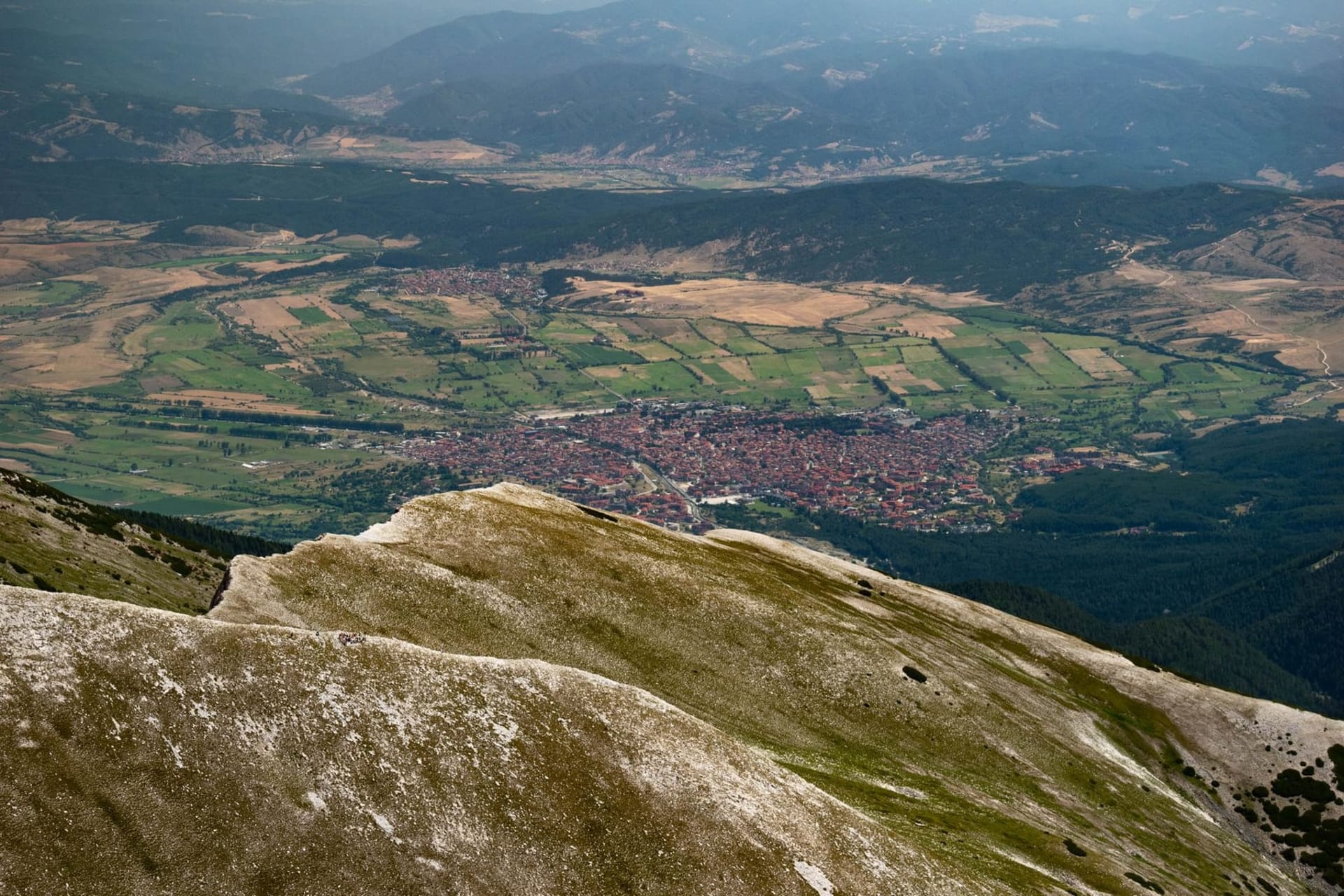
Bulgaria's premier ski resort sits beneath Pirin's dramatic peaks, pairing world-class slopes with a stone-paved old town full of mehanas.
I arrived in Bansko after a three-hour drive from Sofia through a valley that kept narrowing, the Pirin range assembling itself piece by piece through the windshield until the peaks were simply everywhere — steep, limestone-white, indifferent to the small ski town gathering at their base. The gondola station sits at the edge of the old town like a border crossing between two centuries. One side: cafes, fur hats, the smell of woodsmoke leaking under heavy doors. The other: helmets, GoPro mounts, Austrian ski brands.
Up on the Pirin Slopes
The mountain delivers more than its price tag suggests. From the Shiligarnika base at around 1600 meters, the runs open into long, groomed corridors that on a clear January morning feel almost private compared to anything I’ve skied in France. There’s a black run off the Todorka peak that drops sharply enough to earn its color — Lia spent twenty minutes at the top deciding whether to follow me, then descended faster than I did. The views across to the Rhodope Mountains on the horizon are a distraction that nearly cost me a fall on a flat traverse.
Lift queues rarely exceed fifteen minutes even on weekends. Lift tickets cost a fraction of Chamonix or Verbier. The snow quality varies — Bansko sits low enough that rain can threaten the lower slopes in mild winters — but when the cold holds, the upper terrain is genuinely excellent.
The Old Town After Dark
Ulitsa Velyan Ognev cuts through the preserved nineteenth-century quarter, and by six in the evening its stone houses are exhaling firelight from every window. The mehanas — Bulgarian tavern-restaurants — operate on a logic that resists rush. You sit, someone brings bread and a small carafe of rakia, and time reorganizes itself around the rhythm of the kitchen.
I ordered kavarma at Mehana Baryakova, a clay-pot stew of pork and peppers that arrived still bubbling, fragrant with savory and paprika. What genuinely surprised me was the shopska salad — a dish I’d written off as a tourist staple — made with tomatoes that tasted like they’d been grown somewhere specific, not produced. The local sirene cheese, crumbled over the top, had a sharpness that cut clean through the richness of everything else.
What the Town Keeps Quiet
Bansko’s old quarter is UNESCO-listed but manages to carry it lightly. The Neofit Rilski House — birthplace of the monk who codified the modern Bulgarian alphabet — sits on a residential street without fanfare, easy to miss. I ducked inside on a whim and spent an hour in rooms that smelled of cold stone and old paper, which felt like the honest center of the place.
When to go: December through March for skiing, with January and February offering the most reliable snow cover on the upper mountain. Early April sees the snow thin but the mehanas empty out pleasantly, prices drop further, and the Pirin trails begin to open for hiking.