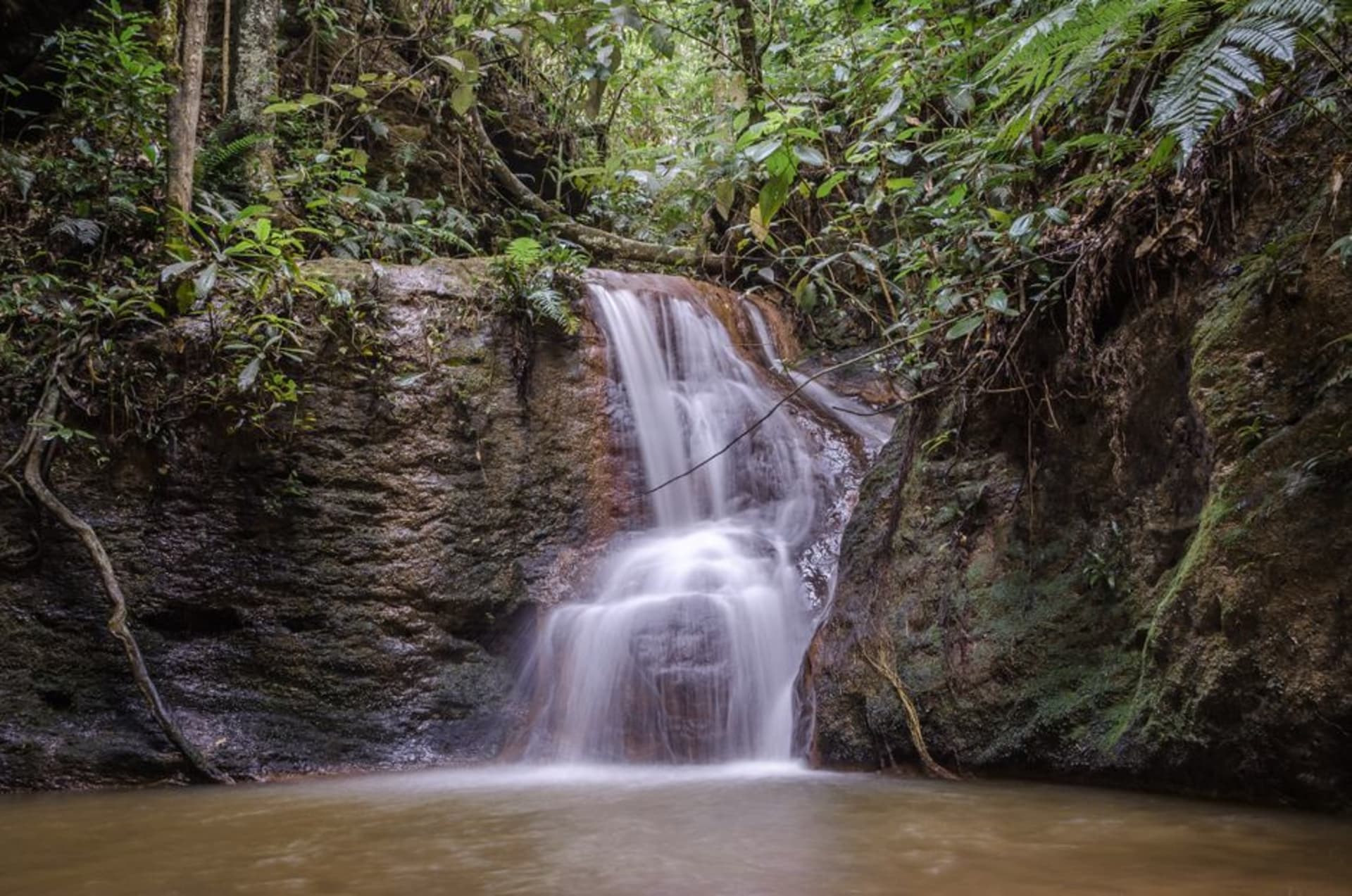
Wasai Teraja (Teraja Waterfall)
"We registered our names at a longhouse, then walked an hour into the jungle just to hear water instead of engines."
A rainforest trek from an Iban longhouse deep in Brunei's Labi hills ends at one of the country's few publicly accessible waterfalls.
I’ll admit I hadn’t planned much for Brunei beyond Bandar Seri Begawan’s golden domes, until a guesthouse owner in Kuala Belait mentioned Wasai Teraja almost in passing, like it was obvious we’d want to go. Lia looked it up and found almost nothing in English, just a name and a district. That was enough to convince us. We rented a car and followed Jalan Labi for what the map promised would be fifty minutes, though it felt longer with the windows down and the forest closing in tighter around the road the further we went.
Kampong Teraja turned out to be an actual Iban longhouse, not a staged tourist stop, and registering there before the hike was the part I hadn’t expected to move me. A woman took our names in a ledger, said a few words to Lia about the trail conditions, and pointed us toward the treeline like she’d done it a hundred times that month. It felt less like buying a ticket and more like being let through someone’s front gate.
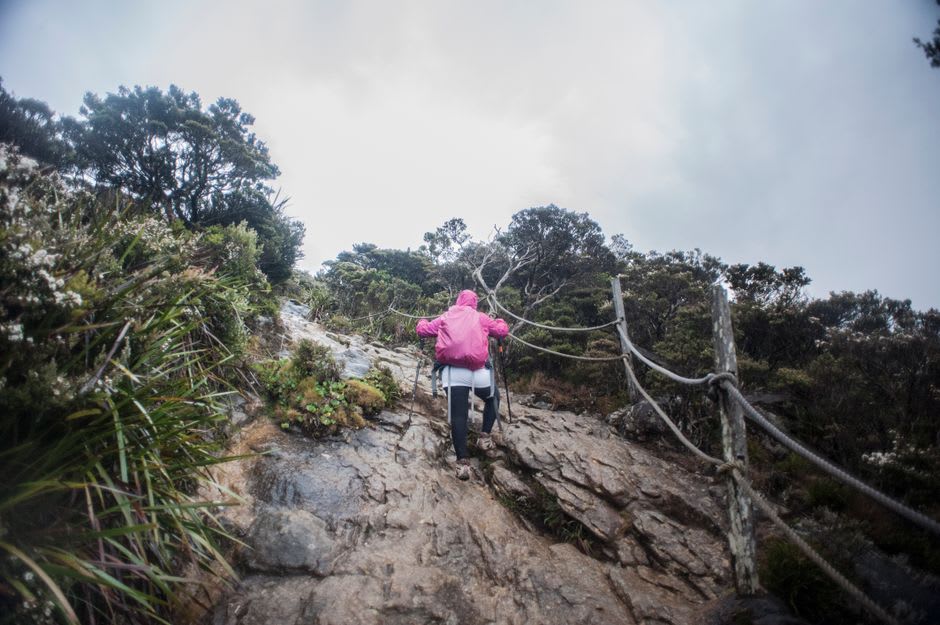
The trek itself was humid and steep in places, and I kept stopping to look at spiderwebs the size of dinner plates strung between trees, convinced every rustle overhead was a Bornean gibbon even though we never spotted one. The guesthouse owner had told us the Labi forest holds over two hundred recorded species of butterflies and spiders, and somewhere past the halfway point I stopped being surprised and just started photographing everything that moved. Lia found a slow loris print, or claimed to, in the mud near a stream crossing, which became the highlight of her day regardless of whether it was true.
When the trees finally opened onto Wasai Teraja, the sound got us before the sight did. It’s not a massive waterfall, but knowing it’s one of only two in a reserve of more than forty falls that’s actually open to the public made standing under the spray feel oddly earned. We sat on the rocks eating the rice Lia had packed that morning, dried off in patches of sun, and didn’t see another person the entire time.
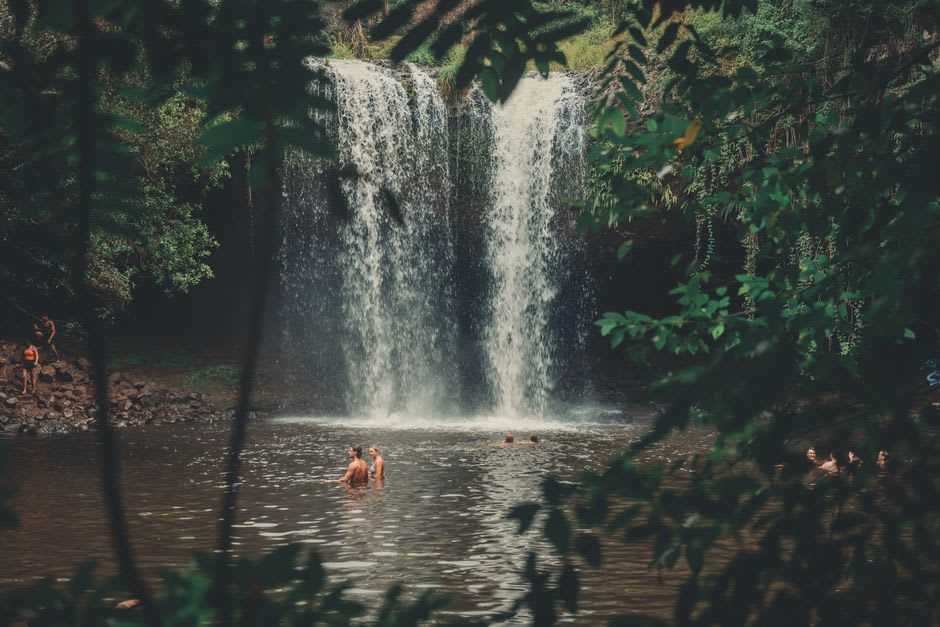
When to go: Aim for the drier stretch between March and September, when the trail holds up better underfoot and the rocks around the falls are less treacherous. We went in a shoulder month and still slipped more than once.