Tasek Merimbun
"The water is the colour of black coffee and perfectly still, and it makes the whole forest look as if it has been printed twice."
Brunei is small and rich and famous for one enormous mosque and a lot of oil, and most visitors never leave the capital. That is their loss, because forty-five minutes inland from the coast, in the Tutong District, there is a lake that looks like nowhere else I’ve been in Southeast Asia. Tasek Merimbun is the country’s largest natural lake and the centrepiece of an ASEAN Heritage Park, and the thing that makes it strange and beautiful is its water: stained jet-black by the tannins leaching out of the surrounding peat swamp, so dark and so still that the reflection of the forest is almost indistinguishable from the forest itself.
The black lake and the red bridge
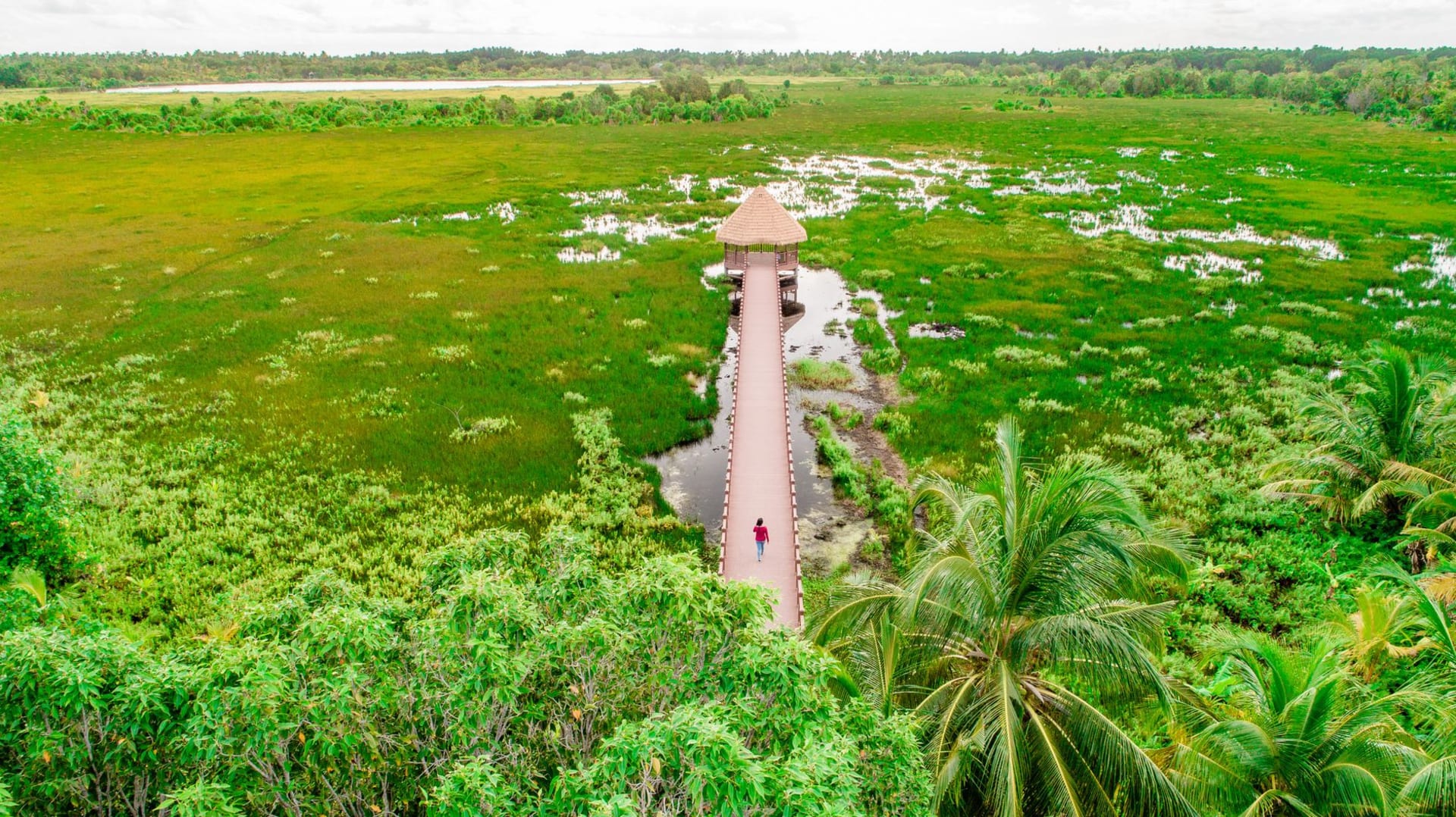
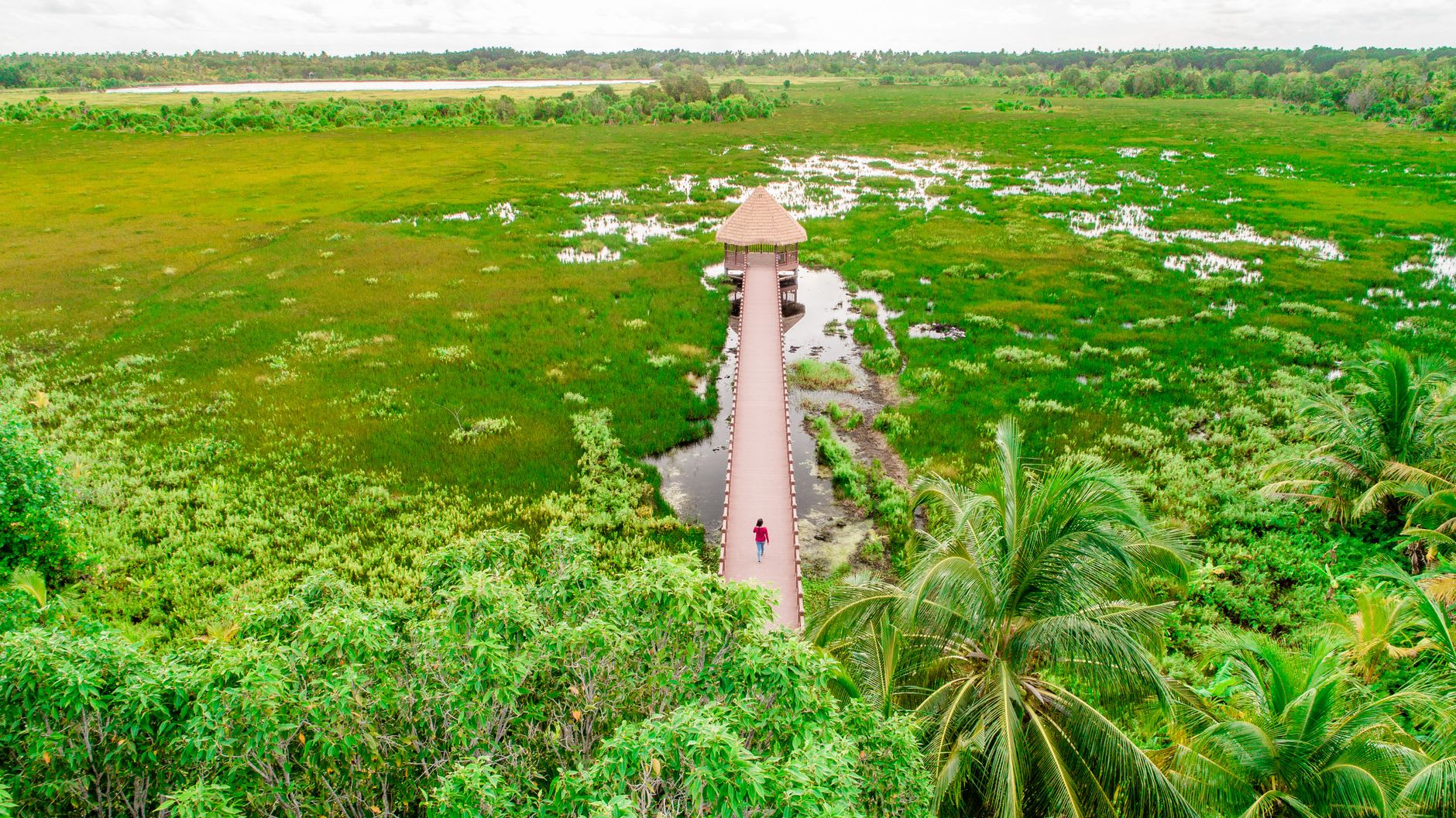
The lake is shaped like a wide, lazy S, and in the middle of one of its bends sits a small forested island, Pulau Jeludin, reached by a wooden boardwalk painted a deep faded red. Lia walked out onto it ahead of me and stopped halfway, and I understood why when I caught up: standing over the black water, with the bridge’s red rails leading your eye to the green island and the whole thing doubled in the mirror surface, you get a moment of genuine visual vertigo. It is the most photographed view in the interior of Brunei and it deserves the attention, though on the weekday morning we visited there was nobody else there at all — just the two of us, a kingfisher, and the tick and hum of the swamp.
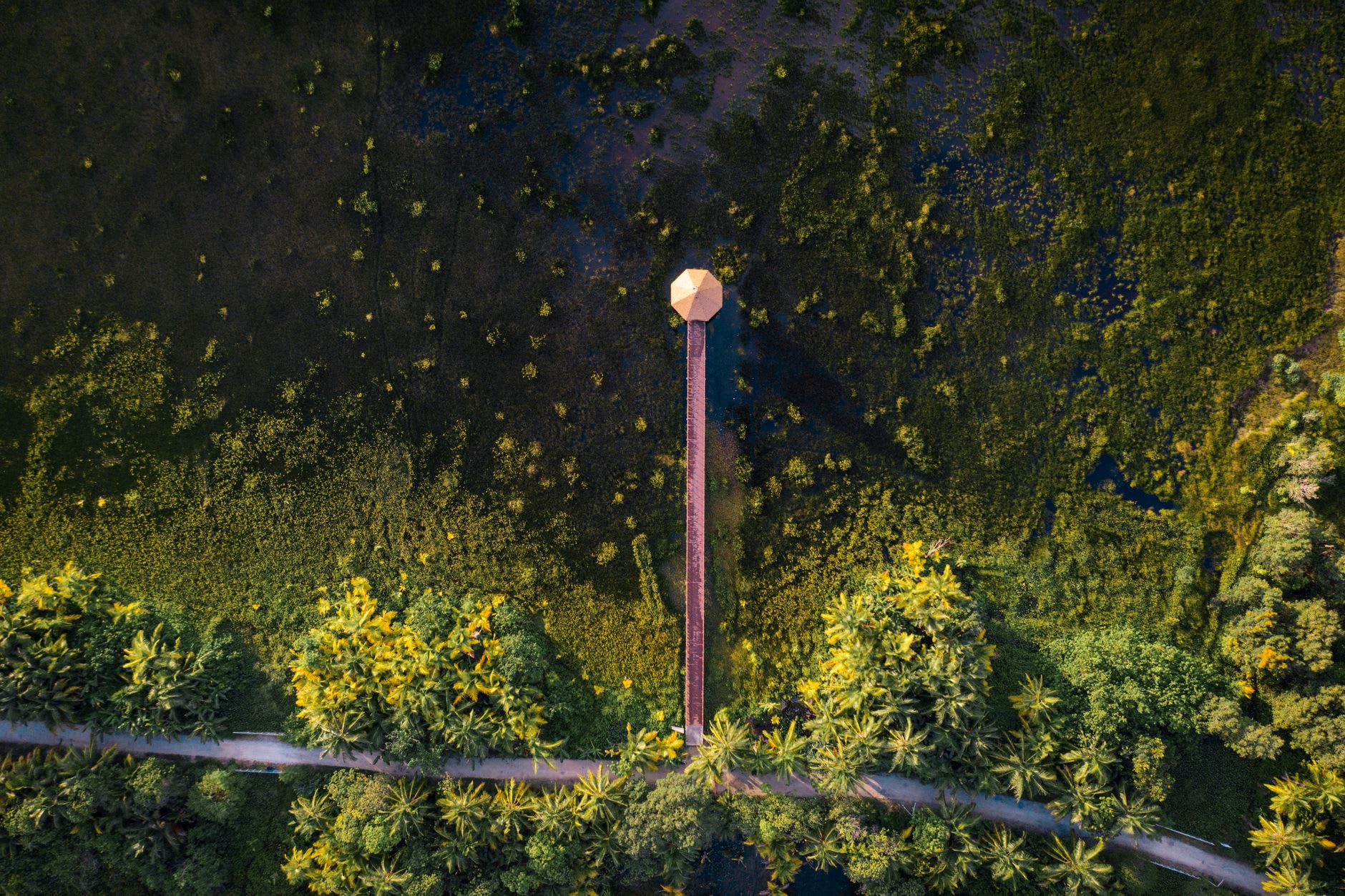
The black water is not dirty — that is the first thing the warden told us, slightly defensively, as if tourists routinely accuse the lake of pollution. It is the opposite: the tannins make it a clean, acidic, low-nutrient environment, the same chemistry that produces the famous black-water rivers of Borneo. Tea, essentially, brewed by ten thousand years of decaying leaves. You can paddle a canoe across it, and the strangest part is the way the bow seems to glide over a void; you can’t see thirty centimetres down, so the boat feels suspended over nothing.
Birds, otters, and the Dusun
This is fundamentally a place for slowness and birds. The peat swamp forest around the lake holds hornbills, the elusive Storm’s stork, kingfishers, and — if you are very lucky and very quiet at dawn — a family of otters that works the shallows along the far shore. The park is also the ancestral land of the Dusun people, and the small heritage centre near the entrance does a decent job of explaining their relationship to this forest, which long predates the boardwalks and the heritage-park signage.
I’ll be honest: there is not a great deal to do here, and that is precisely the appeal after the polished, slightly hushed wealth of Bandar Seri Begawan. You walk the boardwalks, you sit on the island, you watch the light change on the impossibly black water, and you let an hour go by without doing anything productive at all. In a country where everything is immaculate and air-conditioned and slightly unreal, Tasek Merimbun is gloriously, dampishly, mosquito-ishly real.
When to go
Visit on a weekday morning for solitude and the best light on the lake. The drier months from February to April make the boardwalks and trails more pleasant. There is no entrance fee, but there is also almost no infrastructure beyond toilets and a few shelters — bring water, repellent, and your own food. You’ll need a car or a hired driver; there is no public transport to the lake from Tutong town.