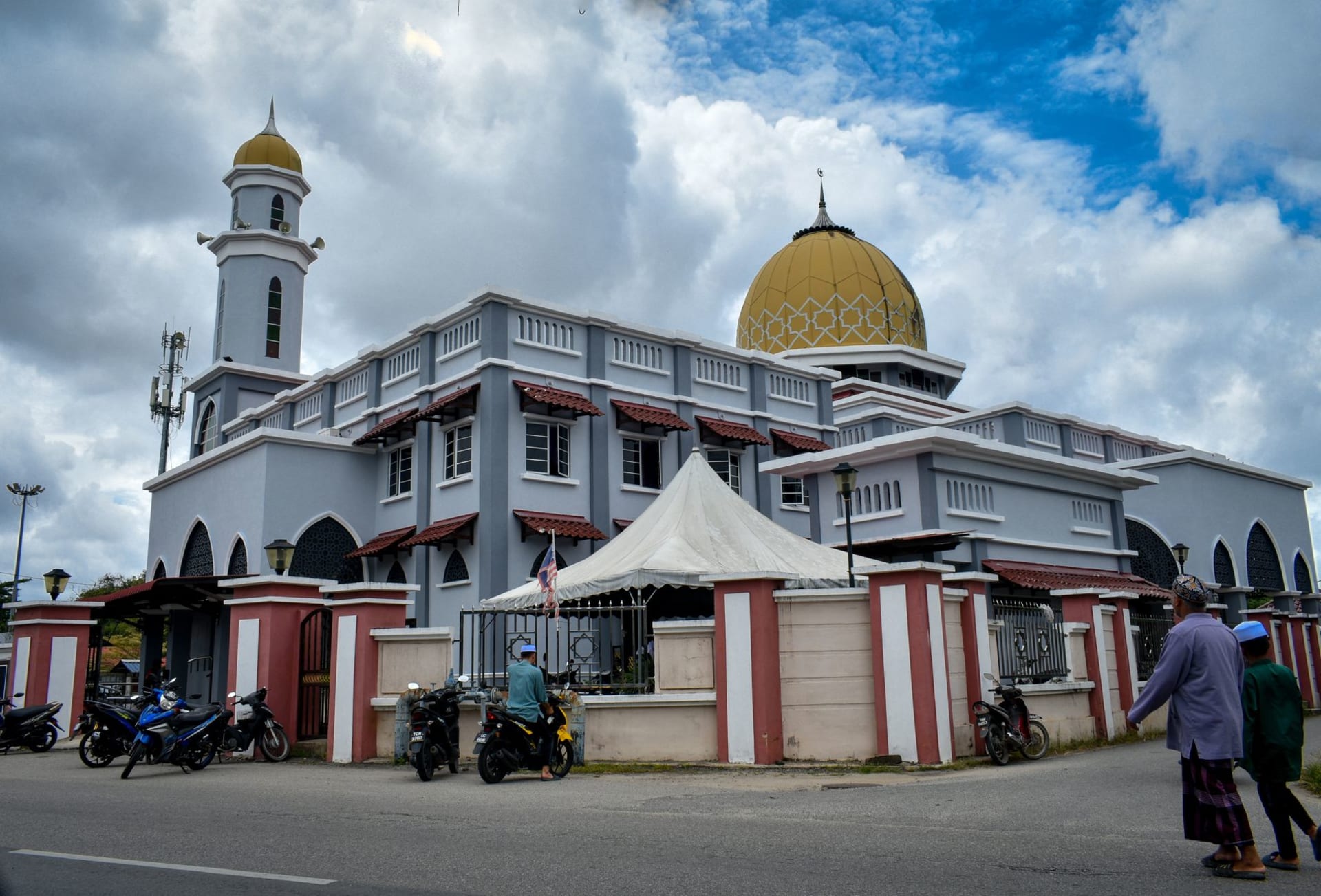
Reaching Bangar requires crossing into the Temburong District, a detour that in itself explains something about Brunei’s geography. Temburong is separated from the rest of Brunei by the Limbang Corridor of Malaysia, which means that until the Pan Borneo Highway bridge opened in 2020, getting here meant either a longboat ride through Malaysian waters or a land crossing through Sarawak. Many Bruneians I spoke to had visited their own national park only once or twice as a result. The new bridge changes everything in theory, though Bangar still feels like a place that is accustomed to being a destination in itself rather than just a staging post.
The town is small enough to walk across in ten minutes: a main street of shophouses, a government administration building, a handful of Chinese-owned kopitiam where the coffee arrives in thick ceramic cups and is poured from heights that would worry most baristas. I stopped at one and ordered the kopi susu and a plate of roti bakar — toast spread with kaya coconut jam — and ate it at a table facing the Temburong River while the longboat drivers gathered at the jetty below, preparing for the morning runs into the national park.

The river at Bangar is wider and slower than it becomes further up, and in the mornings it carries a mist that settles between the water and the jungle hills on the far bank. I watched three longboats load and depart in the time it took me to finish my breakfast. Each one carried a mix of tourists heading for Ulu Temburong and local passengers heading for upriver kampungs — schoolchildren in uniforms, a woman with a basket of vegetables, a man with an outboard motor wrapped in blue plastic. The longboat is the bus route here, and has been for generations.

What I hadn’t expected was the market. Behind the main street on Wednesday mornings, stalls appear selling produce from the upriver kampungs: wild honey in unlabelled jars that the vendor insisted I taste before buying, ferns collected from the jungle that would go into a stir-fry that evening, rattan baskets woven by hand in patterns that varied subtly from village to village. A woman sold dried fish from a newspaper spread on the ground. Everything smelled of the river and the forest and the smoke from the char siu pork turning on a rotisserie nearby.
When to go: Bangar is most useful as the departure point for Ulu Temburong National Park, and logistics are easiest in the dry season (March to October). But the Wednesday market and the kopitiam culture make it worth a morning stop regardless of the season.