Presqu'île de Rhuys
"Ten kilometers long, two coasts, and somehow I never got tired of driving from one to the other."
A slender peninsula guarding the Gulf of Morbihan, where a ducal fortress, oyster villages, and wild Atlantic beaches sit within a ten-minute drive of each other.
The first time I looked at a map of the Rhuys peninsula, I couldn’t believe how small it was — barely 10 km from tip to tip, maybe 2 km across at its widest. Lia laughed at me for being so excited about a strip of land you could bike across in an afternoon. But that’s exactly what makes it strange and wonderful: you can have breakfast looking at flat-calm gulf water and oyster beds, then drive fifteen minutes and be standing in front of Atlantic waves that don’t care how sheltered the other side is. We based ourselves near Sarzeau for four nights and never once felt like we’d run out of peninsula to explore.
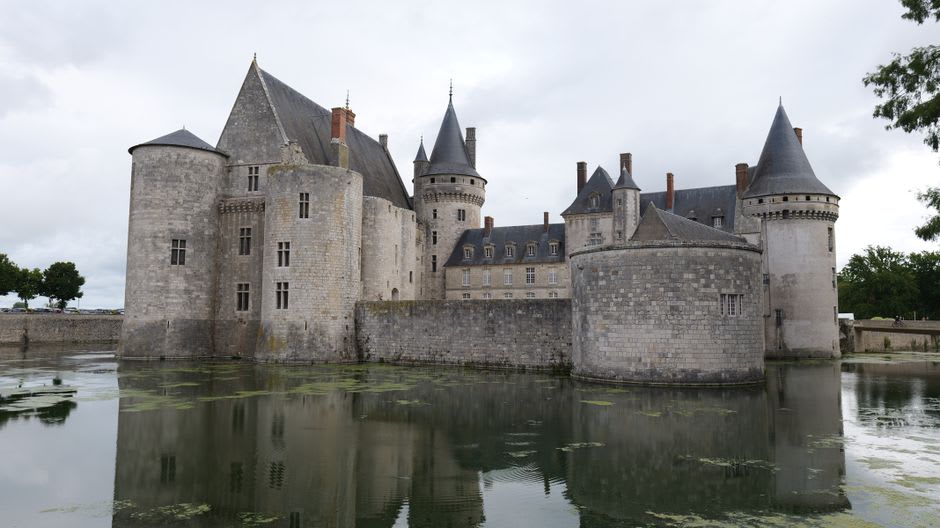
Château de Suscinio was the reason we came in the first place. I’d seen photos of its moat online and assumed they were exaggerated for tourism marketing — they weren’t. This 13th-century fortress, built for the Dukes of Brittany, sits behind a genuine water-filled moat, and after centuries of being left to ruin it’s been restored enough that you can climb the towers and walk the ramparts. I remember standing on the walls with Lia around 6pm, the light going gold, and thinking about how many dukes had probably stood in roughly that same spot arguing about something now completely forgotten.
What surprised me most, though, was how differently the two coasts behave. The gulf-facing north side, up around the marshes, is all calm water and oyster beds — quiet, almost meditative, with herons picking through the shallows. Drive south to the ocean-facing coast and it’s a different world: rugged sandy beaches taking the full force of Atlantic swells, wind whipping sand sideways, surfers in wetsuits even when it didn’t look warm enough to me. We spent one whole afternoon just going back and forth between the two, like flipping a switch on the weather.
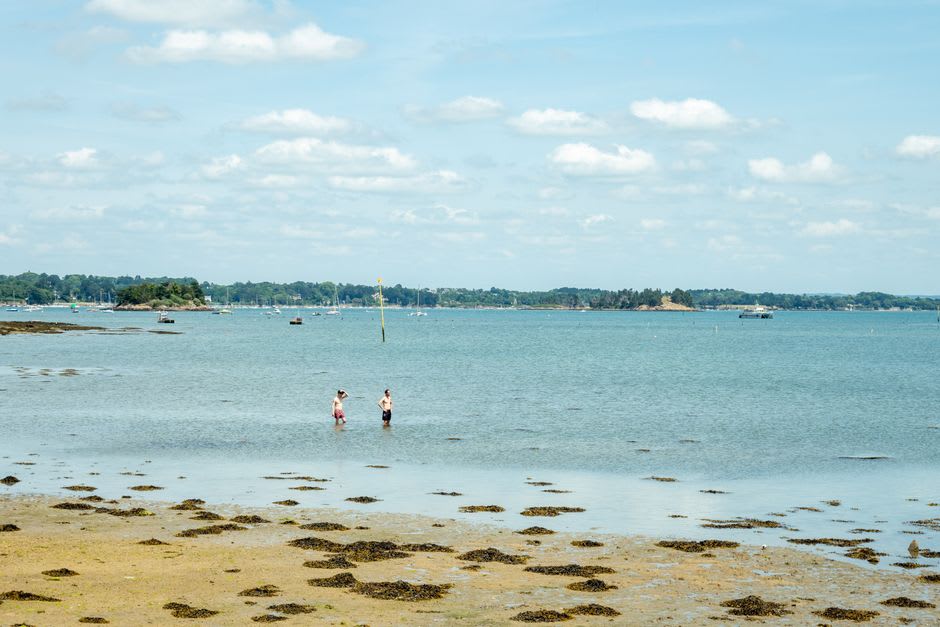
Le Tour du Parc became our favorite stop almost by accident — we pulled off the road following signs for oysters and ended up staying two hours. The village runs on that same maritime economy that’s shaped this coast for centuries, and eating a dozen oysters at a plastic table five meters from where they were farmed, with the salt marshes near Séné stretching out behind us, is one of those meals I still think about. Pierre-the-food-snob was fully satisfied.
When to go: June through September gives you the best mix of beach weather on the wild south coast and peak oyster season on the calm north side — go later in that window if you want the tasting stalls at their busiest.
Keep exploring
More from Brittany
 brittany
 Quimper
Brittany's old capital sits at the meeting of two rivers, where Gothic spires lean slightly and faïence pottery fills every shop window.
Explore brittany
 Roscoff
A small ferry port of golden stone where onion sellers once sailed to England and the sea-cure tradition runs deeper than any spa menu.
Explore brittany
 Saint-Malo
A corsair city sealed inside granite ramparts where the sea doesn't just surround the place — it defines it.
Explore brittany
 Belle-Île-en-Mer
Brittany's largest island rewards the crossing: wild south-coast cliffs, sheltered east-coast beaches, and a port town that Monet painted obsessively.
Explore brittany
 Carnac
Three thousand standing stones arranged in parallel lines across the moorland — and nobody, still, entirely knows why.
Explore brittany
 Concarneau
A working tuna port wrapped around a medieval walled island, where the fish market opens at dawn and the smell of the sea never quite leaves.
Explore