Caribbean
British Virgin Islands
"I came for a week and spent four days just sitting on the water."
I didn’t plan on loving the British Virgin Islands. I’d always filed it under “rich people with boats” — somewhere you went if your idea of a good time was a yacht charter and a rum punch at a beach bar called something like The Soggy Dollar. Which, to be fair, is exactly what it is. But there’s something about being wrong in a place this beautiful that makes the wrongness easier to swallow.
We arrived by ferry from St. Thomas, the kind of short crossing where the water goes from grey-green to something almost impossible — that particular blue-turquoise that looks digitally enhanced until you’re actually in it. Road Town on Tortola is not glamorous. It’s a working port town with traffic, a waterfront strip of boat chandlers and duty-free shops, and the slightly frantic energy of a place that exists to launch people toward the prettier islands. I liked it immediately. Ate a roti from a spot with no name visible from the street, just a handwritten sign and a woman who clearly wasn’t interested in making it easy for tourists to find her. I went back three times.
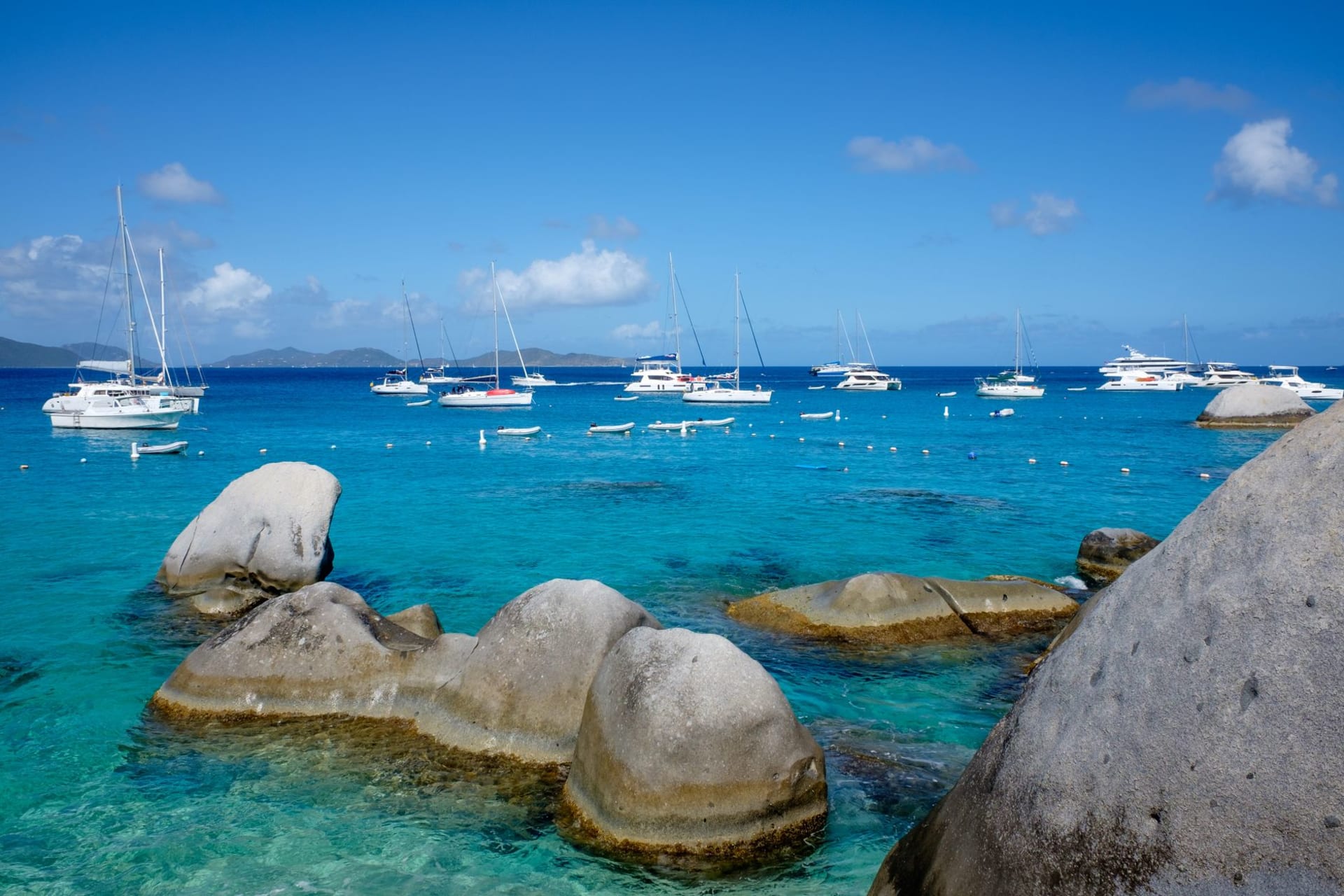
The BVI operates at a pace governed by the wind and tide, and you either surrender to it or you fight it and lose. The real draw is the sailing — the islands are close enough together that you can cover three or four anchorages in a day, and the water between them is shallow enough and sheltered enough to feel genuinely safe even for someone with limited experience. Norman Island, supposedly the inspiration for Treasure Island, has caves you can snorkel into at dusk when the light turns everything amber. Jost Van Dyke is a single-road island where the main settlement, Great Harbour, feels like a village that agreed collectively to slow down about fifty years ago and never reversed the decision. The Baths on Virgin Gorda — enormous granite boulders tumbled into grottos and pools — are crowded by mid-morning, but if you arrive by dinghy at first light you’ll have them nearly to yourself, and the quality of silence inside those rock chambers at dawn is something I’m not sure I can describe accurately.
When to go: December through April is the classic season — reliably dry, trade winds steady, water flat enough for easy sailing. I went in late November and caught the tail end of the quiet period: a few clouds, one brief afternoon squall, and substantially fewer charter boats. May through July can work if you’re not sailing; hurricane season peaks August through October and I’d avoid it.
What most guides get wrong: They sell the BVI as a luxury destination, which it can be, but they miss the fact that provisioning a bareboat and cooking your own meals on anchor is both cheaper and better than any resort and leaves you free in a way that a beach hotel categorically cannot. The food narrative also suffers — guides focus on the beach bars and skip the local lunch spots in Road Town and East End where the fish is fresher and the bill is a fraction. The BVI is genuinely remote in feel despite being forty minutes from a major American hub; that gap between accessibility and isolation is the whole point, and most writing about it never quite catches it.