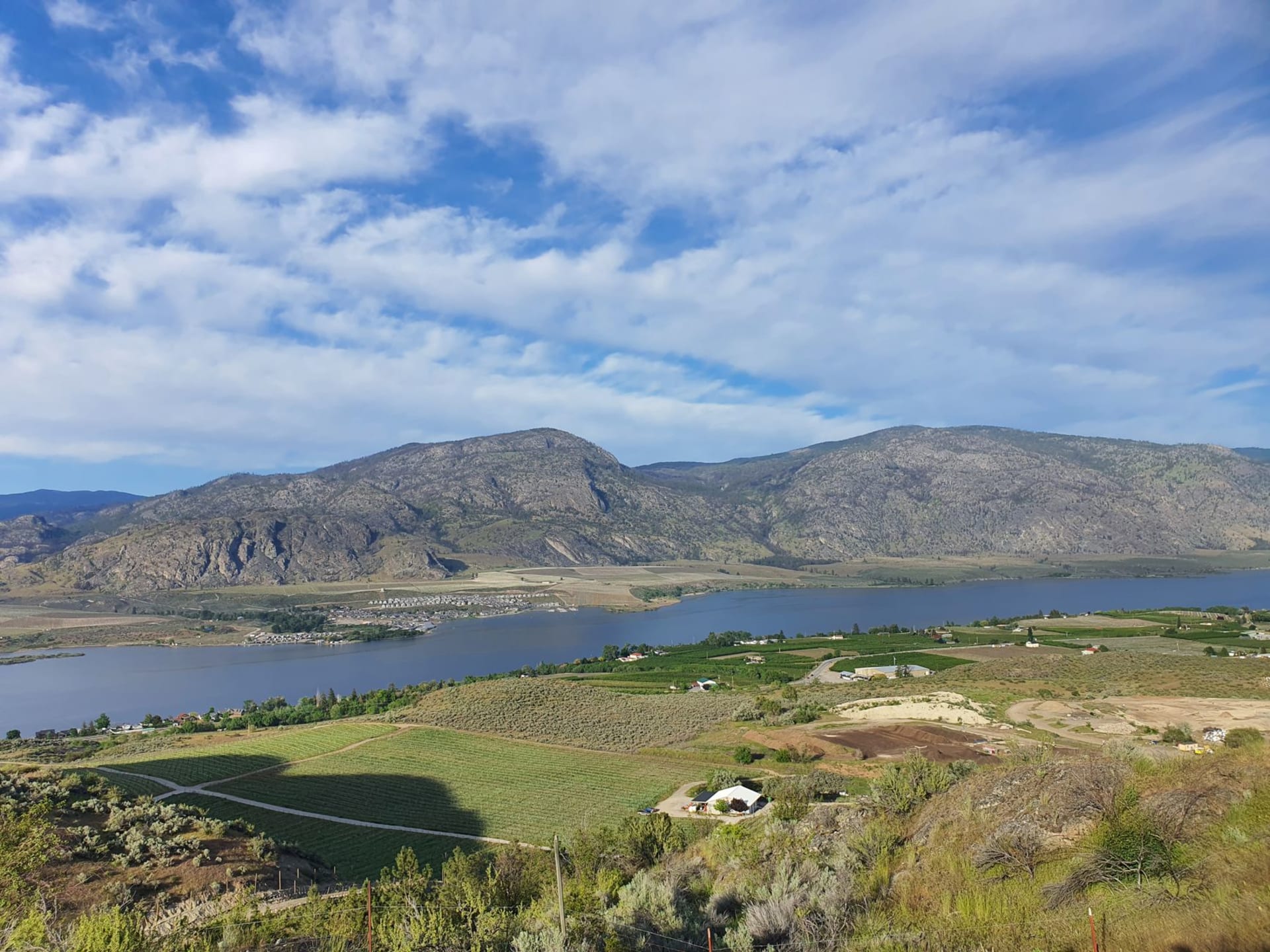
Okanagan Valley
"I ate a peach standing in an orchard in the Okanagan and briefly reconsidered every peach I'd eaten before it."
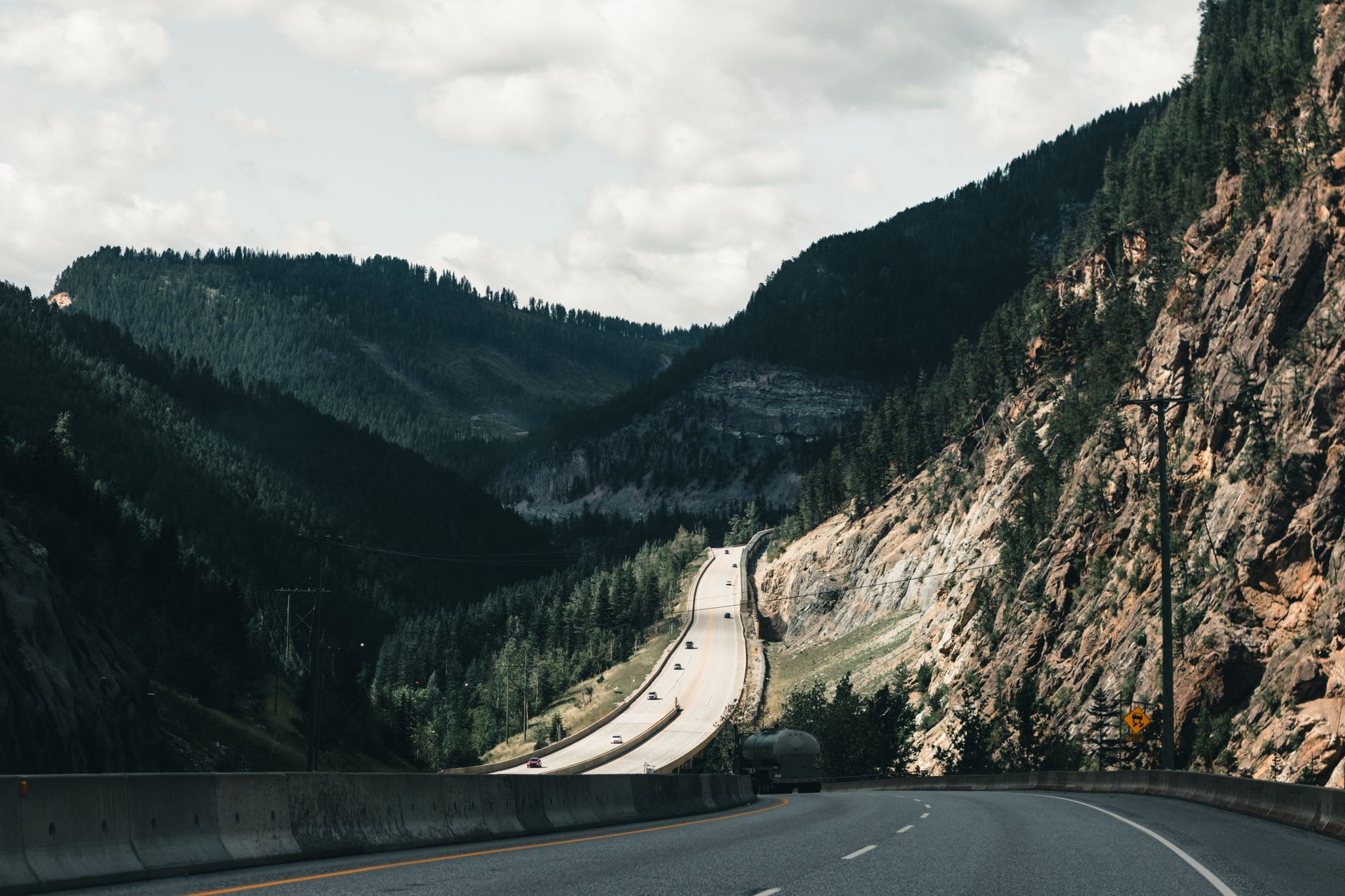
The Okanagan arrives with disorienting speed from the west. You drive through the Coquihalla Pass in rain, the firs closing in on both sides, and then the mountains drop away and suddenly you are in something that looks and feels entirely different — dry hills, ponderosa pines spaced apart enough that you can see the pale grass between them, and Okanagan Lake stretched out in a long blue crescent below. After the wet green of the coast, the shock of it is genuine. It is high desert in the way that some high deserts are beautiful: not the brutal flatness of the Sonoran but something more intimate, more Italian-hill-country than you’d expect this far north. The heat in July is real — thirty-five degrees in Kelowna is not rare — and the air smells of dry pine and hot dust.
The stone fruit is the reason the valley exists — or rather, it’s the reason people figured out the valley was worth staying in. The orchards were planted by early settlers who noticed that the same continental climate that bakes the hills in summer and freezes them in winter produces apricots, cherries, peaches, and plums of bewildering intensity. I stopped at a roadside stand near Summerland in late August and bought a paper bag of Redhaven peaches from a woman who told me to eat them today, not tomorrow. She was right. The flesh was dense and warm from the sun, the juice running down my wrist, and there was nothing polite or dainty about eating one — it required full commitment, both hands. The cherries come earlier, mid-July for the Bing cherries in particular, and the harvest speed means that the best ones sell at the roadside stands in the morning and are gone by afternoon. You have to show up early and buy more than you think you’ll eat.
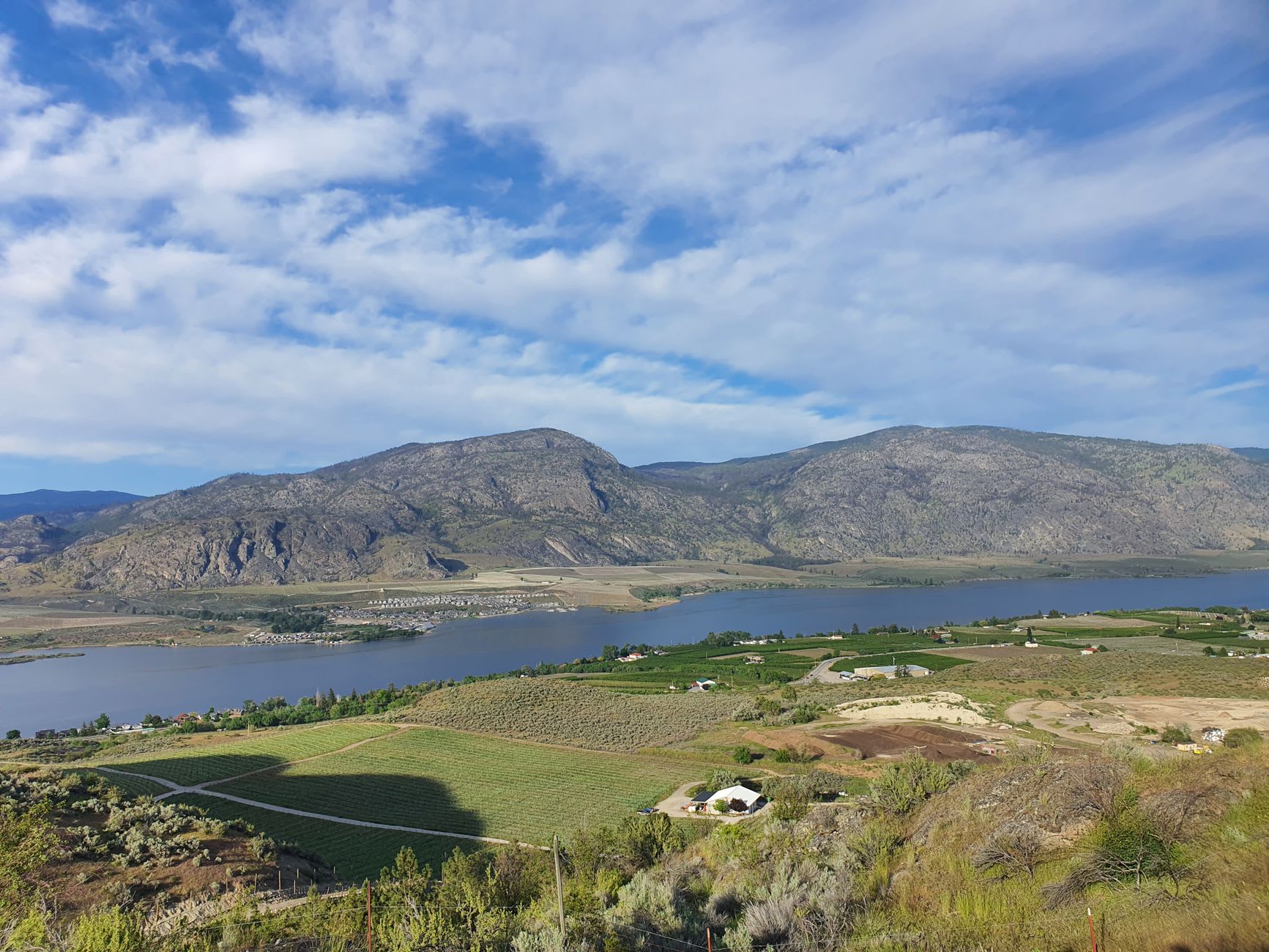
The wine scene has matured in a way that still surprises people who associate Canadian wine with the sweet stuff. The Naramata Bench, a narrow strip of benchland on the east side of the lake above Penticton, produces Pinot Noir and Chardonnay that bear real comparison to the better Burgundies. The Oliver and Osoyoos area at the valley’s south end — where the climate gets hot enough to grow Syrah and Merlot without apology — makes red wines that have found their own idiom. I spent a morning doing a loose self-guided tour on the Naramata Bench, cycling between wineries on a road that runs between vines above and the lake below, stopping for pours of Gamay and a glass of sparkling pét-nat at a place with a terrace and no pretension. The tasting fees are modest, the producers mostly accessible, and nobody is performing exclusivity.
Kelowna, the valley’s largest city, has a downtown that rewards walking: the waterfront promenade along the lake, the cultural district with its rotating gallery installations, the Pandosy Village neighbourhood’s independent restaurants and coffee spots. But the valley rewards slowing down more than it rewards covering ground. Drive the back roads between Penticton and Naramata in late afternoon, when the light hits the lake at an angle that turns everything amber and the vineyards cast long shadows. Pull over whenever.
When to go: Mid-July through August is cherry and peach season, hot weather, and the wineries at full operation — busy but justifiably so. September brings the wine harvest, cooler evenings, and the Okanagan Wine Festival. October is underrated: the orchards emptying, the tourists thinned, the light going gold and low over the lake. The valley gets genuine winter — cold, sometimes snowy — and Big White and Silver Star ski resorts operate, but the essential Okanagan is a warm-season proposition.