Praia do Forte
"A beach town that decided, decades ago, that the turtles mattered as much as the tourists."
A former fishing village turned eco-conscious resort town on the Coconut Coast, built around Projeto Tamar's sea turtle conservation work and some of Bahia's most walkable, low-rise beach charm.
Praia do Forte sits an hour and a half north of Salvador on the aptly named Coconut Coast, and it took about twenty minutes there for me to notice what was missing: no high-rises, no beachfront towers casting shade across the sand by 3pm. The village capped its own growth deliberately, and it shows in every low white building along the main sandy lane, Alameda do Sol, where I ate an acarajé from a street stall while Lia negotiated (badly) over a hammock she didn’t need.
Projeto Tamar
The reason many Brazilians make the trip isn’t the beach — it’s Projeto Tamar, a marine conservation project founded in 1980 that turned this coastline from a place where sea turtle eggs were routinely poached into one of the most successful turtle conservation programs in the world. The visitor center sits right on the beach with pools where you can watch juvenile hawksbills, loggerheads, and green turtles at close range, and a small museum walks through five species that nest along this stretch of Bahia between September and March. It’s the rare conservation-tourism setup that feels earned rather than performative — the project came first, the visitors came later.
The Reef Pools and the Old Castelo
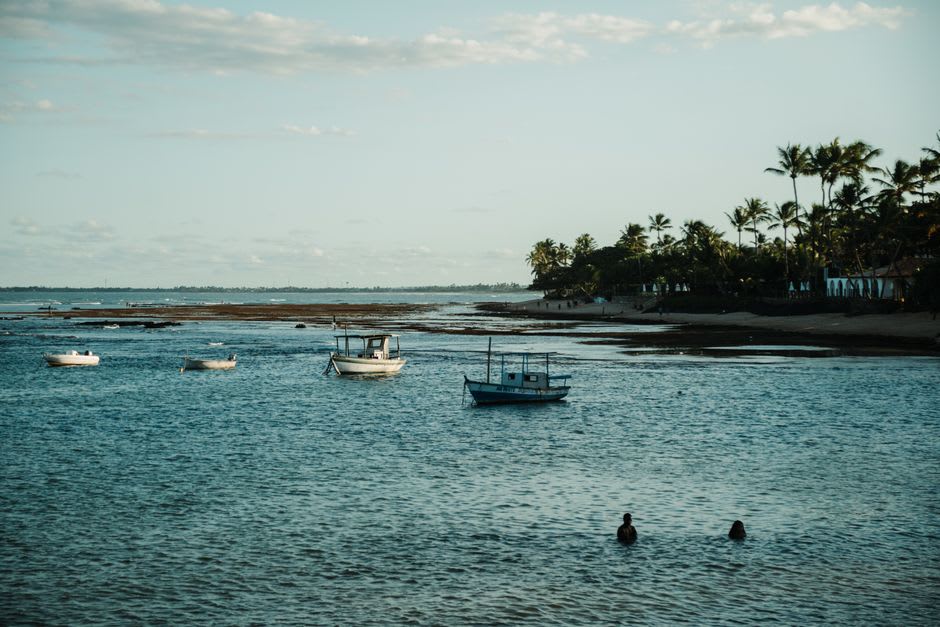
At low tide, natural reef formations trap warm, shallow pools along the beach — some deep enough to swim in, calm enough that families let toddlers loose in them without worry. We spent an entire lazy afternoon moving between pools like they were rooms in a house, the Atlantic swell breaking harmlessly against the outer reef line a hundred meters out. Above the village, the ruins of Garcia D’Ávila’s 16th-century castelo — one of the oldest colonial structures in Brazil — stand in slow-motion collapse amid grazing cattle, a strange and quiet contrast to the postcard beach below.
An Easy Rhythm
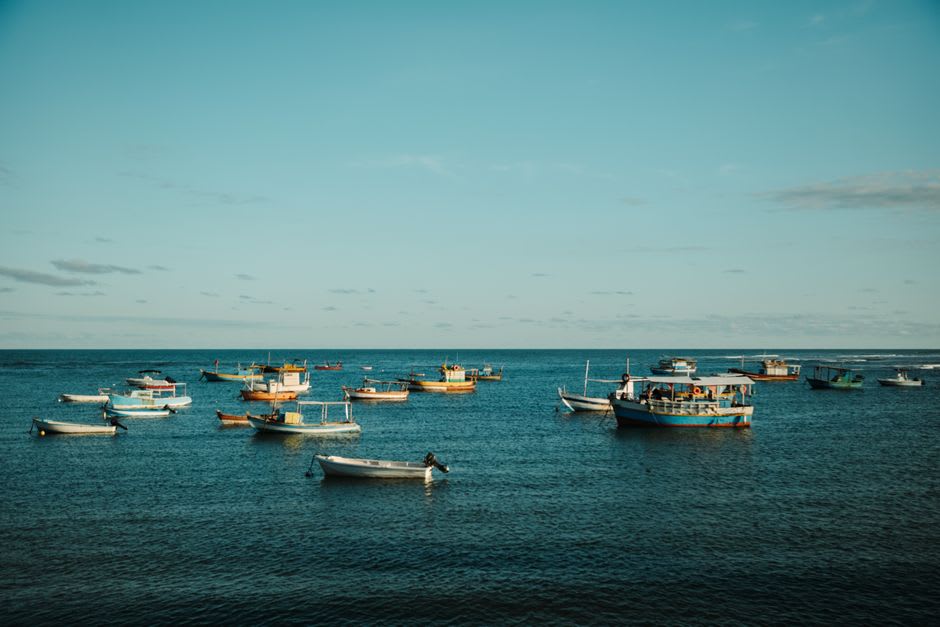
What stayed with me most was how unhurried the whole village felt without being sleepy. Capoeira circles form spontaneously near the church square most evenings, restaurants serve moqueca in clay pots at a pace that assumes you have nowhere else to be, and the sand streets mean nobody’s engine noise interrupts the sound of waves. It’s an easier, gentler introduction to Bahia than Salvador’s intensity, and a good decompression stop either before or after it.
When to go: September through March overlaps with turtle nesting season, when Projeto Tamar’s work is most visible. June through August is drier and cooler, better for the reef pools without the peak holiday crowds.
Keep exploring
More from Brazil
 brazil
 Praia do Francês
A laid-back Alagoas beach town near Maceió where reef pools form at low tide and the surf breaks draw a looser, younger crowd than its capital neighbor.
Explore brazil
 Praia do Rosa
Santa Catarina's iconic surf village between two crescent beaches, famous for right whales calving offshore each winter.
Explore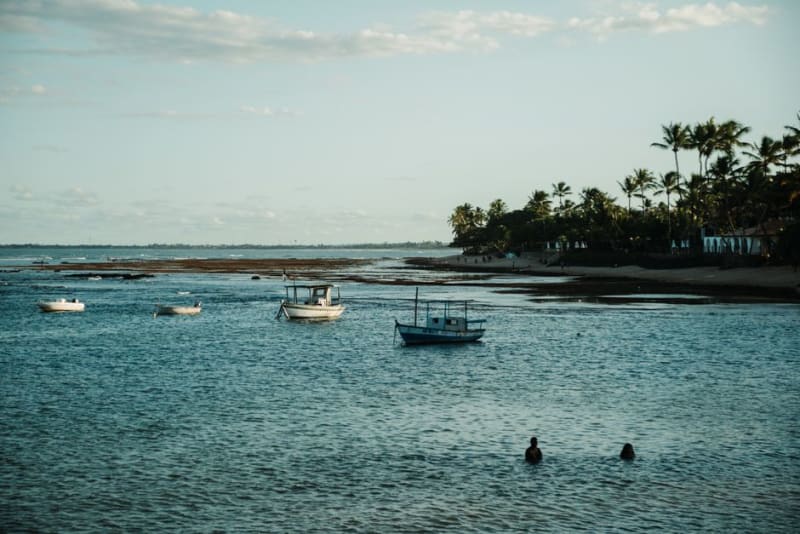 brazil
 Praia dos Carneiros
A palm-lined Pernambuco beach with reef pools and a tiny whitewashed chapel that stands ankle-deep in the sea at high tide.
Explore brazil
 Presidente Figueiredo
The 'land of waterfalls,' a jungle town outside Manaus with more cachoeiras than anyone could visit in a single trip.
Explore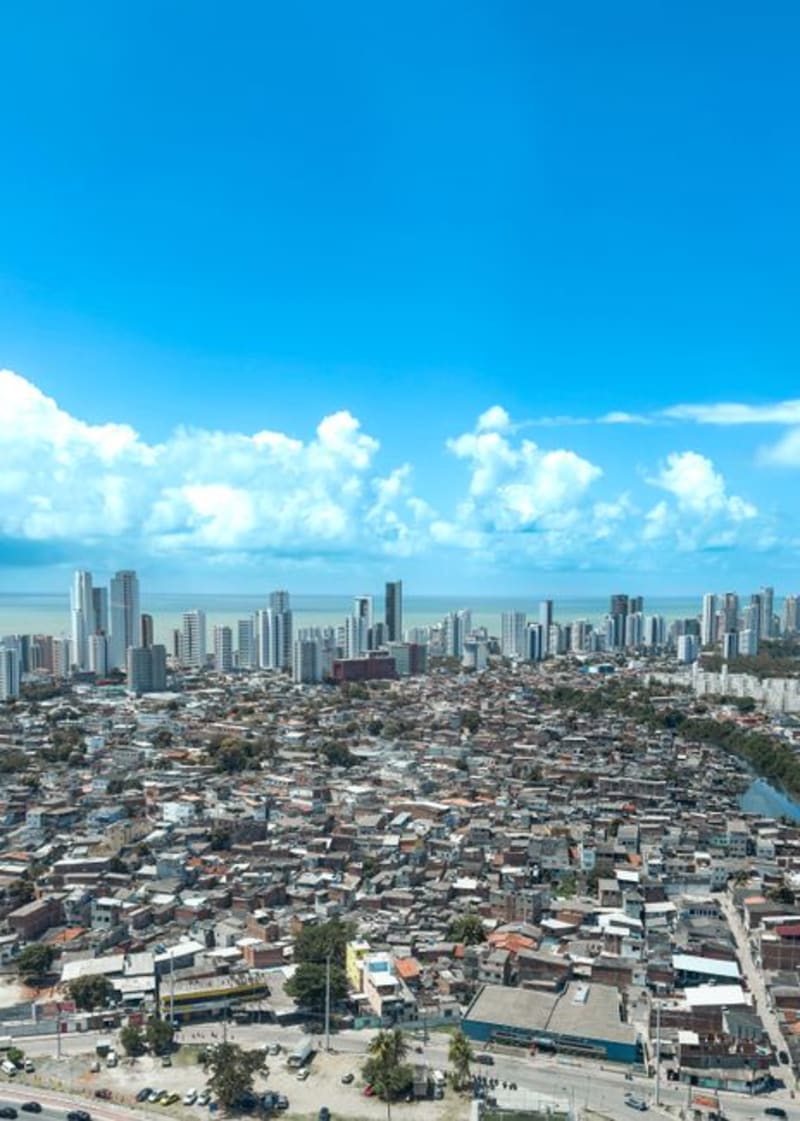 brazil
 Recife
Pernambuco's capital, laced with rivers and bridges, where forró spills out of bars and the old sugar-port streets still smell of the Atlantic.
Explore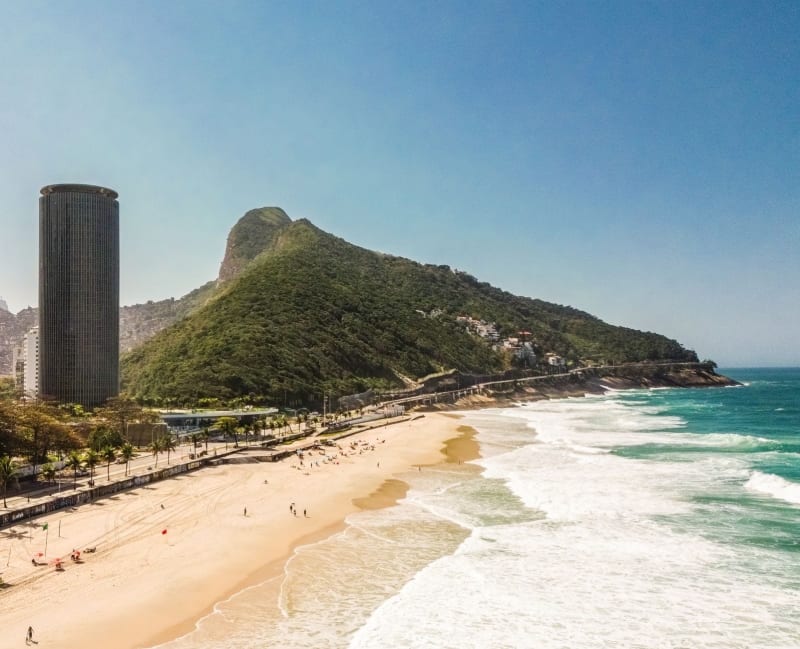 brazil
 Rio de Janeiro Beaches
From Ipanema to Barra, Rio's beaches are where samba, volleyball, and the entire social order plays out daily.
Explore