Porto Seguro
"This is where Brazil began, officially, and where it now parties like it never stopped celebrating."
Brazil's 'discovery coast,' where the country's 1500 landing site coexists with a loud, unapologetic beach-party town built on lambada blocks and all-inclusive resorts.
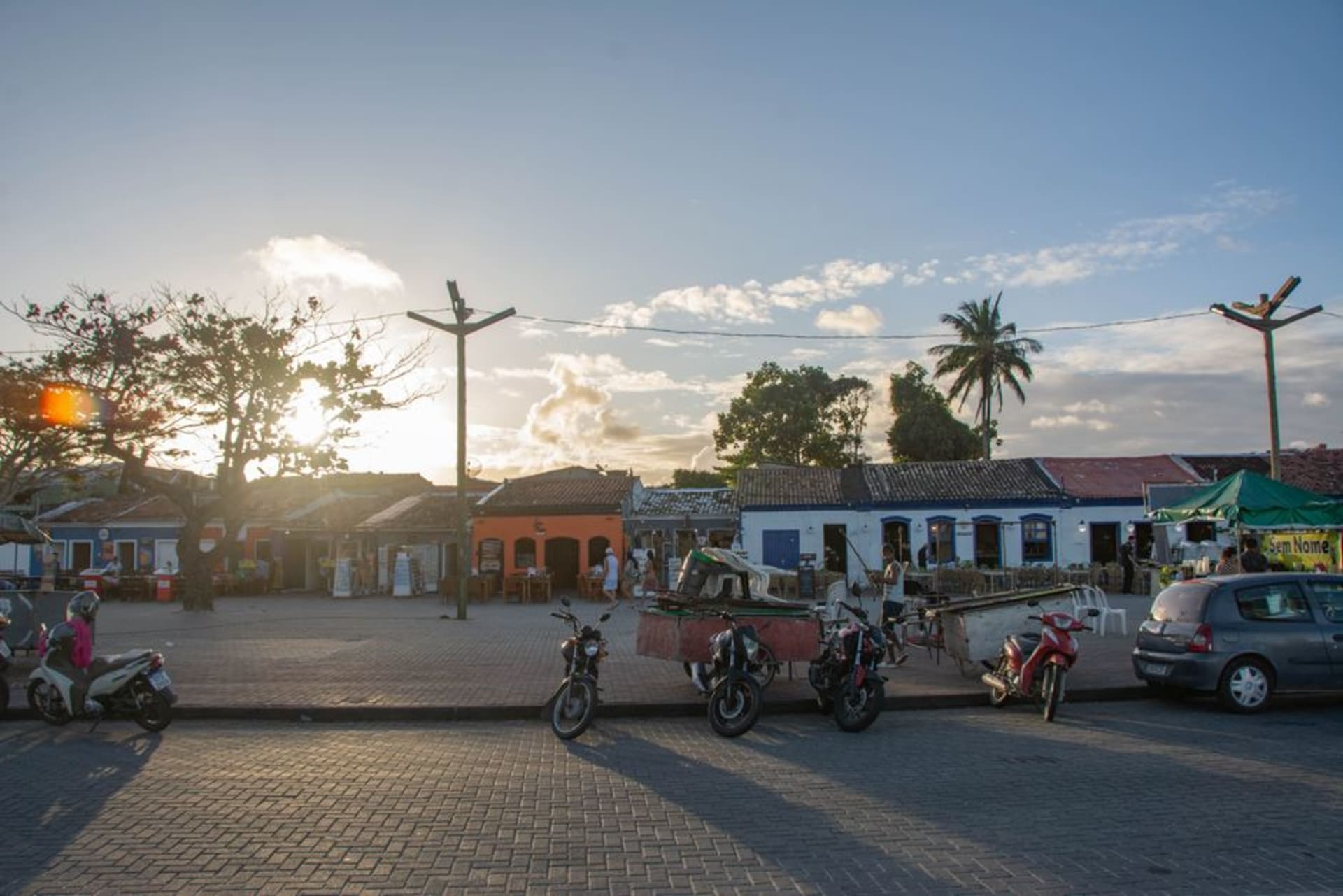
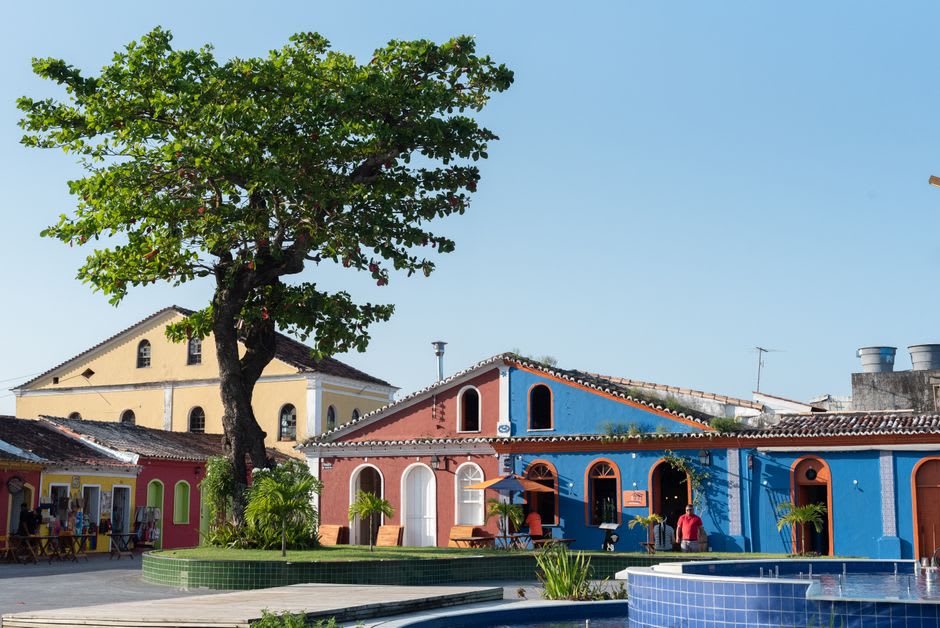
Porto Seguro carries a strange double identity that took me a full day to reconcile. Up on the bluff, the Cidade Histórica preserves the exact stretch of coast where Pedro Álvares Cabral’s fleet made landfall in April 1500 — whitewashed colonial churches, a small fort, a marker commemorating a moment that rewired an entire continent’s future. Down on the beachfront strip, Avenida Portugal runs a completely different program: lambada bars, blaring axé music, and a nightly parade of tourists on rented buggies. Both versions are honestly Brazilian. Neither cancels the other out.
The Cidade Histórica
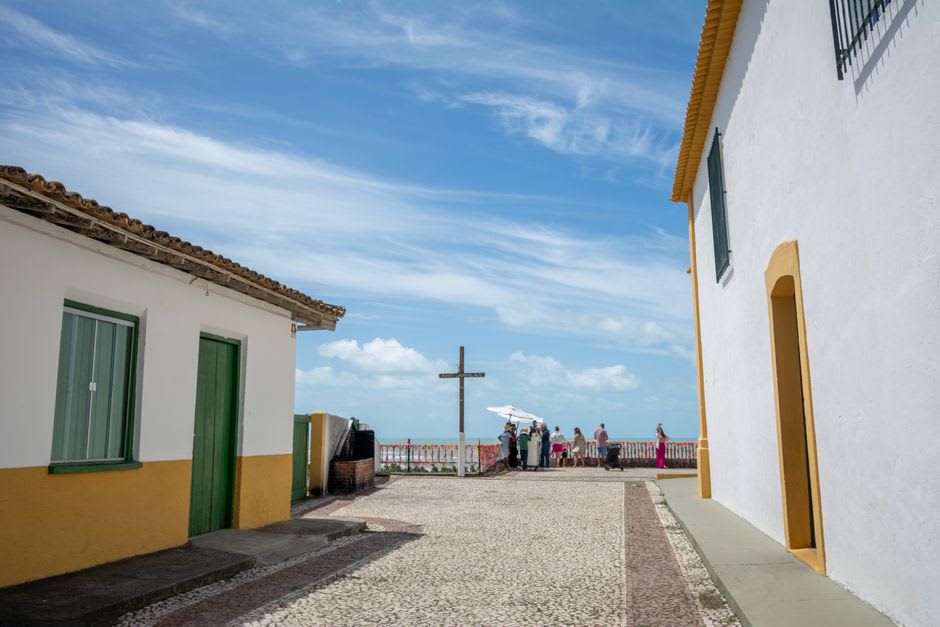
The old town sits apart from the beach chaos, up on a hill reached by a short funicular or a longer walk, and the quiet up there feels almost deliberate after the noise below. Igreja de Nossa Senhora da Pena and the ruins of the old Jesuit college date to the earliest years of Portuguese settlement, and a small marco — a stone pillar the Portuguese planted to claim the land — still stands near the cliff edge. I stood there longer than the plaque probably warranted, trying to picture the reversal: a coast this green and this warm, seen for the first time by people who had crossed an ocean not knowing what they’d find.
Passarela do Álcool and the Party Machine
Back at sea level, the town’s real economic engine runs on package tourism from São Paulo and Minas Gerais, and Avenida Portugal — nicknamed Passarela do Álcool with characteristic bluntness — turns into a genuinely fun, genuinely loud strip after dark. Lia and I let ourselves get pulled into an axé cover band’s set outside a bar with a name I’ve forgotten and a caipirinha list I haven’t. It’s not subtle tourism, and it isn’t trying to be. If you want Bahia’s party reputation delivered without irony, this is where it lives most completely.
A Base for the Discovery Coast
Porto Seguro’s real usefulness is as a hub — ferries and buses radiate out to Arraial d’Ajuda, Trancoso, and the beaches further south, and the airport makes it the easiest entry point to this whole stretch of coast. We used it as exactly that: two nights to decompress, eat well, and see the historic quarter, before catching the ferry south toward quieter water.
When to go: July and December through February are peak Brazilian holiday season and the loudest by far. April, May, and September offer warm weather with a fraction of the crowd, and a calmer read on the historic quarter.
Keep exploring
More from Brazil
 brazil
 Praia do Forte
A former fishing village turned eco-conscious resort town on the Coconut Coast, built around Projeto Tamar's sea turtle conservation work and some of Bahia's most walkable, low-rise beach charm.
Explore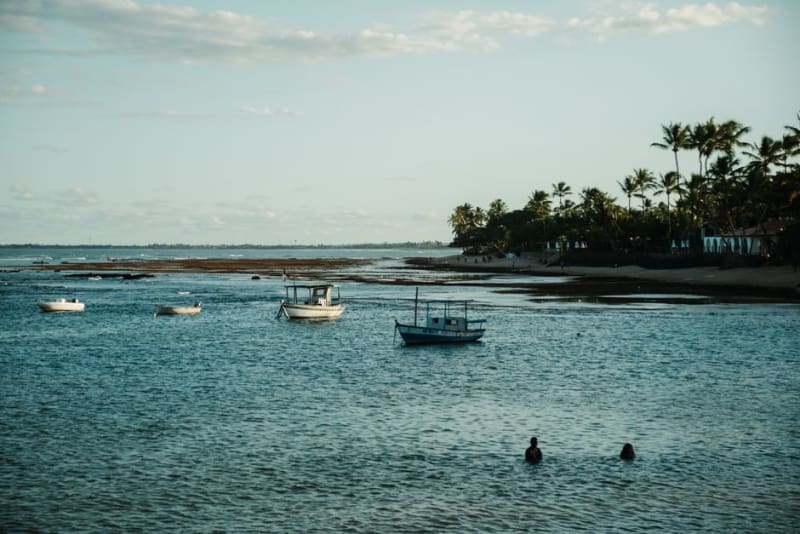 brazil
 Praia do Francês
A laid-back Alagoas beach town near Maceió where reef pools form at low tide and the surf breaks draw a looser, younger crowd than its capital neighbor.
Explore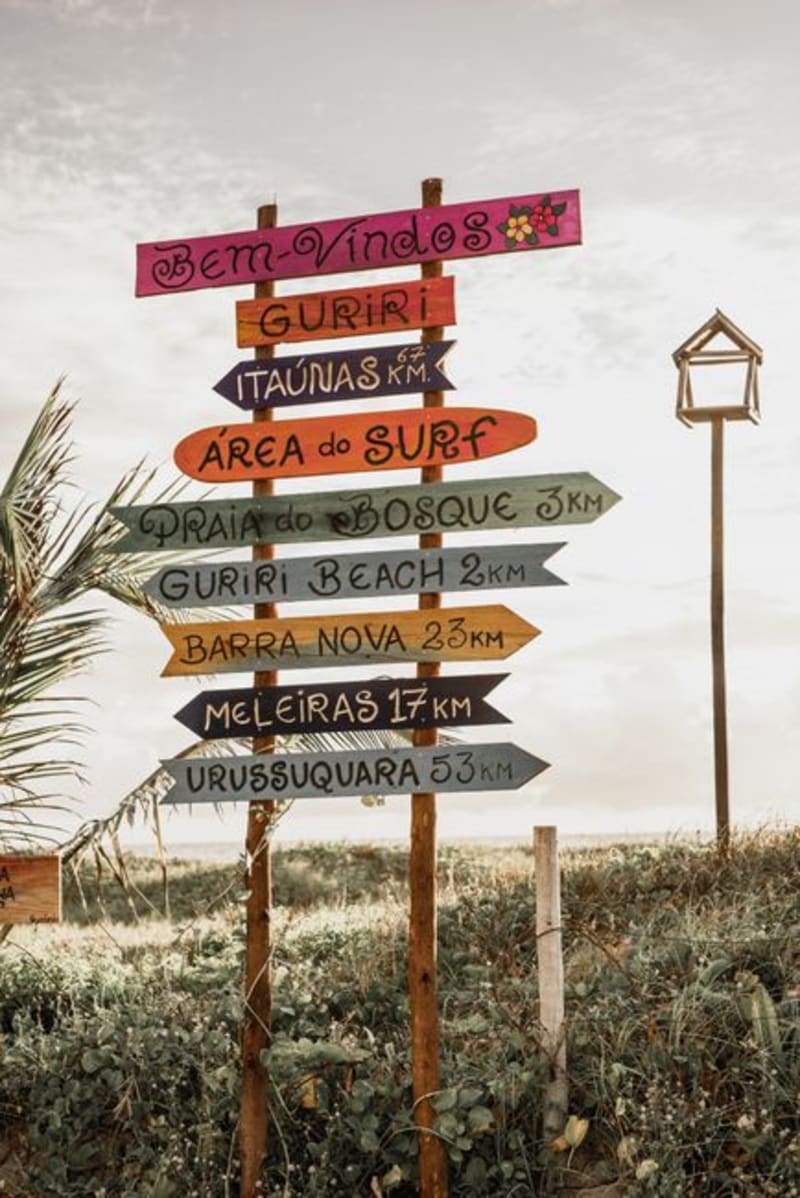 brazil
 Praia do Rosa
Santa Catarina's iconic surf village between two crescent beaches, famous for right whales calving offshore each winter.
Explore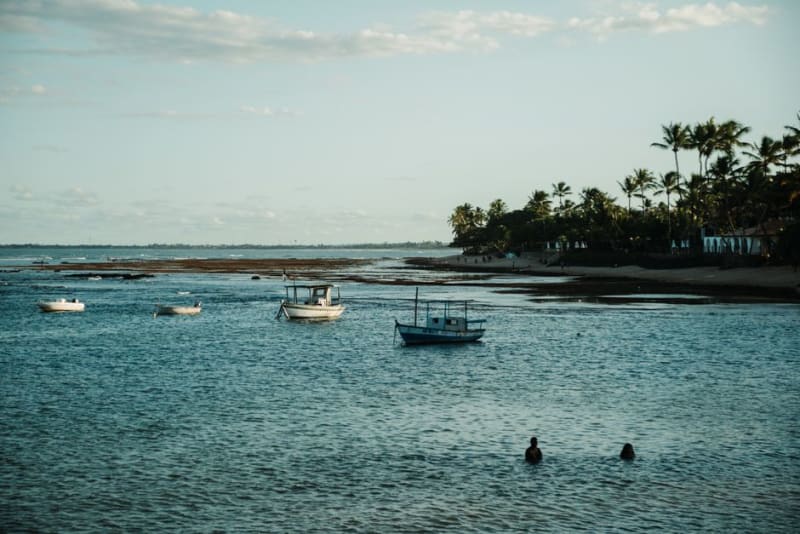 brazil
 Praia dos Carneiros
A palm-lined Pernambuco beach with reef pools and a tiny whitewashed chapel that stands ankle-deep in the sea at high tide.
Explore brazil
 Presidente Figueiredo
The 'land of waterfalls,' a jungle town outside Manaus with more cachoeiras than anyone could visit in a single trip.
Explore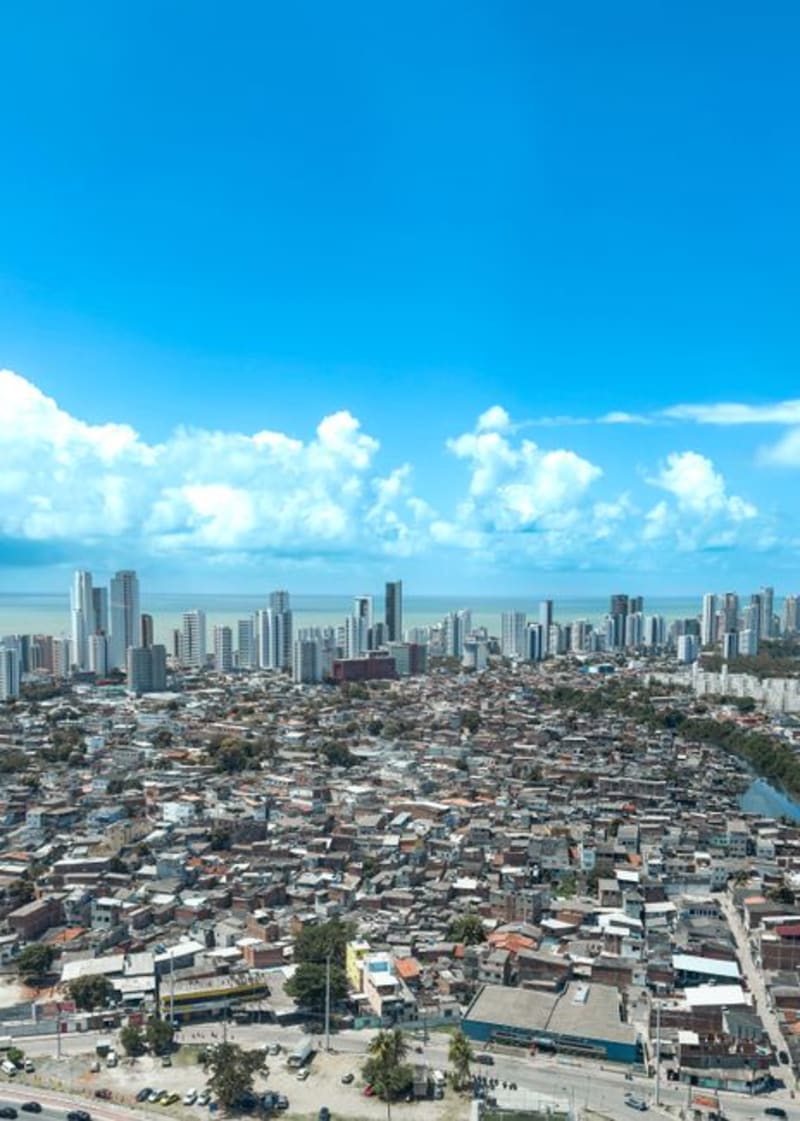 brazil
 Recife
Pernambuco's capital, laced with rivers and bridges, where forró spills out of bars and the old sugar-port streets still smell of the Atlantic.
Explore