Pipa
"I went to Pipa to see dolphins and stayed a week longer for reasons that had nothing to do with dolphins."
A bohemian cliff-top surf town in Rio Grande do Norte where dolphins fill the bay every morning and the nightlife never quite drowns out the beach.

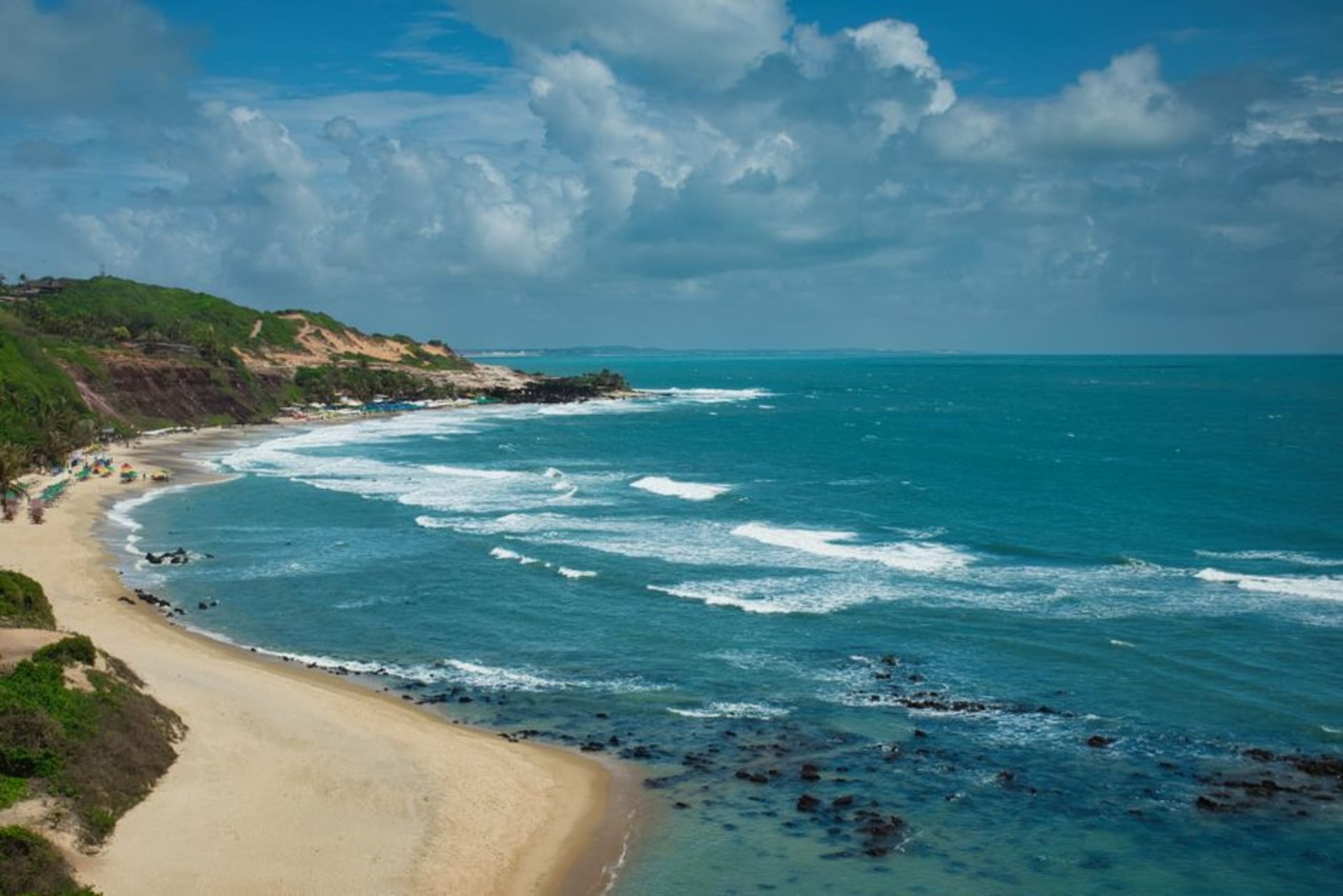
Pipa has the reputation of a hippie beach town that got discovered, and it wears that reputation honestly. An hour and a half south of Natal, the town sits on cliffs above a series of beaches connected at low tide, and the main strip — Avenida Baía dos Golfinhos — runs a tight few hundred meters of restaurants, bars, surf shops, and stalls selling the kind of jewelry and sarongs that mark every beach town of this type, but the crowd here still skews toward independent travelers and long-stayers rather than package tourists, and the town’s character holds up under that pressure better than most.
The dolphins are real. Baía dos Golfinhos, the bay just south of the main beaches, hosts a resident population of spinner dolphins that come into the shallow water most mornings to rest and socialize, and swimming or snorkeling among them — while respecting the roped-off no-swim zones designed to protect them — is genuinely one of the better wildlife encounters I’ve had on this coast. I went out at seven in the morning with a small guided group, the water still cool, and watched a pod of maybe twenty dolphins moving in loose formation just beneath the surface, occasionally breaking to leap. Nobody in the group said much afterward. There wasn’t much to add.

Praia do Amor is the beach most people photograph — a crescent of sand below dramatic red-clay cliffs, reached by a set of stairs down from the clifftop path, with a small sea stack offshore that has become the unofficial symbol of the town. It gets crowded by mid-morning, especially in high season, but arriving early or staying until the light goes gold in the late afternoon thins the crowd enough to actually enjoy it.

The clifftop walkway, the Caminho das Falésias, links several of the beaches — Praia do Amor, Praia do Madeiro, Praia do Curral — along a path with ocean views the entire way, and it’s a better way to see the coastline than any single beach visit. Praia do Madeiro in particular has decent surf breaks for beginners and intermediate surfers, and I spent two mornings failing to stand up on a rented board while Lia, infuriatingly, got it on her second try.
At night, Pipa’s main street turns into a slow-moving crowd of caipirinha stands, live music spilling out of open-air bars, and forró classes that anyone can wander into, which is how I ended up, after several caipirinhas, attempting forró with a level of confidence entirely unsupported by ability.
When to go: September through March for the driest weather and calmest seas for dolphin-watching and swimming. School holidays (January, July, Brazilian summer) bring the biggest crowds; April to June is quieter with occasional rain but still warm. Early morning is the only reliable time to see the dolphins.
Keep exploring
More from Brazil
 brazil
 Pirenópolis
A cobblestoned 18th-century mining town in the hills of Goiás, ringed by waterfalls and increasingly discovered by São Paulo weekenders.
Explore brazil
 Porto Alegre
Rio Grande do Sul's riverside capital — gaucho pride, sunset over the Guaíba, and the best churrasco culture in Brazil, unapologetically.
Explore brazil
 Porto Seguro
Brazil's 'discovery coast,' where the country's 1500 landing site coexists with a loud, unapologetic beach-party town built on lambada blocks and all-inclusive resorts.
Explore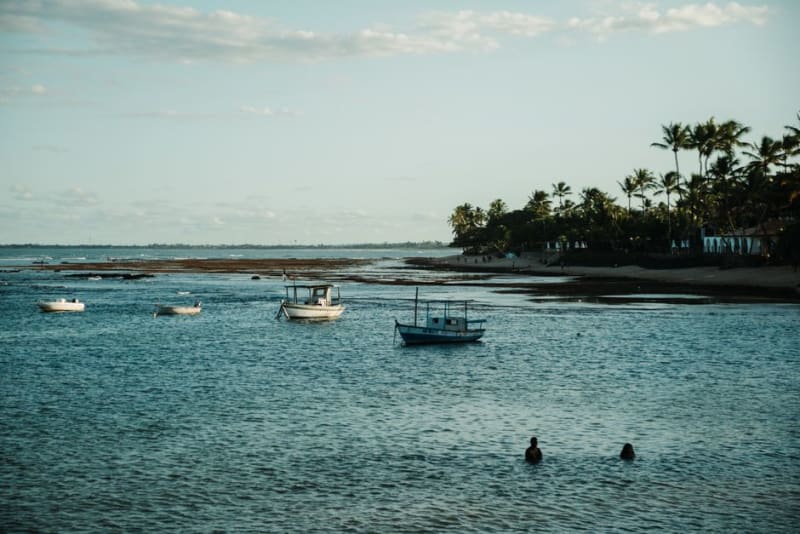 brazil
 Praia do Forte
A former fishing village turned eco-conscious resort town on the Coconut Coast, built around Projeto Tamar's sea turtle conservation work and some of Bahia's most walkable, low-rise beach charm.
Explore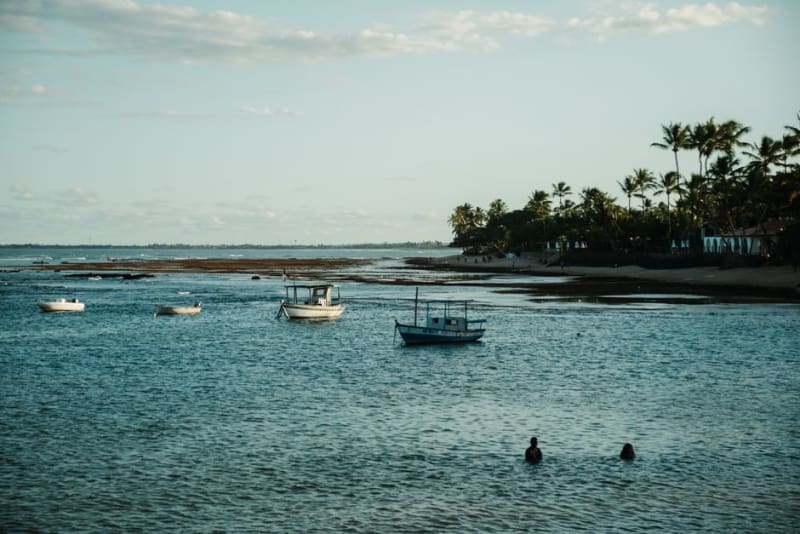 brazil
 Praia do Francês
A laid-back Alagoas beach town near Maceió where reef pools form at low tide and the surf breaks draw a looser, younger crowd than its capital neighbor.
Explore brazil
 Praia do Rosa
Santa Catarina's iconic surf village between two crescent beaches, famous for right whales calving offshore each winter.
Explore