
A pilgrimage town in Minas Gerais built around twelve soapstone prophets carved by a man who lost the use of his hands and kept working anyway.
Congonhas is not a town you linger in for days. It is a town you visit for a single afternoon, for a single site, and then find yourself thinking about for years afterward — which is a strange kind of value that no length-of-stay metric can capture.
Twelve Prophets, One Staircase
The Basílica do Bom Jesus de Matosinhos sits on a hill above the modern town, and the reason people make the trip from Belo Horizonte or Ouro Preto is the staircase leading up to it: twelve life-sized soapstone statues of Old Testament prophets, carved by Antônio Francisco Lisboa — Aleijadinho — in the final years of his life, after the disease that crippled his hands had progressed to the point that he reportedly had tools strapped to what remained of his fingers. Whether that detail is fact or legend, the sculptures themselves settle the argument about his skill: expressive, wind-swept robes, faces caught mid-gesture, an intensity that has survived two and a half centuries of weather.
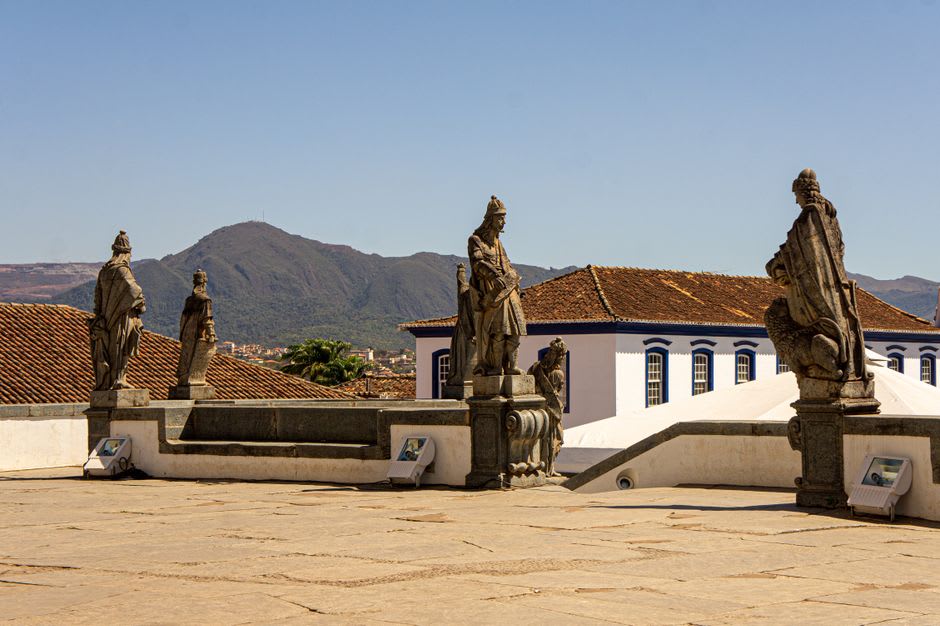
We arrived early, before the tour buses, and had the staircase mostly to ourselves — just us, a groundskeeper sweeping the plaza, and twelve stone prophets catching the first proper light of the day. Lia walked the full length twice, slowly, and didn’t say much. Neither did I.
The Passion Chapels
Below the staircase, six small chapels contain life-sized wooden sculptures depicting scenes from the Passion of Christ, also largely Aleijadinho’s work, painted by his collaborator Manoel da Costa Athayde. They are less photographed than the prophets outside but arguably more affecting up close — the wooden figures crowded together in small dim chapels, candlelight catching gilded robes, the whole thing feeling less like a museum display and more like a devotion still actively practiced, which it is: Congonhas remains an active pilgrimage site, especially during Holy Week.
A Town That Knows Its Purpose
The town itself around the basilica is modest and unpretentious — a scattering of lanchonetes serving coffee and pão de queijo to visitors passing through, a small crafts market selling soapstone carvings in obvious homage to the master who put the town on the map. There is no pretense here about being a full destination in itself. Congonhas knows exactly what it is, and does that one thing better than almost anywhere else in Brazil.
When to go: Year-round, though Holy Week (the days leading up to Easter) brings the Festa do Senhor Bom Jesus de Matosinhos, a major pilgrimage and one of the oldest religious festivals in the country, drawing tens of thousands of visitors.