Počitelj
"Half the houses have no roofs and pomegranate trees grow through the walls — and it is one of the most beautiful things I've seen."
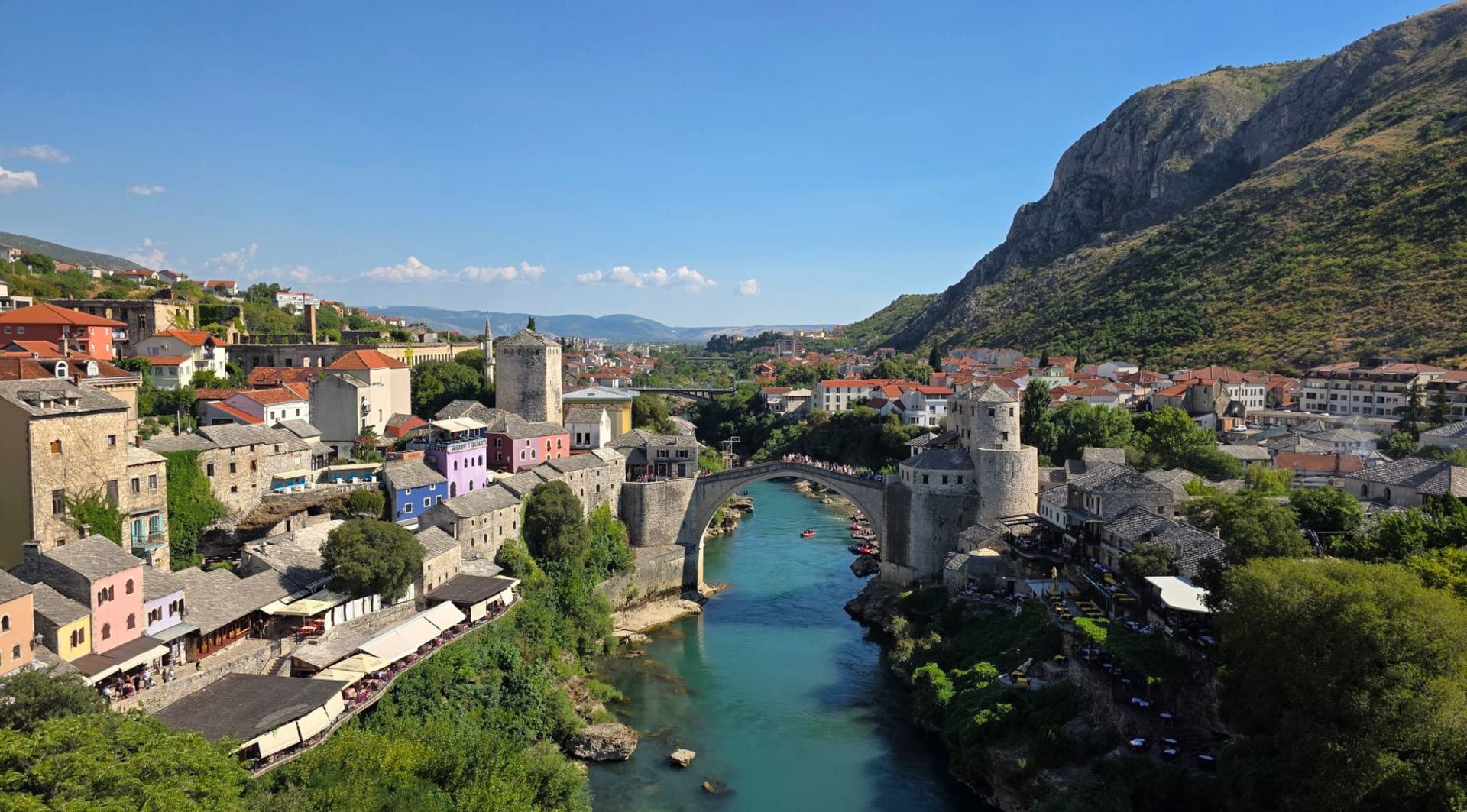
You see Počitelj from the road before you stop. Driving south along the Neretva valley from Mostar, the highway runs close to the river, and on the left the cliff face rises sharply, and there on the cliff is a village — pale limestone houses stepped up the rock face, a mosque, an old tower, all of it the same grey-white as the stone it’s built from, as if the village grew directly out of the cliff rather than being constructed on it. I’d been told it was special and still wasn’t prepared for it. I pulled over immediately.
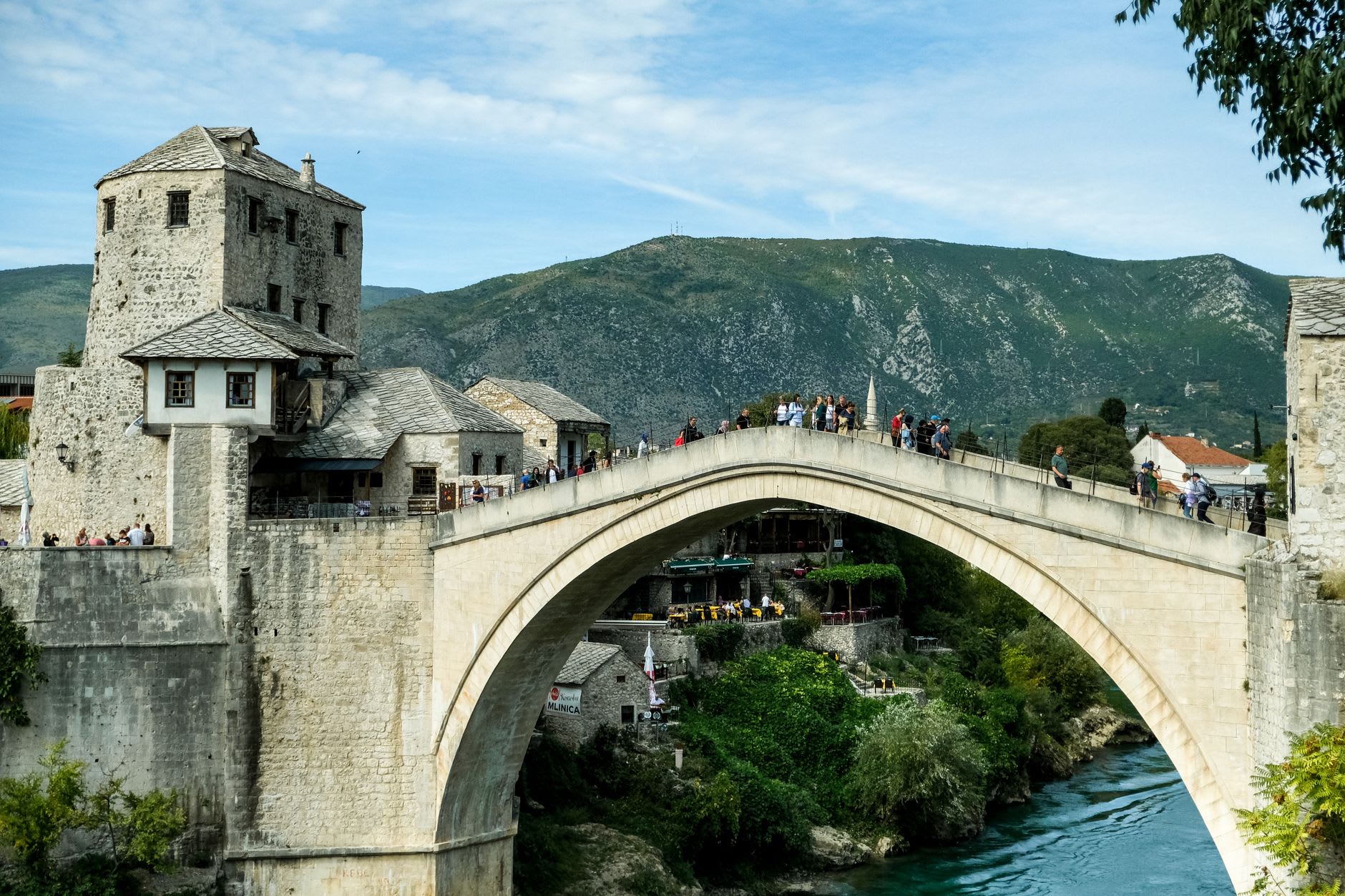
The village dates from Ottoman times, built on the foundations of a medieval Bosnian fort. At its peak it was a garrison town on the road between Mostar and the Adriatic, important enough to have its own clock tower, hammam, and madrasa. The architecture is distinctly Ottoman — stone houses with wooden shuttered windows, narrow lanes paved with irregular limestone flags, a mosque with a minaret rebuilt after the 1990s war when the original was dynamited. Most of the old structures date from the seventeenth and eighteenth centuries, which means they have been standing on this cliff for over three hundred years.
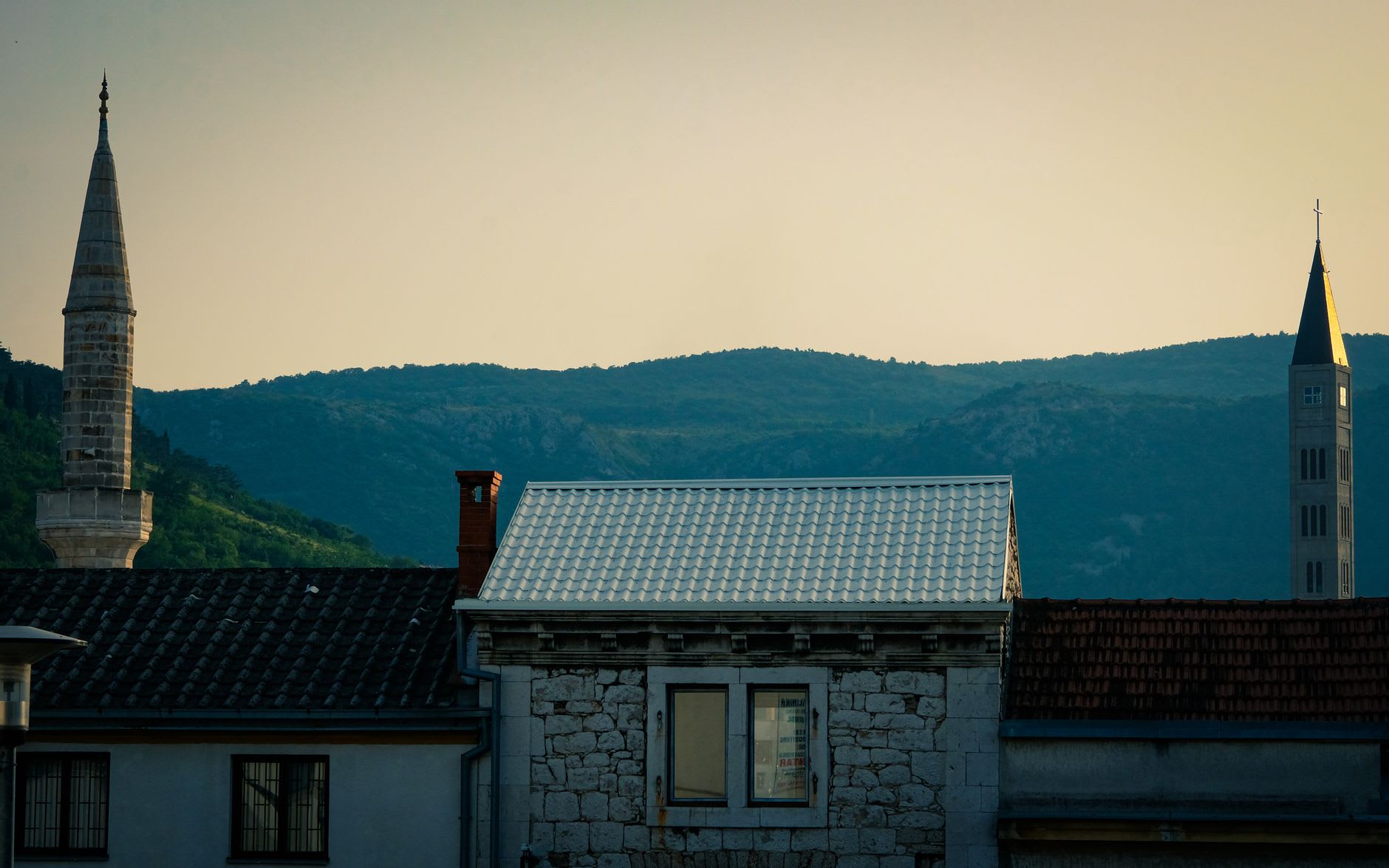
The village is largely uninhabited now. Before the 1990s war, around four hundred people lived here; after it, the Bosniak population was expelled and the village was damaged. Reconstruction has been ongoing but slow, and many houses remain roofless shells. What surprised me was how the decay and the beauty had become inseparable. I walked through what remained of a courtyard and found pomegranate trees growing up through cracked flagstones, heavy with fruit, their roots apparently finding whatever they needed in the rubble. Fig trees had pushed through stone walls. Vines were dismantling corners of buildings with gentle, patient persistence. The whole place had a quality of being in the process of returning to nature, but slowly, in no particular hurry.
The Kula tower at the top of the village rewards the climb. It’s a short but steep walk up a path of worn limestone steps, past houses that range from carefully restored to open to the sky. At the top, the view opens over the Neretva valley — the river running blue-green below, the highway bridge across it, the flat agricultural plain stretching toward the Adriatic in the south and the mountains in the north. I stayed up there through the late afternoon while the light changed on the valley floor and the stone around me shifted from cream to gold to the colour of amber.
There is a small art colony in Počitelj — artists have been coming here since the 1960s and a summer school has operated intermittently. This gives the village a slightly different character from a pure heritage site: there are studios with paint-stained steps, and in the summer months work appears in makeshift galleries in the restored houses. The combination of extreme historical beauty and active artistic use felt right to me, like the place was being held open for something rather than simply preserved.
When to go: April through October, with spring and autumn the best for light and temperature. The pomegranates ripen in September and October, which is when the village looks most specifically itself. Midday in July is brutally hot on the exposed stone — go in the morning or late afternoon.