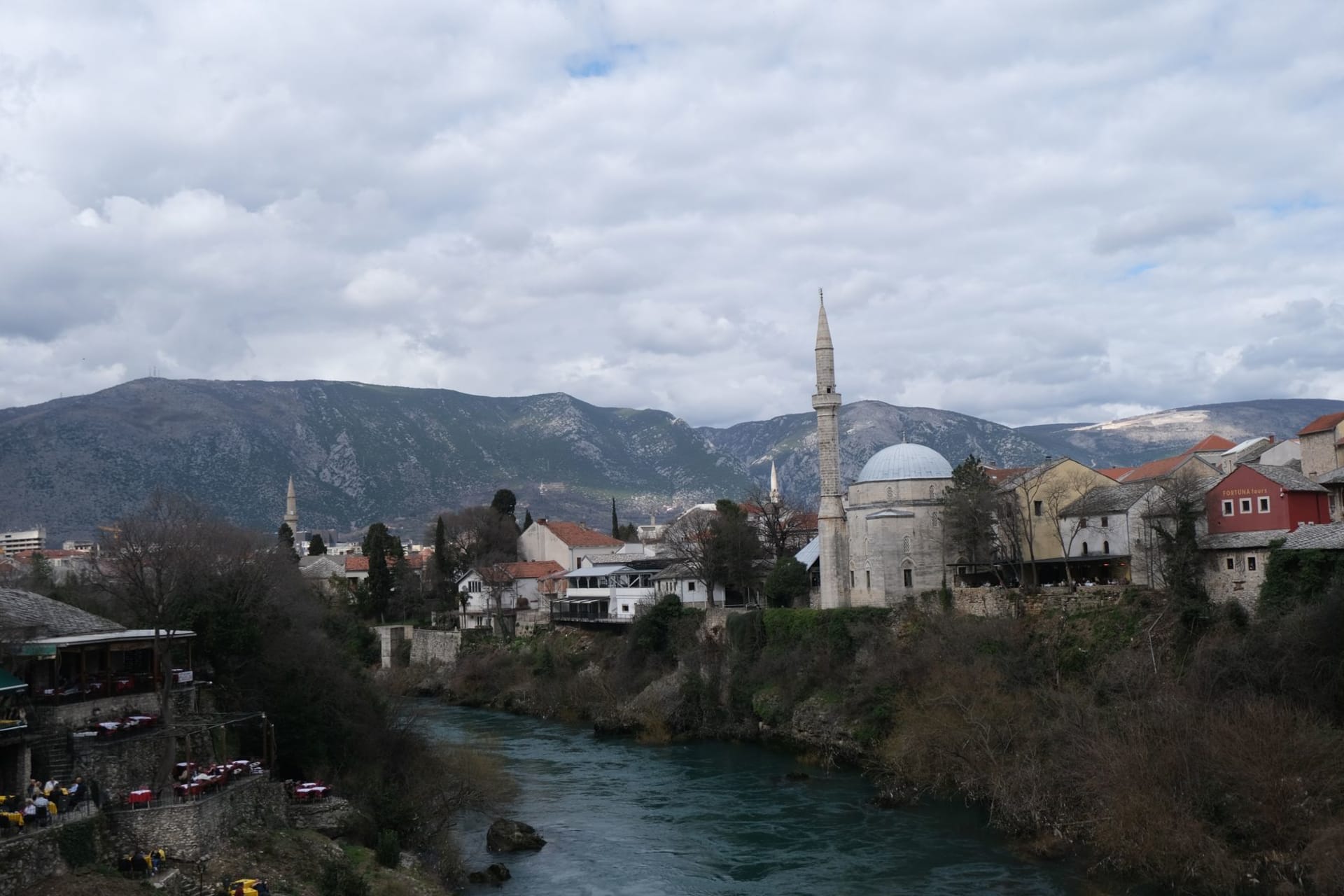
Mostar
"The bridge was rebuilt stone by stone after they destroyed it — that act of reconstruction is the most defiant thing I've seen."
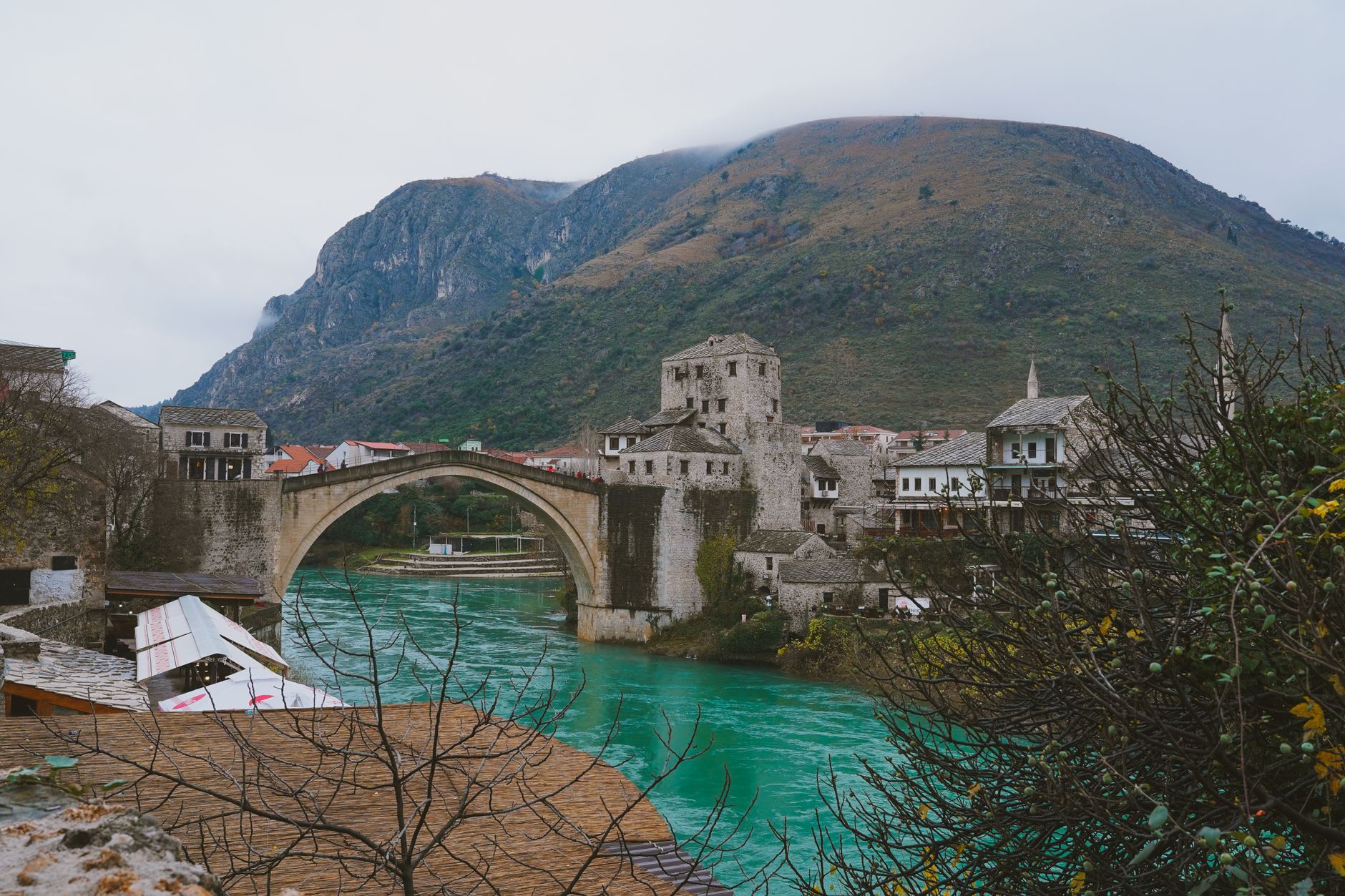
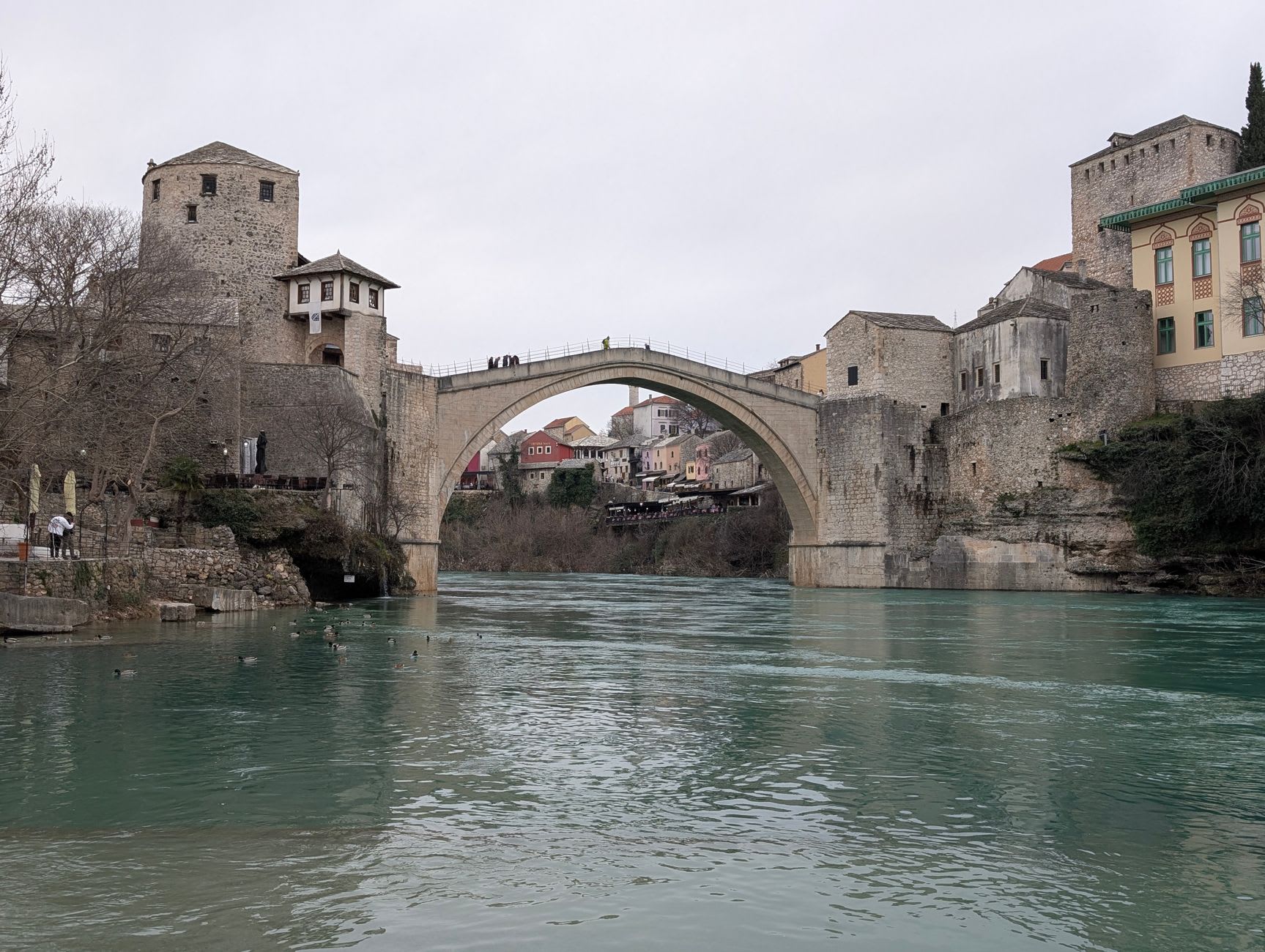
I went to the bridge at five-thirty in the morning, before the tour groups, before the souvenir stalls opened, before the young men took their positions on the parapet to solicit donations for their diving performances. The Stari Most in that early light was pale grey and absolutely still, a single Ottoman arch over water so green it seemed to generate its own illumination. A man was sweeping the cobblestones at the east end with a birch broom. Pigeons detonated from a minaret somewhere above me. I stood there for twenty minutes and felt something I rarely feel at famous landmarks: that the thing had actually earned its reputation.
The history of it matters. The bridge was built in 1566 under the Ottoman architect Mimar Hayruddin, a single span of limestone that took nine years to complete. It stood for four hundred and twenty-seven years. In November 1993, during the Croat-Bosniak war, it was destroyed by tank shells — deliberately, over two days, because it was a symbol. It was rebuilt and reopened in 2004 using stones quarried from the same source in the same traditional technique. The fact that it exists is not just architectural; it is an argument made in stone.
The old town around the bridge — Kujundžiluk, the coppersmith’s street — is genuinely lovely and genuinely overrun from about nine in the morning until late evening in summer. I don’t say this as a complaint exactly, because the commerce feels organic, the coffee is excellent, and the grilled meats at the small restaurants tucked behind the main lane are some of the best I ate in the Balkans. But the real Mostar is the one you find by walking away from the tourist axis. Cross to the east bank and keep going. The neighborhoods behind the mosque are quieter, more residential, and full of small details: fig trees overhanging crumbling walls, a cat sleeping on a warm stone step, a grandmother hanging laundry from a wooden balcony that can’t have been repaired in thirty years.
The Neretva itself deserves attention. In late spring and early summer it runs a color that doesn’t look real — a cold, phosphorescent green from glacial melt — and locals swim in it from the rocks below the bridge. On the west bank, the cafés set tables above the water. The sound of the river is constant throughout the old town, a background noise that gets into everything.
Mostar also carries division in its physical geography in a way that’s uncomfortable to notice and impossible to ignore. The west bank of the Neretva is predominantly Croat and Catholic; the east bank is predominantly Bosniak and Muslim. The front line of the early 1990s war roughly followed the river. Two parallel city administrations still exist. The tension is not visible in any dramatic sense, but if you pay attention to street names, to which monuments have been maintained and which haven’t, to where the bullet holes are concentrated, you start to read the city differently.
When to go: May and June before the summer crush, or late September when the heat drops and the tourists thin. Avoid July and August unless you enjoy navigating shoulder-to-shoulder crowds on a medieval bridge. Dawn visits at any time of year are worth the early alarm.