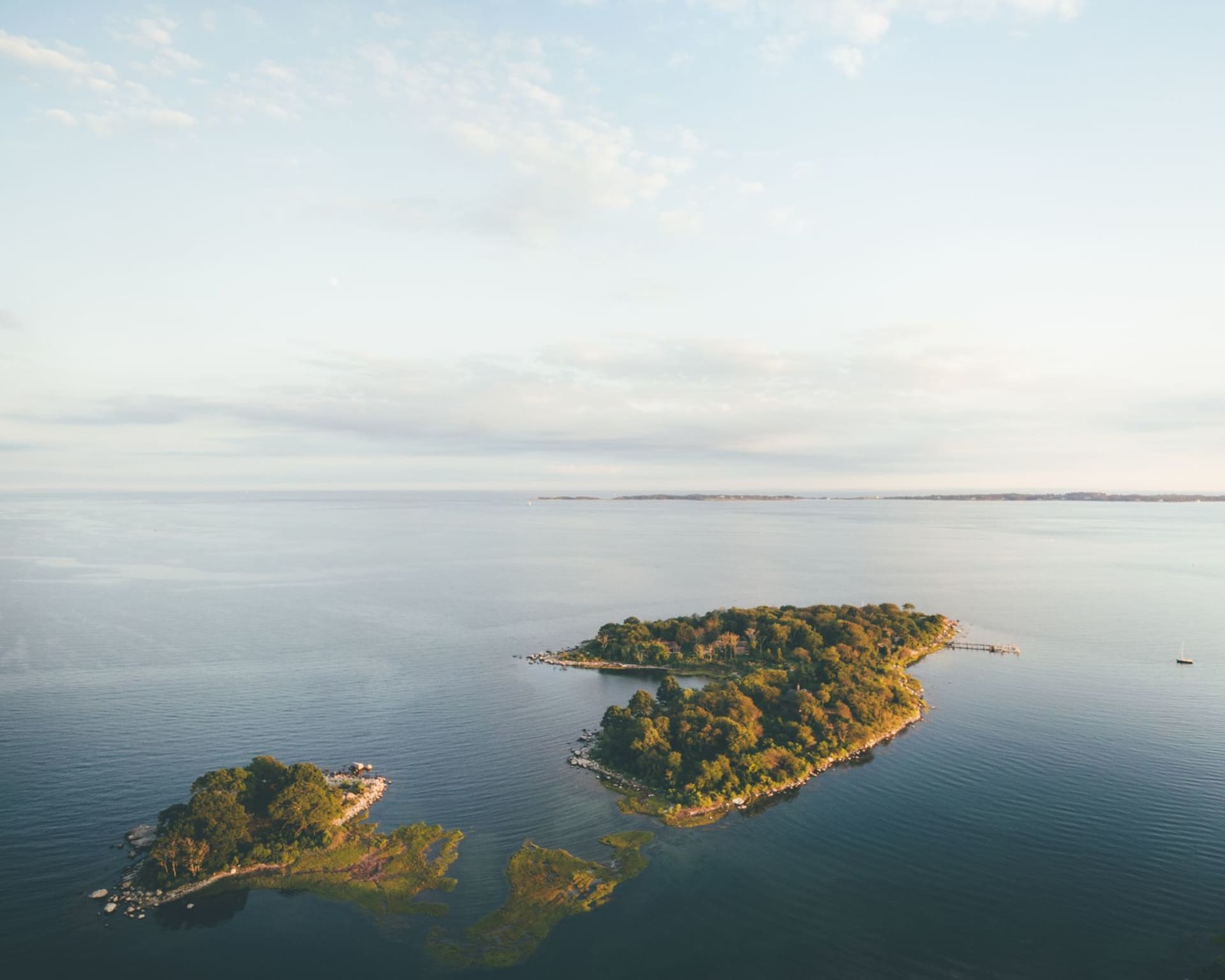
Almindingen
"The forest is the interior life of the island. Everything else is its face."
You can miss Almindingen entirely if you spend your Bornholm days on the coast, which most people do, bouncing between smokehouse towns and beach stretches and the castle ruin at the northwest tip. The forest sits in the middle of the island, occupying the highest ground, and the island’s geometry is such that you can see its dark mass from almost anywhere — a smudge of green above the rye fields, visible from the ferry as it approaches. I rode into it on my fifth day, turning inland from the coastal road near Nexø and following a cycling track that entered the trees as quietly as a door closing.
Almindingen is the third-largest forest in Denmark, which is a fact that initially underwhelms and then doesn’t. Covering roughly two thousand hectares in the center and eastern parts of the island, it is a mixed forest of oak and Norway spruce and Douglas fir, with older stands of beech that have the particular cathedral quality of tall beech forests — columns of smooth grey bark supporting a canopy that closes out the sky, the floor clear and carpeted in the season’s leaf fall, the light coming in green and diffuse and even. The cycling trails run for over eighty kilometers through and around the forest, and they connect with the island’s broader network in ways that allow for full-day circuits without repeating yourself. The Bornholm cycling map, which you can buy at any tourist office and which I kept folded in my jersey pocket for twelve days, marks the forest trails in green, and there are enough of them to fill a week.
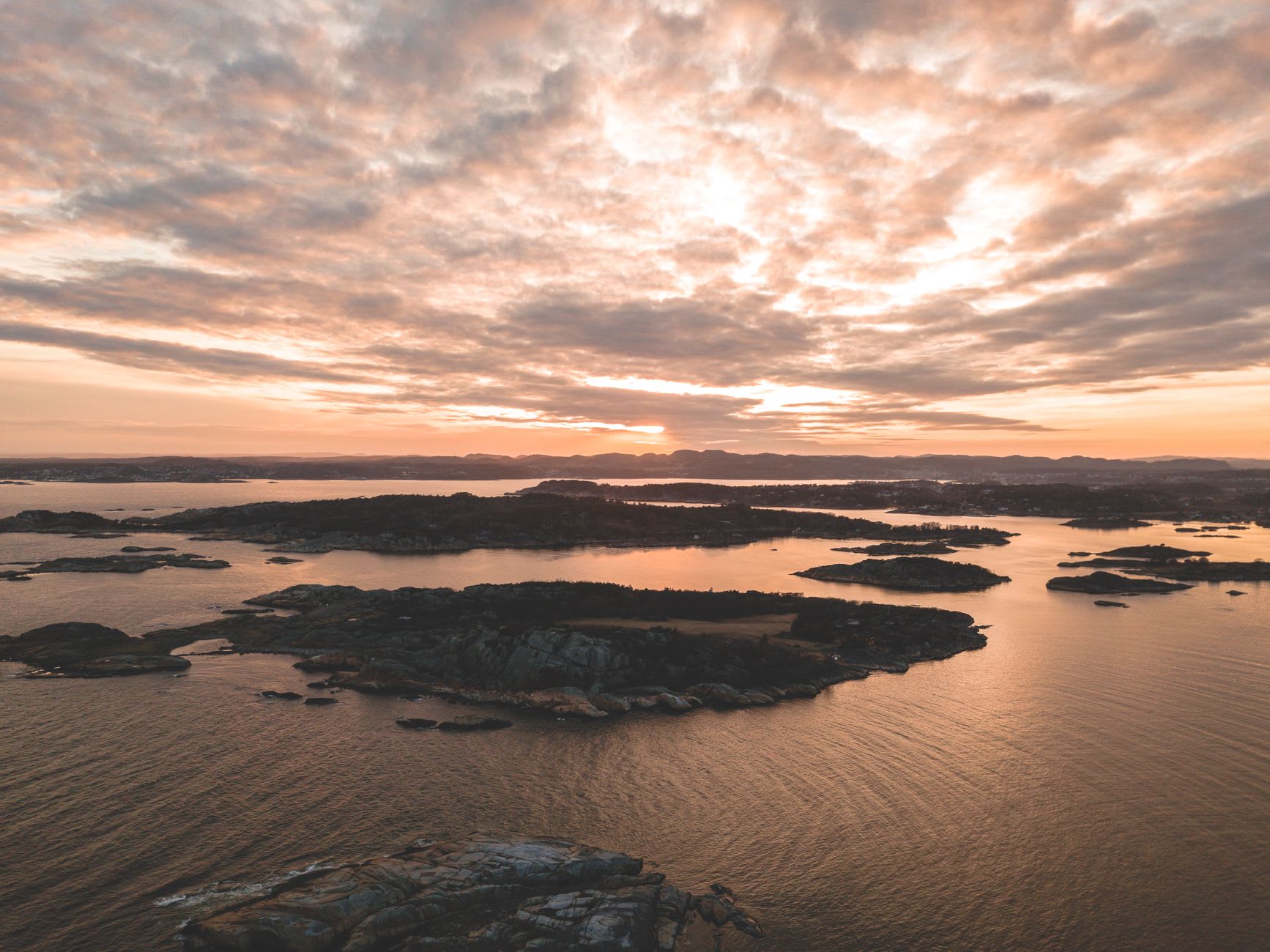
Rytterknægten, at 162 meters, is the highest point on Bornholm — a modest elevation by any continental standard but sufficient, when you climb the wooden observation tower at its summit, to see the entire island laid out below you. I climbed it on a clear morning and stood for twenty minutes identifying landmarks: Hammershus to the northwest, a white dot above the sea; the smokehouse chimneys of Hasle trailing thin threads to the west; Dueodde’s lighthouse a needle at the southern tip; the dark mass of Christiansø barely visible to the northeast on the horizon. The island is exactly the right size for this exercise — small enough to comprehend from a single point, large enough that the comprehension takes time and requires attention.
Ekkodalen — Echo Valley — is the forest’s other main attraction and a genuine curiosity. It is a narrow cleft in the granite running roughly north-south through the eastern part of Almindingen, a valley so geologically eccentric in its acoustics that sound produced at one end returns recognizably from the other. The name is not hyperbole. I stood at the southern entrance and shouted something in French and heard it come back from the granite walls with enough clarity that a passing Danish couple looked at me with the particular indulgence that Scandinavians extend to people from southern Europe who have not yet learned to contain themselves outdoors. The path through the valley follows a small stream and takes about forty minutes end to end.

The deer in Almindingen are wild but accustomed to people, and in the early morning you can cycle through the eastern sections of the forest and encounter them at close range — a roe deer doe watching you from twenty meters with the expression of someone who has assessed the situation and found it acceptable. The flora in the forest’s clearings in June includes wild strawberries in the sunny patches and several varieties of orchid in the damper spots, and the birdsong in May is dense and continuous from before dawn until mid-morning, a layered sound that the cycling track gives you the best access to.
When to go: The forest is at its most spectacular in autumn, October particularly, when the beech and oak turn gold against the dark evergreens. Spring is excellent for birdsong and wildflowers. Summer is good for cycling the full network; the forest provides shade on hot days when the coast feels exposed. The observation tower at Rytterknægten is accessible year-round.