Sepilok
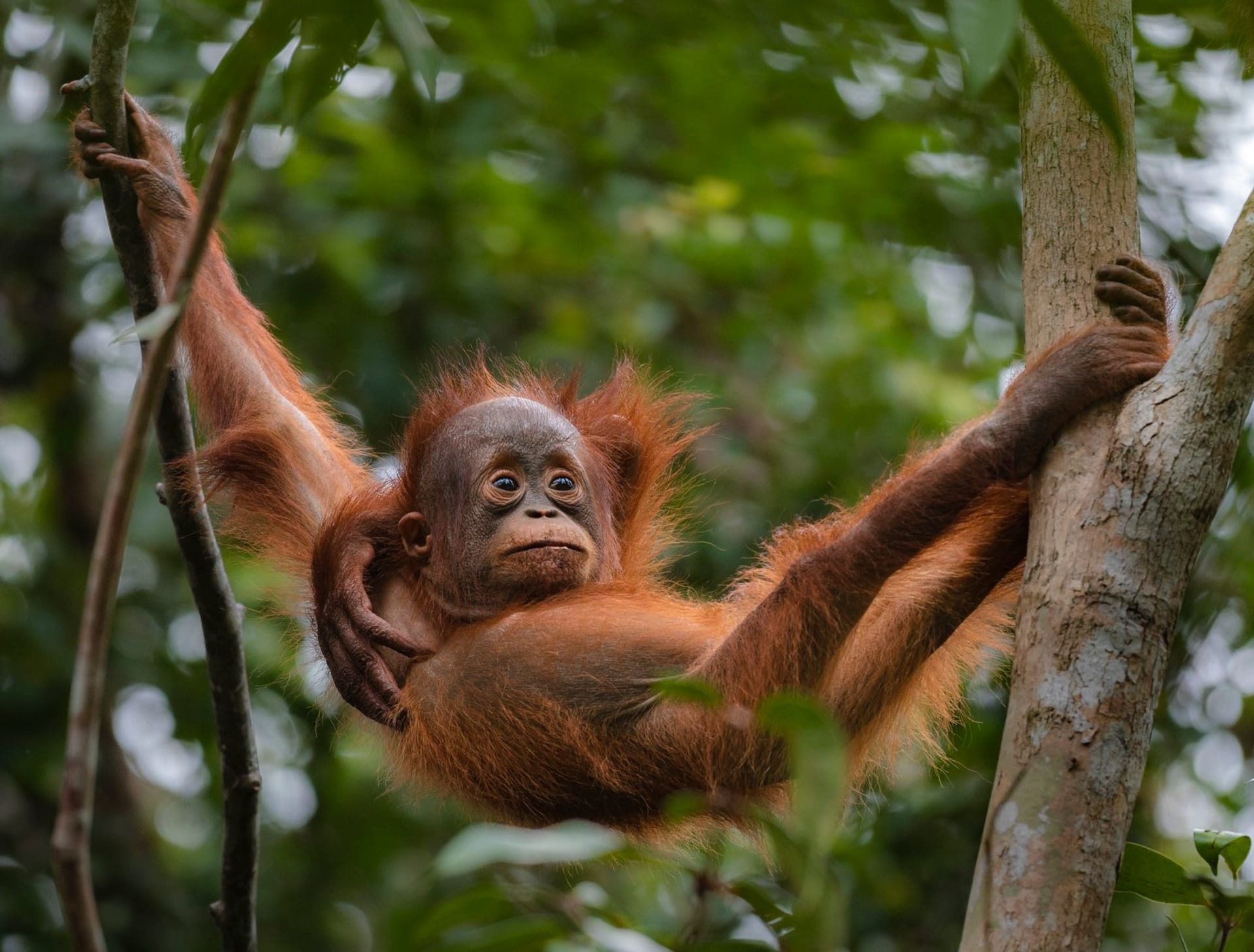
"The juvenile that stared at me for a full minute was not curious — it was evaluating."
The bus from Sandakan drops you at the end of a red dirt road, and the forest announces itself before you can see it. The smell hits first — wet earth, rotting wood, something sweet and faintly fermented, the breath of a canopy that has been doing this for sixty million years without interruption. I arrived forty minutes before the morning feeding, and I was already sweating through my shirt, which felt exactly right.
Sepilok Orangutan Rehabilitation Centre sits inside a protected reserve of lowland dipterocarp forest — one of the last pockets of intact old-growth in this part of Sabah. The centre takes in orphans: animals whose mothers were killed by deforestation, the palm oil industry, the particular violence of development. The rehabilitation program is long and patient. Young orangutans spend years learning to forage, to nest, to navigate the canopy without a mother to show them. The feeding platforms provide a safety net during this process — supplementary fruit for animals that have not yet found their own food chain in the forest.

I watched four of them come down from the trees. The youngest was maybe two years old, knuckle-walking along the ropes with the loose-limbed confidence of an animal that has never fallen and cannot quite imagine doing so. The older ones were more deliberate — they sat at the platform, picked through the papaya and banana with something approaching contempt for the quality of the fruit, and glanced at the assembled tourists with an expression I can only describe as tolerant. It is impossible not to feel the weight of their situation in the gaze. They are wild animals being trained for a wildness they should never have lost.

A short walk through the same reserve brings you to the Bornean Sun Bear Conservation Centre, which deserves more visitors than it gets. Sun bears — the world’s smallest bears, honey-coloured bibs on dark frames, with the longest tongues of any bear species — are equally threatened, equally misunderstood. Watching one dismantle a termite mound with surgical precision, methodically tongue-drilling into each tunnel while ignoring the crowd entirely, I felt the same thing I felt with the orangutans: the sense that these animals are conducting their own lives, and that our presence is a historical inconvenience they are choosing, generously, to overlook.
The boardwalk trails beyond the centre are worth an extra hour if you can manage the heat. The forest there is genuinely old — trees with buttress roots the size of walls, shafts of filtered green light, the sound of insects so constant it becomes a kind of silence. I sat on a bench at the edge of the forest for twenty minutes and watched nothing happen, which was the best twenty minutes of the day.
When to go: The two daily feedings run at 10am and 3pm. Come for the morning feed and stay through the afternoon for quieter forest time. March through October is most reliable — the paths turn to mud in heavy rain and the forest is harder to read. Arrive early; the light before 9am in the canopy is extraordinary and the tourists haven’t compacted yet.