
Niah Caves
"Forty thousand years of people have stood exactly where I was standing, looking up at the same black ceiling."
A cathedral-sized cave mouth in the Sarawak jungle, where a 40,000-year-old skull rewrote what we know about early humans.
We got off the express boat at Bintulu with sore backs and salty hair, and two days later I was standing under a hole in the earth so big it had its own weather. That’s the only way I can describe the mouth of the Great Cave at Niah National Park — it swallows the jungle canopy whole, and when you finally step inside, the temperature drops and a fine mist starts drifting down from somewhere in the dark. Lia grabbed my arm the first time a swiftlet screamed past our heads. I’d read about Niah before we came, mostly in the dry language of archaeology papers, but nothing prepared me for how it actually feels to walk the plank boardwalk into that chamber and realize you’re standing in one of the largest cave mouths on the planet.
The walk in itself is part of the experience. It’s about four kilometers from the park headquarters through lowland rainforest, boardwalks slick with humidity, hornbills occasionally clattering overhead, before the trees pull back and the cave just opens up in front of you like the jungle had a secret. Inside, guano collectors still climb impossibly thin bamboo poles lashed together to reach the birds’ nests wedged into the high walls — the same nests that end up, halfway around the world, in bowls of bird’s nest soup. I watched one man free-climb about thirty meters with nothing but a headlamp and asked our guide if he ever thought about falling. He just shrugged and said it runs in families here.
What stopped me cold, though, was learning where I was actually standing. In 1958, the archaeologist Tom Harrisson excavated a human skull fragment from the cave floor that turned out to be around 40,000 years old — the “Deep Skull,” among the oldest modern human remains ever found in Southeast Asia. Our guide pointed to a roped-off patch of earth, unremarkable to look at, and said that’s roughly where it came from. I found myself just staring at the dirt for a minute. Lia said later she felt it too — that strange vertigo of realizing people had been living, cooking, and dying in this exact chamber for tens of thousands of years before either of us existed.
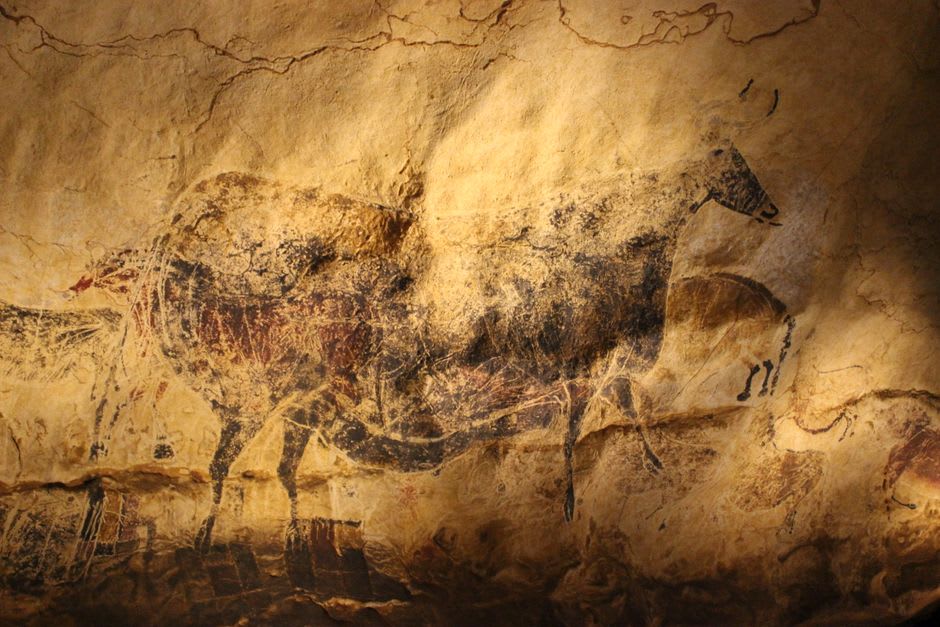
Further along the trail, past the Great Cave, we pushed on to the Painted Cave, where faded red ochre figures — human forms, boats — still cling to the rock, alongside remnants of ancient “death-ship” burial practices, where the dead were sent off in miniature wooden boats. The paintings are faint now, almost ghostly, and you have to let your eyes adjust before the shapes resolve. We sat there a while, quiet, listening to water dripping somewhere in the dark.
When to go: Aim for February through September — outside the wetter northeast monsoon months — when the trails and cave boardwalks are drier and far less treacherous underfoot.