Danum Valley
"Primary rainforest sounds different from secondary forest. The difference is the sound of time."
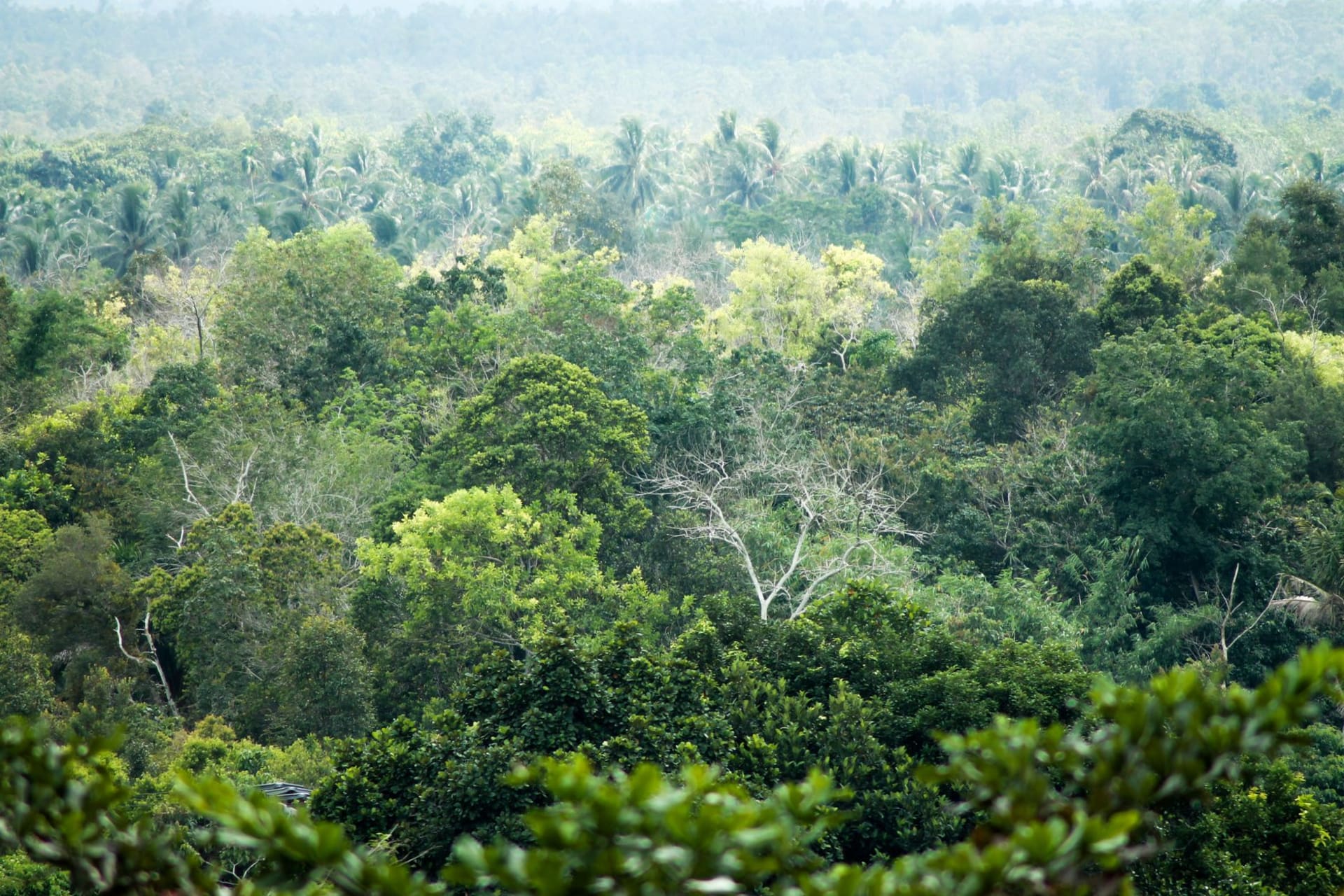
The road in takes two hours from Lahad Datu on a logging track that passes, with uncomfortable clarity, through the plantation and logged-over land that surrounds the conservation area on all sides. You drive through oil palm — kilometre after kilometre of identical fronds, the monoculture silence, the low red soil — and then, abruptly, the road enters the forest boundary and everything changes. The canopy closes overhead. The trees are sixty, seventy, eighty metres tall. The understorey deepens and darkens and the air changes temperature and quality the way air does when it is being produced by something enormous and ancient.
Danum Valley Conservation Area protects 438 square kilometres of primary lowland dipterocarp forest in inland Sabah — the largest remaining block of this habitat type in the state, possibly in Southeast Asia. It is a working research station as much as a tourist destination, and the serious scientific context gives the place a different character from the wildlife parks down on the coast. The Borneo Rainforest Lodge — the only accommodation inside the reserve — is expensive, remote, and exactly what you want when what you want is to be inside old-growth forest with no way out until you decide to leave.

The canopy walkway — a series of rope bridges suspended fifty metres above the forest floor — is the most disorienting physical experience Borneo offers. You walk out into the canopy at the level of the treetops and understand, suddenly, that the forest you’ve been looking at from below has a second world up here: hornbills moving at eye level, a gibbon watching you from thirty metres away, the upper surface of leaves catching light you didn’t know was available. Below you, the forest floor is invisible. You are floating above a closed system that has no interest in your presence.
Night walks here produce a different inventory than the animal-rich Kinabatangan. Danum’s nights are older and quieter. The guides carry red-filtered torches that don’t destroy night vision, and they move slowly, pointing out things that would take years to learn to see: the iridescent eyes of a potoo sitting motionless on a branch, a tarsier — the size of a fist, eyes like headlamps — clinging to a vertical stem and eating a grasshopper with startling precision, a pit viper coiled in the leaf litter with the contained patience of a trap.

The dawn birdwatch begins at 5am, in darkness, at a rocky riverside perch where the Danum River catches the first light. The birdlist is extravagant — eight species of hornbill have been recorded in the valley, and on a good morning you can expect to see four or five before breakfast. The forest around the lodge holds wild orangutans, Malay sun bears, sambar deer, bearded pigs, clouded leopards (rarely, and only at night on camera trap) — the full suite of Bornean large mammals, sharing a forest that has never been logged and therefore still functions as a forest should.
When to go: March through October aligns with the drier season. The forest is accessible year-round, but trails become difficult in heavy rain and river crossings can close. Minimum three nights to begin to understand the place; four or five is better. The Borneo Rainforest Lodge books out months ahead; the research station’s more basic accommodation sometimes has last-minute availability for independent travellers.