
Bako National Park
"The proboscis monkey is not a beautiful animal. It is the most honest animal in the forest."
The boat from Kampung Bako is a small wooden craft that makes the journey to the park headquarters in about twenty minutes, crossing the mouth of the Sarawak River where it meets the South China Sea. The water here is café au lait with river sediment, and the mangroves on the park boundary are dense and impenetrable and full of the sound of unseen birds. The landing at the park jetty requires stepping across wet rocks, and I got one boot soaked immediately, and then thought — correctly — that both feet would be wet within the first hour of trail walking anyway and it didn’t matter.
Bako is Sarawak’s oldest national park, established in 1957, and it covers a small but remarkably varied peninsula of sandstone cliffs, beaches, and seven different vegetation types within a 27-square-kilometre area. What draws most people is the proboscis monkeys — the endemic, pot-bellied, pendulous-nosed primates that live only on Borneo and only in coastal and riverine forest. At Bako, they have become casually habituated to the park headquarters and appear regularly on the beach in front of the canteen, which is one of the more absurdist wildlife encounters available to the travelling naturalist.
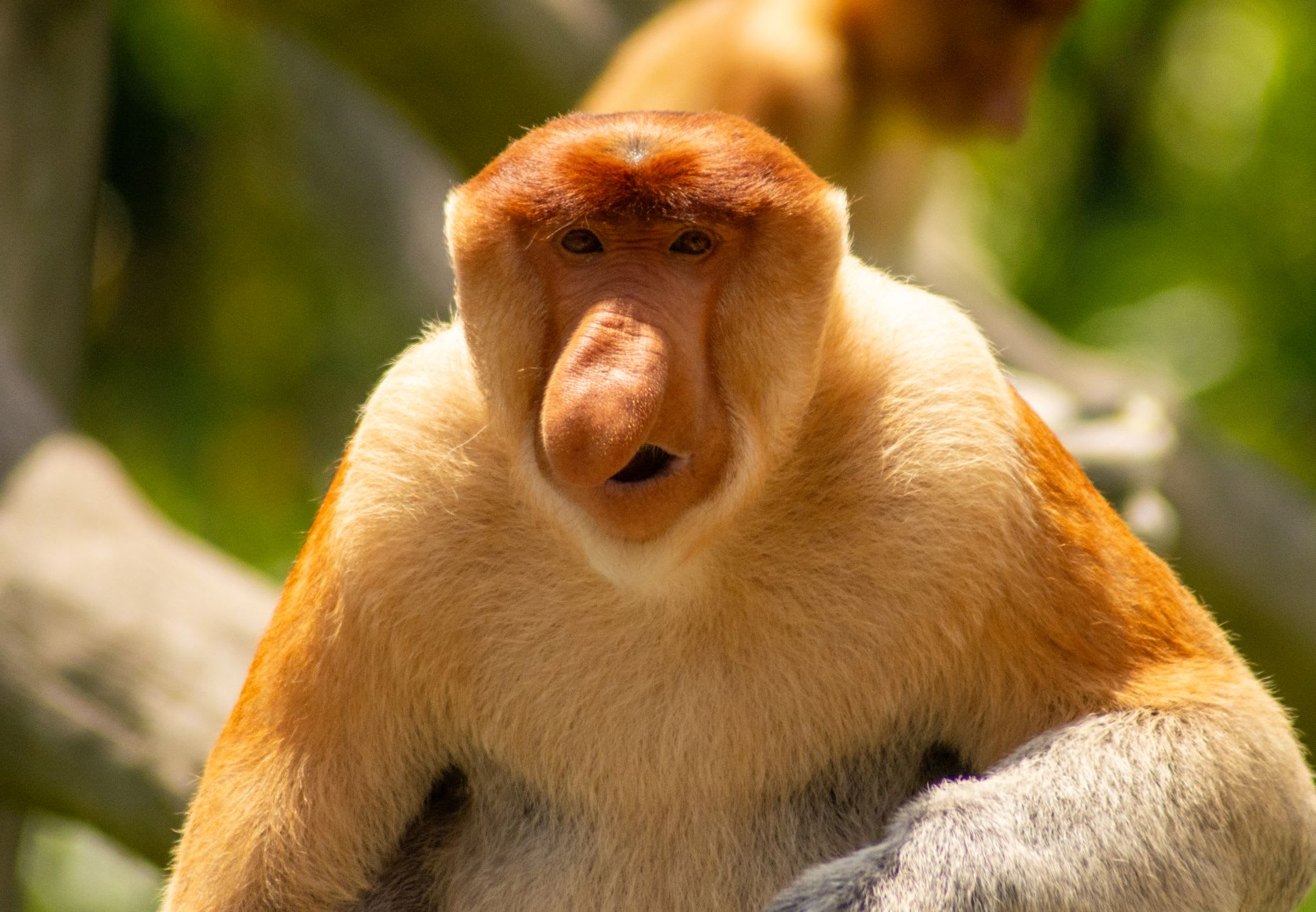
The beach in front of the park headquarters is a small crescent of grey sand backed by casuarinas and dipterocarp forest. On the afternoon I arrived, four adult male proboscis monkeys were sitting in the trees immediately above the beach volleyball net, doing nothing in particular with the relaxed authority of animals that have decided this patch of ground belongs to them. The males are extraordinary-looking — the nose, which functions as a resonating chamber for territorial calls, grows throughout their lives and in old males droops almost to the chin. They crash through the canopy with more noise than agility. On the ground they walk upright for short distances, which produces a walk that is somehow both dignified and comic.
The trails inland are worth the leeches, which will find you regardless. The Lintang Loop, the park’s longest circuit, takes four to five hours and moves through kerangas — the heath forest on sandstone that grows almost nowhere else — where pitcher plants grow in the white sand and sundews trap insects on the path margins. The vegetation in kerangas is stunted and sun-blasted and strange, the soil too poor for anything demanding, the plants that succeed there forming their own low, insistent ecosystem.
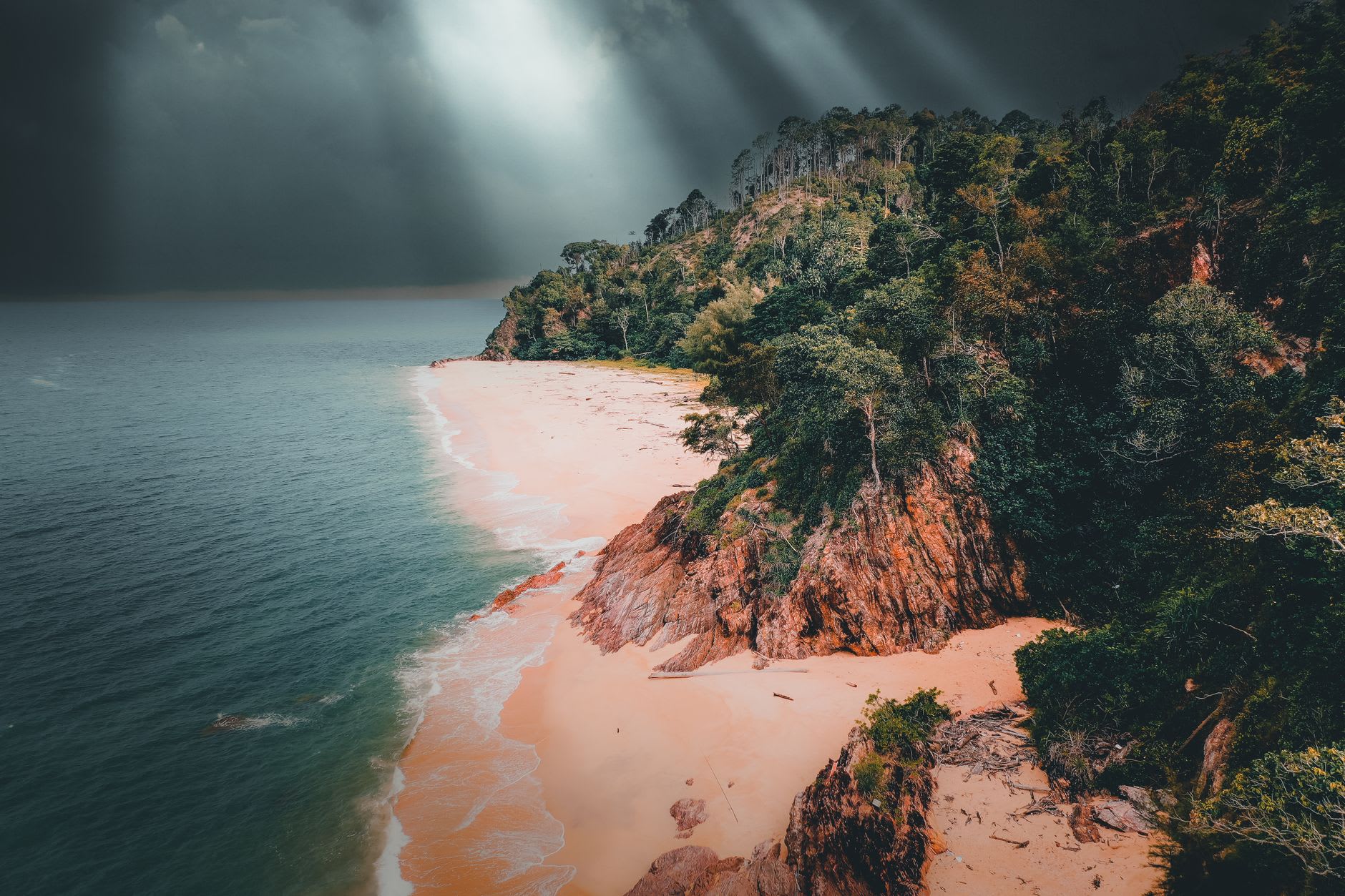
The sandstone sea stacks along the coast, carved by wave action into sea arches and columns and undercut cliffs in burnt orange and cream, are what the photographs don’t adequately prepare you for. From certain headlands in the late afternoon, with the South China Sea spreading west toward the horizon and the stacks catching the last horizontal light, the park looks like it has been designed by someone with a very good eye and a complete indifference to restraint.
Staying overnight inside the park, in the basic chalets at park headquarters, transforms the experience. The evening brings the silver leaf monkeys down to the canteen terrace, the proboscis families moving through the canopy over the beach, a resident bearded pig that materialises at dusk looking for kitchen scraps with the focused determination of an animal that has learned the schedule.
When to go: March through September is drier and better for the coastal trails. Mornings are best for wildlife — the animals are most active before ten and after four. The boat to Bako departs from Kampung Bako jetty, reached by bus or taxi from Kuching; the crossing is weather-dependent and can be cancelled in rough seas.