Gonio
"Two thousand years of walls and the sea hasn't moved an inch — Gonio makes empires feel briefly manageable."
The taxi driver who took me from Batumi to Gonio kept gesturing toward the mountains whenever he couldn’t think of the right word in any language we shared. He wanted me to understand that those peaks — the Lesser Caucasus, heavy with cloud — were the Turkish border. That the river we crossed was almost the end of Georgia. That the village ahead had seen Romans, Byzantines, Ottomans, Russians, Soviets, and now, apparently, French travelers arriving by taxi in the mid-afternoon. He seemed to find this chain of events entirely reasonable.
Gonio-Apsaros fortress is among the best-preserved Roman military installations on the eastern Black Sea, and it sits in the middle of the village like a misplaced thought — stone walls four meters thick rising from the flat coastal plain, watch towers intact, an interior where archaeologists are still digging and where the grass grows thick between the excavated foundations. Legend holds that the Apostle Matthias is buried here, though nobody seems entirely certain of that. What is certain is that legions were garrisoned in this place two thousand years ago, looking out at the same sea I was looking at, probably wondering how they’d ended up at this particular edge of the world.

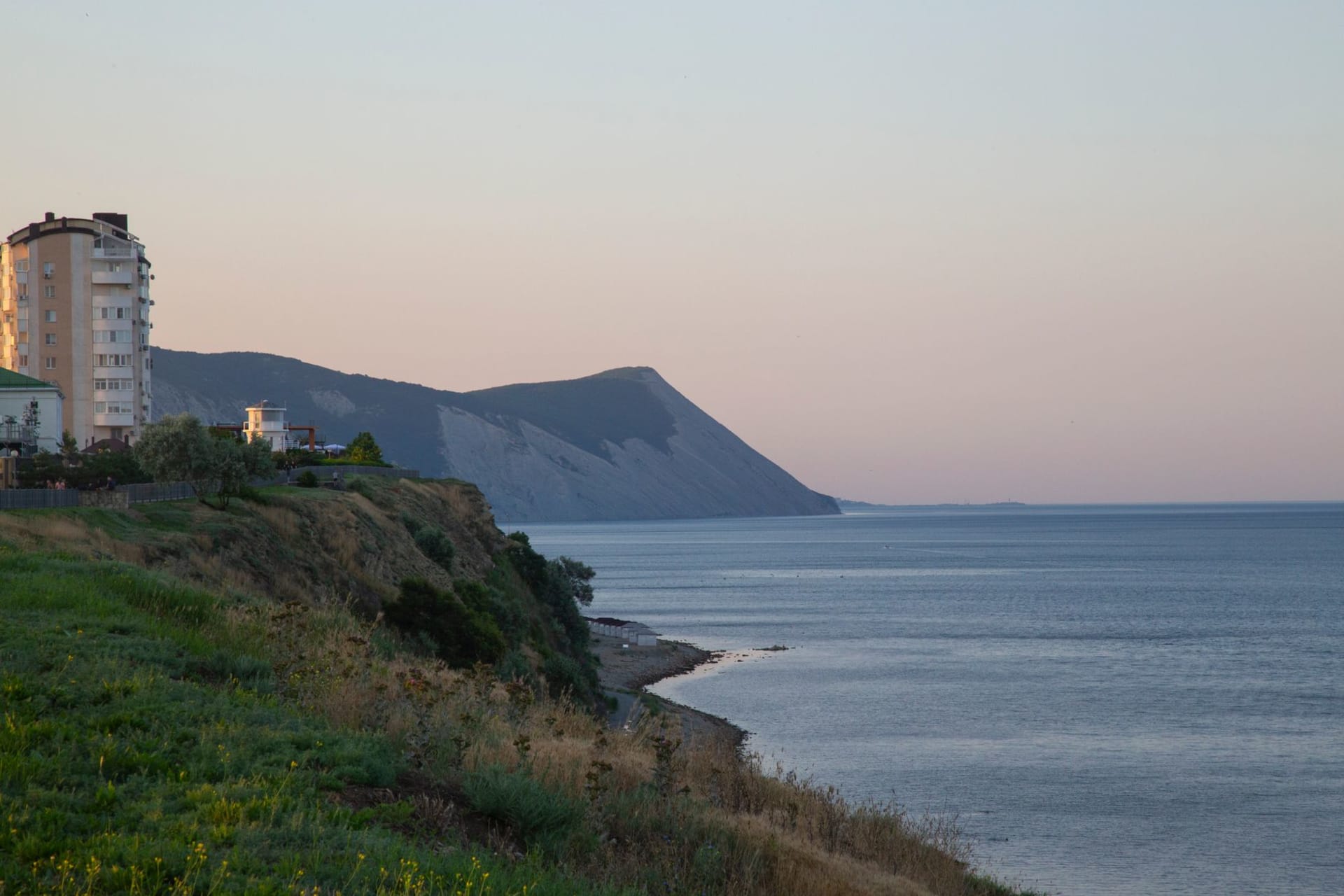
Past the fortress, the village dissolves into a long beach of dark pebbles and coarse sand that stretches south toward the border crossing at Sarpi. On the afternoon I was there, three men were fishing with long rods from the waterline, and a woman was spreading laundry on a fence to dry. The sea was unusually calm — the Black Sea can run rough even in summer, but that day it lay flat and olive-green, almost oily. I swam for twenty minutes and got out only because the sun was dropping behind the Caucasus ridge and the air had gone cold immediately, the way mountain-adjacent air does.
There is one small café near the fortress entrance that serves beer and fried fish and seems to maintain hours entirely according to the owner’s mood. I ate there twice: the first time at noon, the second at four in the afternoon when the light was long and golden and the café was empty except for me and a sleeping cat. The fish was whatever had been caught that morning, simply fried in oil, served with bread and salt and a bowl of something pickled that I couldn’t identify but ate in its entirety. This is the level of culinary specificity that Gonio operates at. It is sufficient. It is, honestly, more than sufficient.

Most people treat Gonio as a half-day excursion from Batumi, which is exactly the right way to treat it. Come in the morning when the fortress is cool and nearly empty, spend an hour inside the walls imagining the garrison life, then walk south along the beach until you feel the border in the air — that peculiar atmospheric pressure of a boundary approaching. Eat at the café. Swim if the sea is calm. Return to Batumi before the evening minibuses fill up.
When to go: April through October. The fortress is open year-round but the beach only makes sense in warm weather. May and September offer the combination of empty sand and comfortable swimming temperatures. In summer the beach draws families from Batumi, but it never gets truly crowded.