
Batumi
"The old town smells like church incense and frying dough at the same time — that contradiction is Batumi exactly."
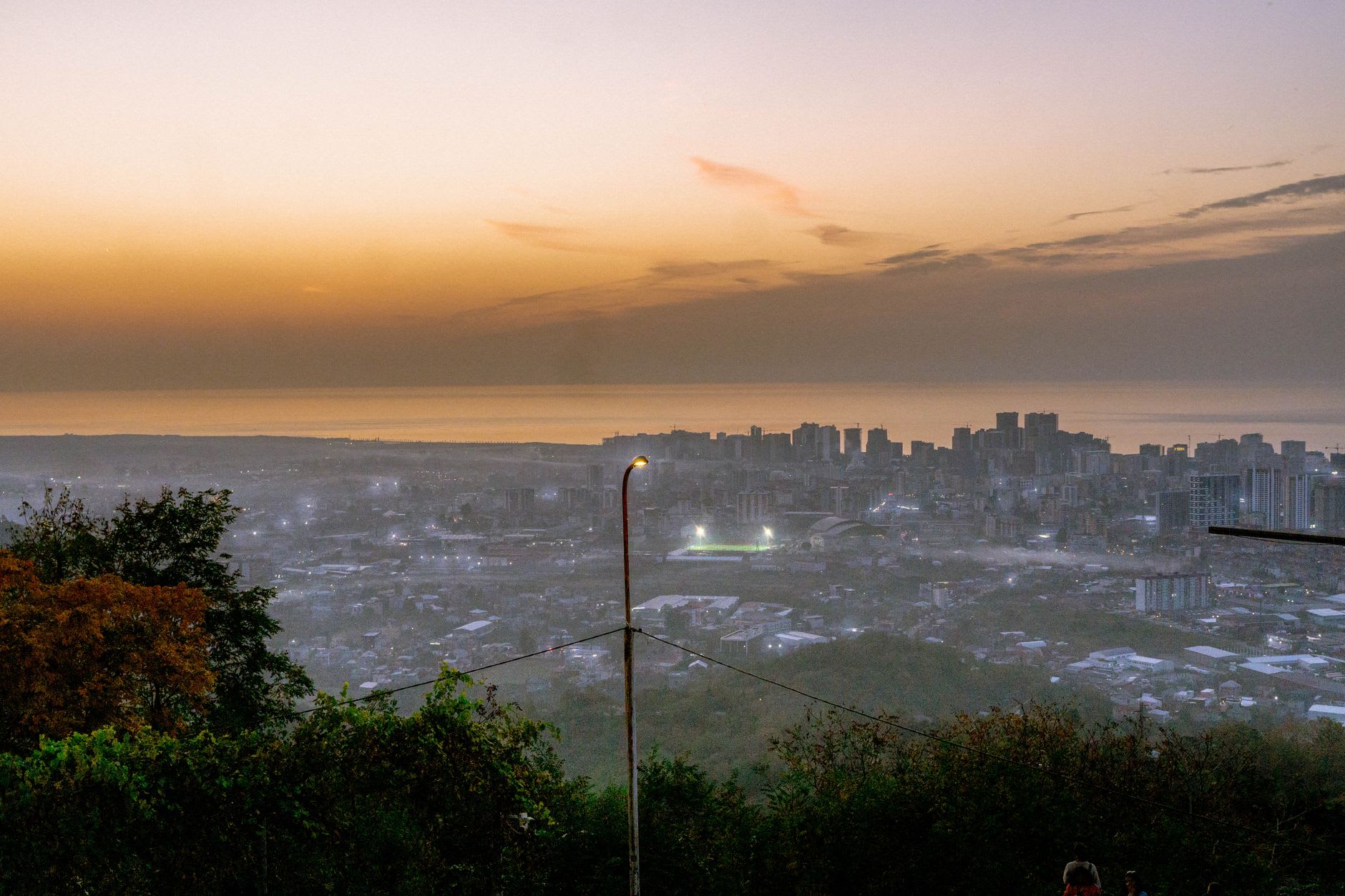
I arrived in Batumi on a night marshrutka from Tbilisi that took nine hours and smelled of cheap cologne and someone’s roast chicken. When the door finally swung open onto the seafront boulevard, the air hit me like a wet towel — warm, salty, faintly vegetal. Neon from the casino towers threw pink light across the pavement. A man was selling churchkhela from a cart. Somewhere behind all of it was the sea, invisible but audible, making its low Black Sea sound. I stood there for a full minute trying to understand what kind of city this was going to be.
It turned out to be two cities stacked on top of each other. The one everyone photographs — the Piazza square with its European-pastiche columns, the aluminum sculpture of the Alphabet Tower, the towers of steel and glass catching the Caspian-investment-money light — that city exists and it is genuinely bizarre. But walk ten minutes inland and you find the other Batumi: 19th-century balconied houses painted the color of old pistachios, small squares where women sit shelling beans, a covered market where the smell of fresh tkemali plum sauce is so sharp it waters your eyes. This is the city I kept returning to.
Food in Batumi is specifically Adjaran, which is to say it differs from Tbilisi food in ways that reward attention. The khachapuri here comes in the boat shape — adjaruli — an open pastry filled with molten cheese, a raw egg cracked in the center, a slab of butter dissolving on top. You tear pieces of the crust and stir them into the egg-cheese filling. It is the sort of food that arrives at your table and makes every previous plan for the rest of the day seem suddenly negotiable. The market also sells salted churchkhela, walnuts threaded on string and dipped repeatedly in grape must until they form a dense, waxy cylinder. I bought more than I could carry, both times I visited.
The botanical garden perched on the headland above the city is Batumi’s best-kept secret — a Soviet-era project planted with species from five continents, now gloriously overgrown, where bamboo groves give way to Mexican agaves and Japanese maples. In October the light through the canopy turns amber and the place is nearly empty. Paths lead down through subtropical ferns to a beach backed by steep cliffs where you can swim while watching container ships pass on the horizon. This is one of the few places in the city where the competing versions of Batumi — the chaotic modern one, the vanishing historic one — fall briefly quiet.
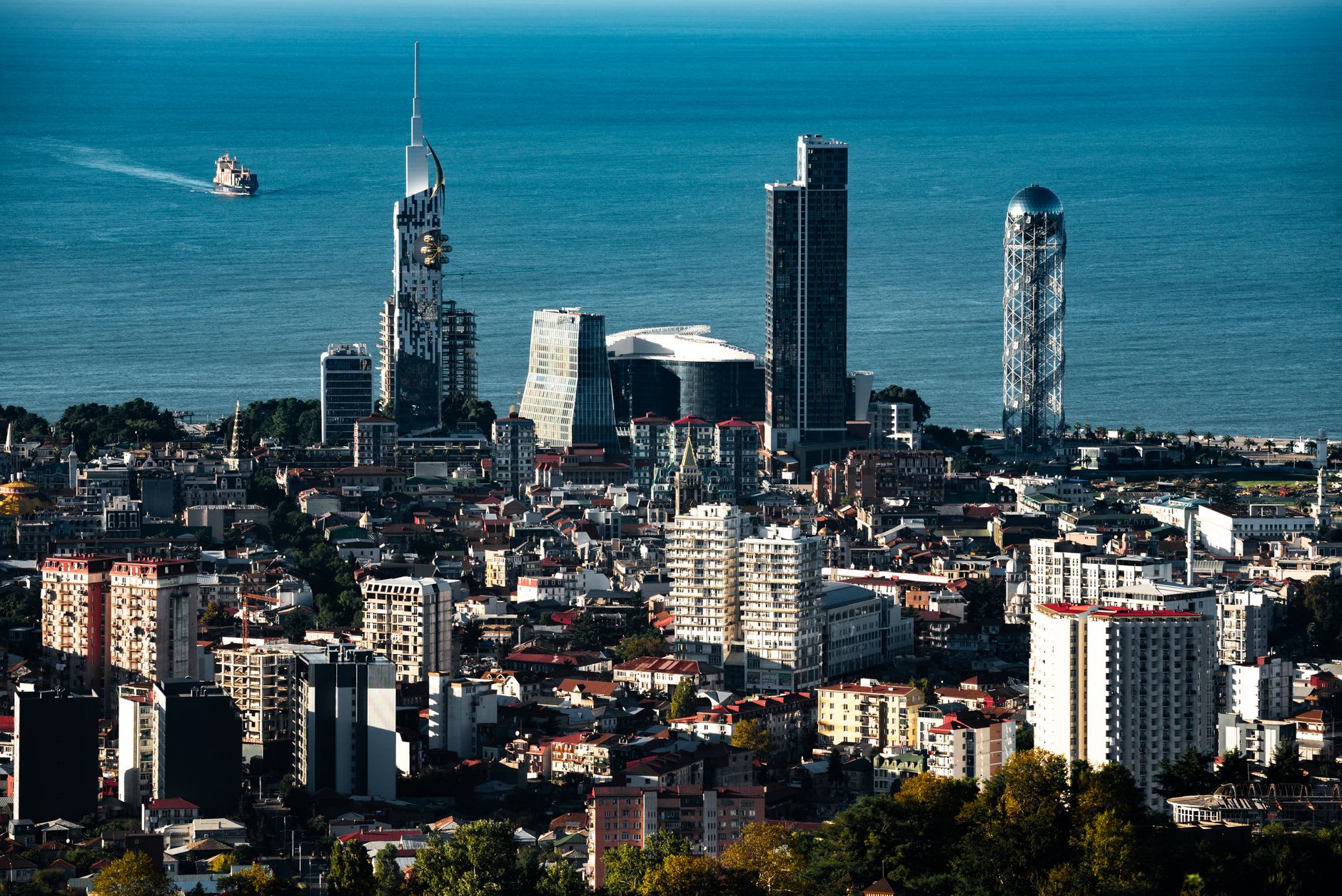
I do not love Batumi the way I love smaller places on this coast. It is too loud, too contradictory, too committed to becoming something I find mildly exhausting. But I understand why people arrive and can’t leave — something in the texture of the place, the sweetness of the wine at two in the morning, the balcony views across a sea that looks like hammered tin, keeps pulling you back into another conversation with it.
When to go: May through June or September through October. July and August the city runs hot and the waterfront promenade becomes a parade. Spring brings magnolias and the old town wears its decay most beautifully. Autumn is quieter and the sea is still warm enough to swim.