
Freiburg im Breisgau
"I stepped off the train expecting a gateway town and found a city with a personality so distinct it makes the forest feel like its backyard."
I arrived from Basel on a Tuesday morning and made the mistake of assuming Freiburg was merely a launching point. The train station opens onto a city that moves with a particular kind of confidence — students on rattling bicycles, market vendors calling out the price of Breisgau strawberries, and running through every paved channel along the gutters, the Bächle: narrow streams of fast-moving mountain water that trace the old city’s street grid and have been doing so since the medieval period. I watched a child drop a walnut boat into one of these channels and then sprint to keep up with it for half a block before it vanished into a grate. The Bächle are absurd and charming and completely unremarked upon by anyone who lives here, which is the most Freiburg thing about them.
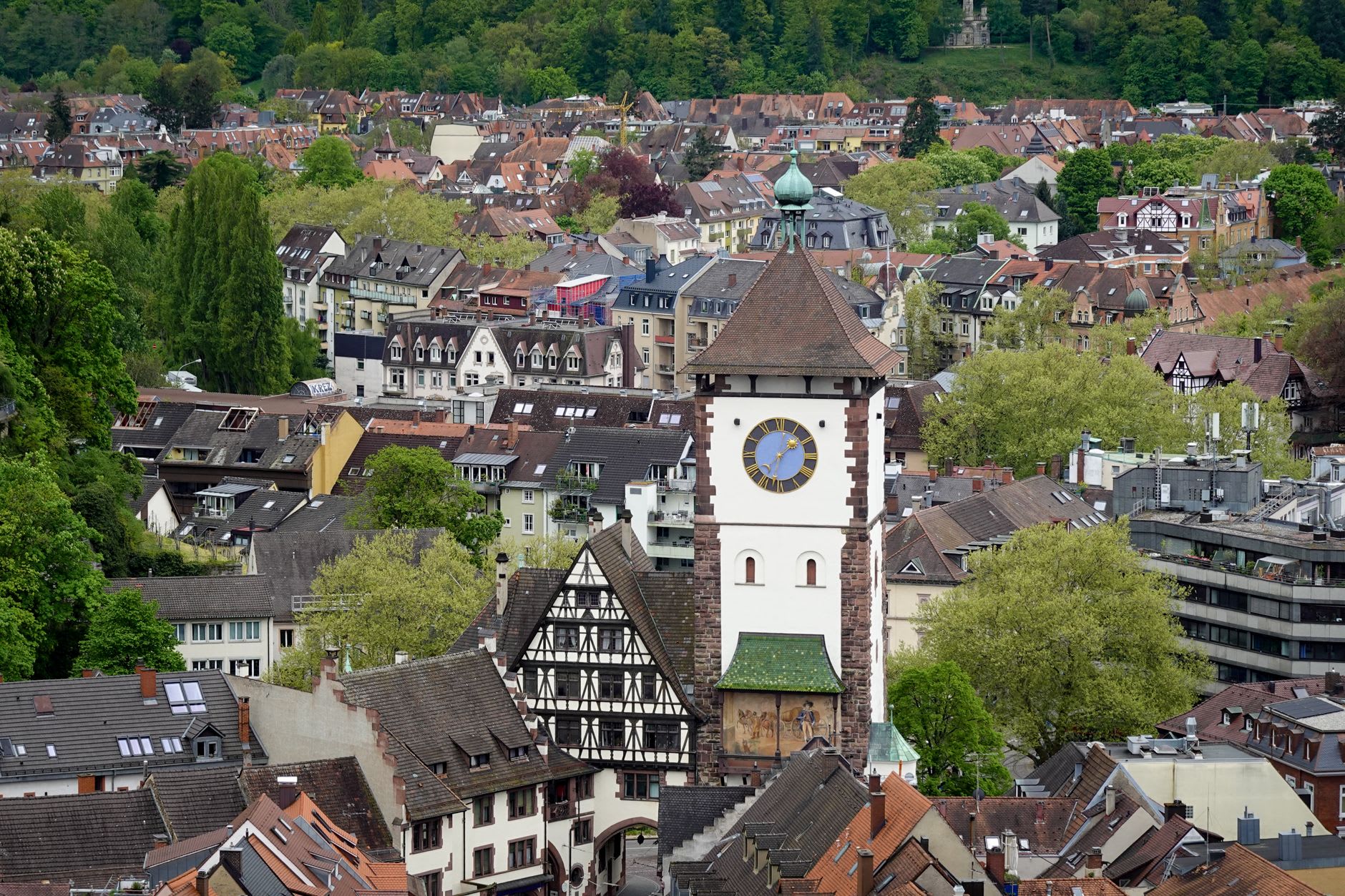
The Münster stops you. You can be midway through a sentence about something else entirely and then you turn a corner and there it is — this enormous Gothic tower in warm red Vosges sandstone, unfinished for centuries until the fourteenth century when the spire was finally completed, and still so disproportionate to the square below it that it produces a faint vertigo. Below the tower, the Saturday market is one of the best in the country: whole wheel Emmental from nearby farms, jars of dark forest honey with the color and consistency of amber, and bundles of Badische herbs that smell like something between thyme and rosemary and something I cannot name. A woman at one stall was selling handmade schnaps in unlabeled bottles, and she poured me a sample of Mirabelle plum without being asked, which felt like an act of elemental hospitality.
The wine is the thing most visitors miss about Freiburg. The Kaiserstuhl — an ancient volcanic mound rising from the Rhine plain about twenty kilometres west — produces Pinot Noir here called Spätburgunder that has nothing of the thin northern version about it. Freiburg is the city where you drink it in small wine bars with bare wooden walls and no menu posted outside, where the person behind the bar opens bottles with the matter-of-fact authority of someone who has never had to justify why their wine is good. I sat in one of these bars until the light outside turned amber, and I ate a board of Badischer Speck and aged Harzer cheese, and I understood why people who move here for university never quite manage to leave.
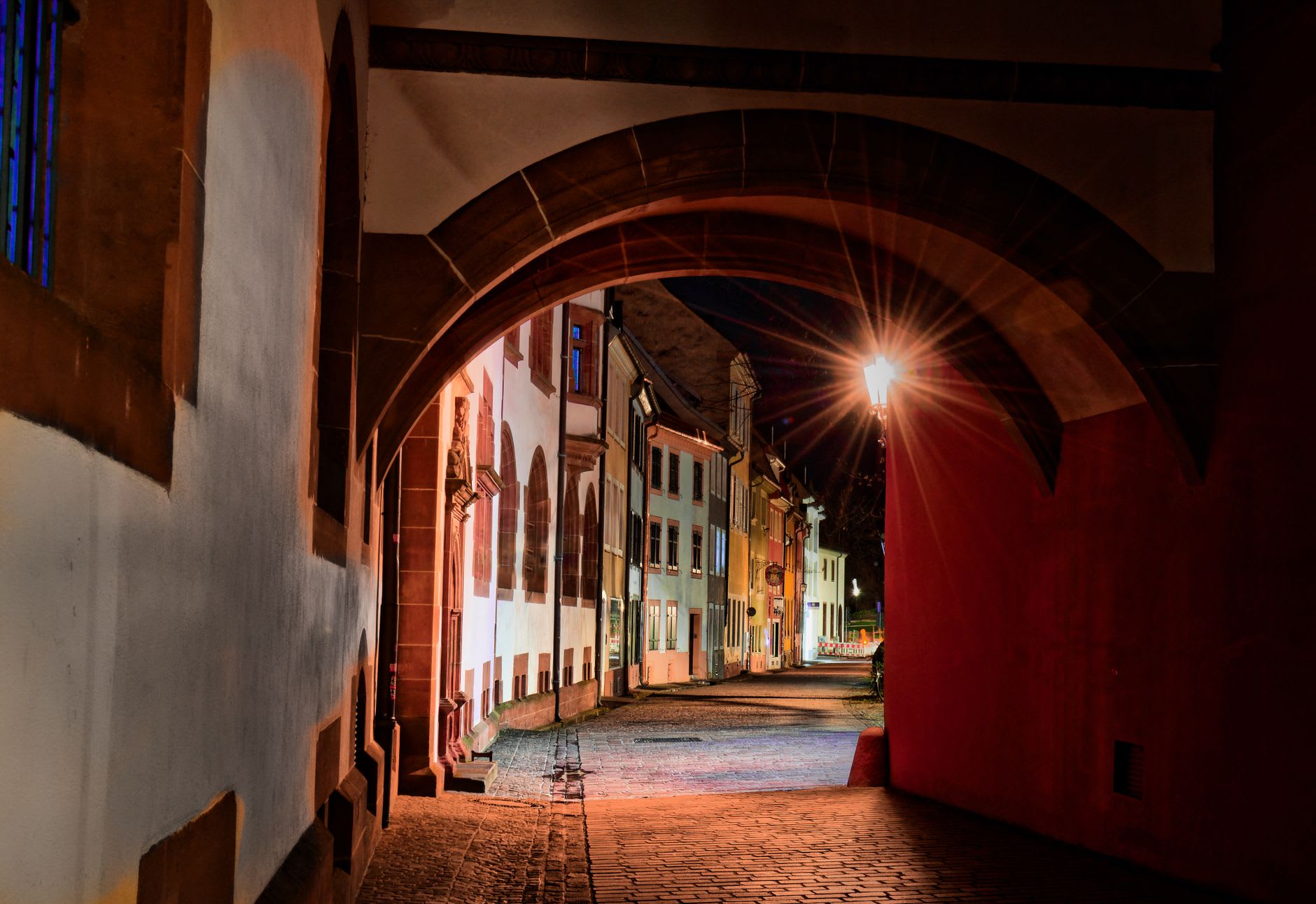
The Schlossberg hill above the old town is for evenings. A funicular takes you up, or you walk — the path through the Schlossberg park winds through chestnut trees and smells of damp earth after rain — and from the tower at the top, the whole Rhine plain opens westward toward Alsace and the Vosges, while the Black Forest closes in eastward, ridge after ridge of dark fir, the city wedged in its gap like something that grew there naturally. Which, in a way, it did.
When to go: May and June bring the Breisgau strawberry season and long warm evenings on terrace wine bars. September is harvest time across the Kaiserstuhl, with new wine appearing at market stalls by October. December’s Christmas market under the Münster is genuinely beautiful, though crowds peak on weekends.