Thimphu
"Thimphu is what a capital looks like when a country decides not to become a city."
Thimphu surprised me by being so thoroughly itself. I had expected compromise — the inevitable erosion that comes when a traditional society meets administrative modernity — but the capital of Bhutan wears its contradictions with a kind of untroubled confidence. The streets are narrow and the buildings low, painted in cream and ochre with traditional latticed windows, and at the main intersection a policeman in dress whites and a peaked cap directs traffic from inside a decorative booth. There are no traffic lights in Thimphu. The city tried them briefly in the 1980s and residents found them cold and impersonal; the booths came back. I watched this policeman for ten minutes from a teahouse window and felt an unexpected tenderness for the whole arrangement.
The Wang Chhu river runs through the valley below the city, and on weekends the market on its banks draws farmers from the surrounding hills. I arrived on a Saturday morning when the stalls were full: baskets of dried red chilies stacked to my eye level, pyramids of suja — salty butter tea in old thermoses — and rough circles of datshi, the fresh yak cheese that holds ema datshi together. A man was selling betel nut wrapped in leaf, the red-stained teeth of the buyers around him evidence that this was not a casual habit. I bought a packet of ngaja — sweet black tea — and drank it in the cold with old men who looked at me without judgment.

The Tashichho Dzong, at the northern end of the city, is the seat of the Bhutanese government and the summer residence of the Je Khenpo — the chief abbot. It is whitewashed and vast, its golden rooftop finials catching the afternoon light, its courtyards accessible to visitors only in the evening when the monks and civil servants have finished their work. I went at five o’clock when the low sun lit the painted murals along the interior corridor with a warmth that made them appear to move. The monks chanting in the assembly hall produced a sound so deep and so even it registered less as music than as atmosphere.
Thimphu’s Memorial Chorten, near the southern end of town, is where the older residents come to pray. It is the most active religious site in the city — not the most spectacular, but the most alive. Old women in kira dress circled the white stupa clockwise, murmuring mantras with strings of prayer beads looped through their fingers. The smell was juniper and butter smoke and the faintest trace of incense brought in from somewhere farther inside. I sat on the stone steps around the base and watched the city’s daily life conduct itself in orbits around this white tower, and thought: this is a place that takes its cosmology seriously.

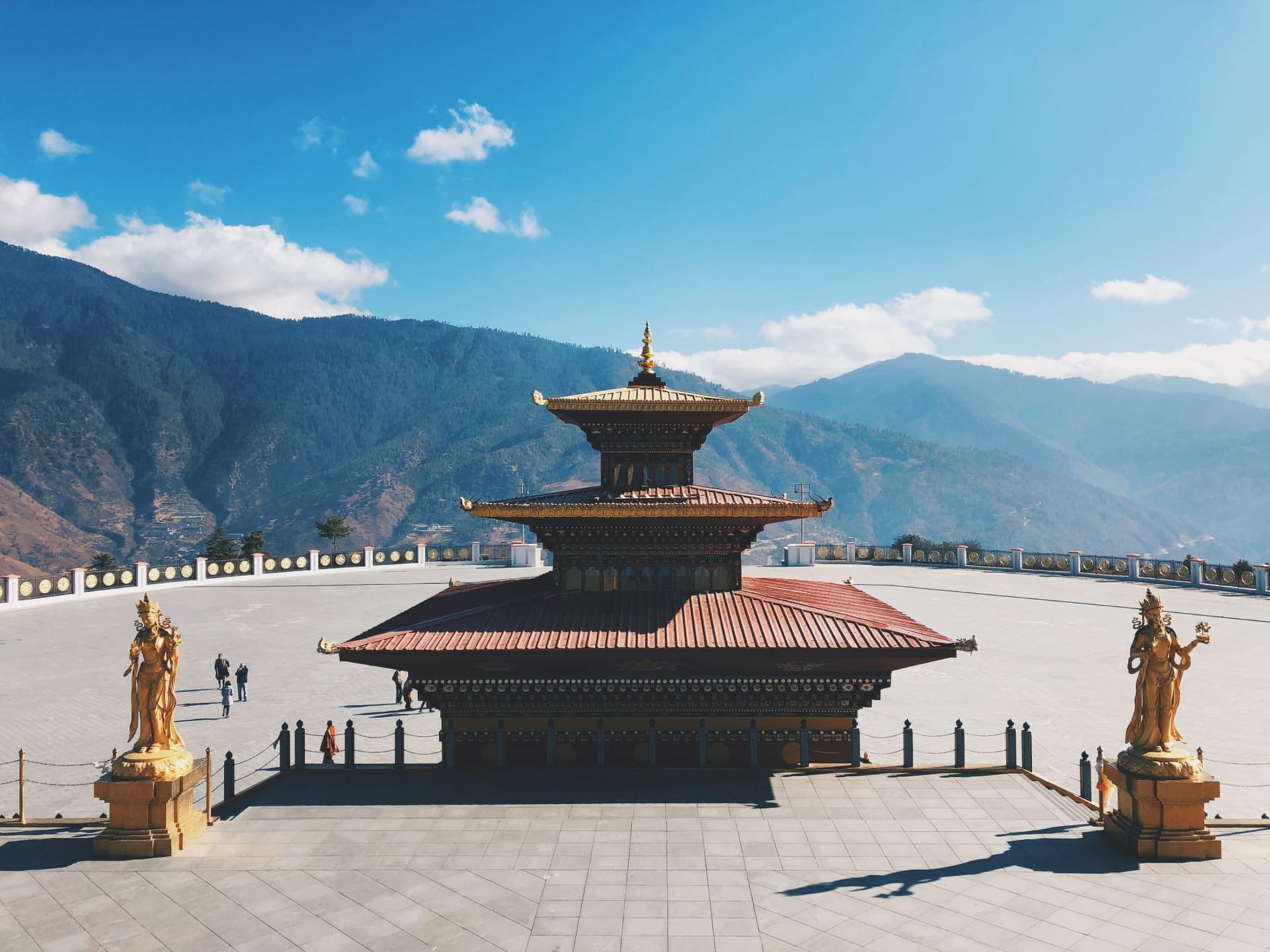
Above the city, the Buddha Dordenma — a 51-metre bronze Buddha painted in gold, seated above the valley on a forested hill — is large enough to seem almost cartoonish in photographs. In person, approached through a grove of prayer flags and rhododendron trees in the early morning, it is something else entirely. The scale makes everything quiet. Below it, the entire Thimphu valley spreads out in its mist and patchwork fields, ringed by mountains whose peaks disappear into cloud. I ate a bowl of thukpa noodle soup at a stall near the base, hands wrapped around it for warmth, and felt genuinely grateful for the daily fee that keeps all of this from becoming a postcard.
When to go: October and November bring clear skies and the Thimphu Tsechu festival, held over three days in autumn with mask dances in the dzong courtyard. March and April are milder, with longer days and the rhododendrons beginning to bloom on the hills above the city. Avoid the June-August monsoon.