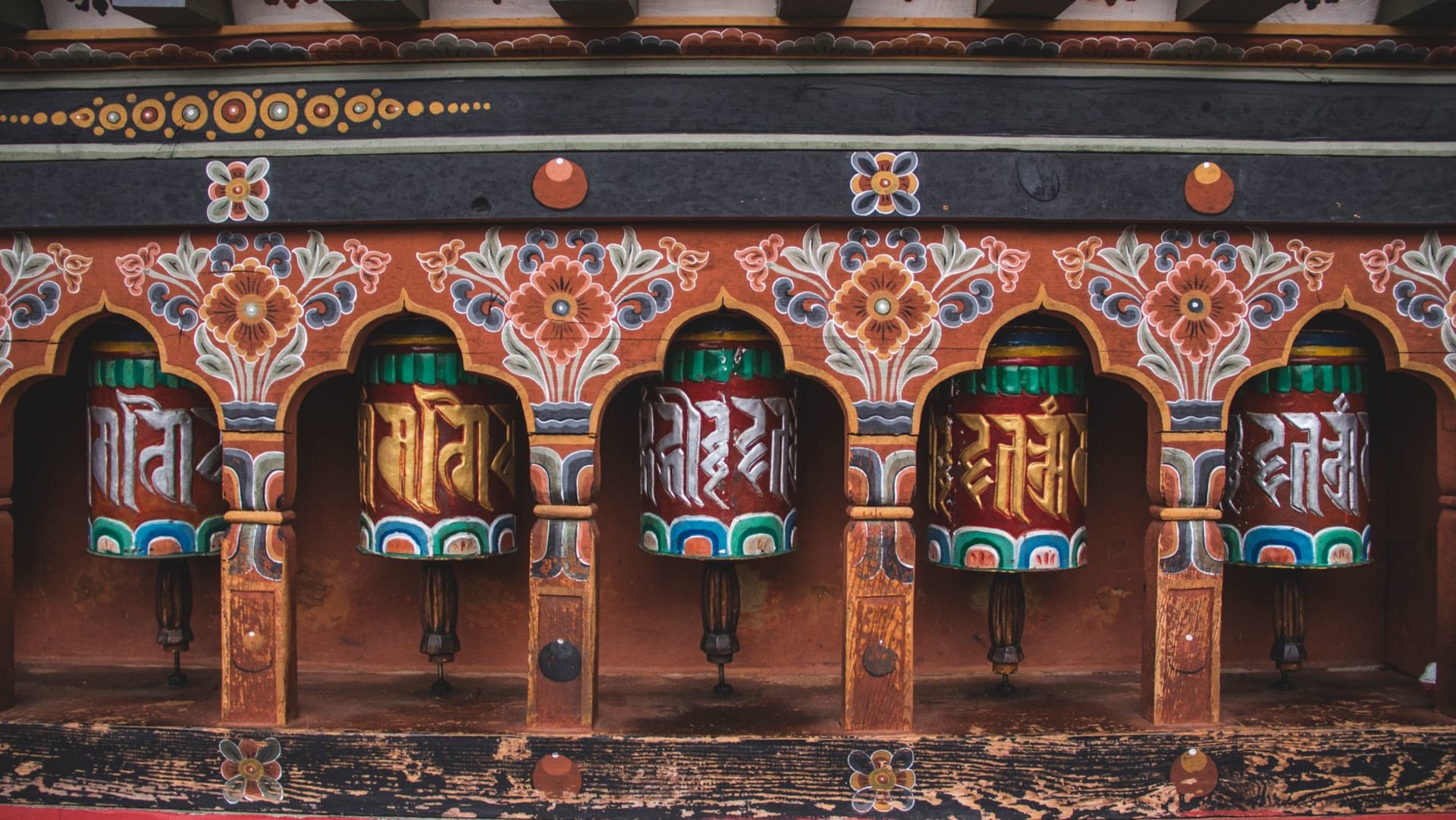
Lhuentse
"Lhuentse Dzong looks like it was placed there by someone who wanted to make clear that gravity is optional."
The road to Lhuentse branches north from Bumthang and climbs steadily, crossing a pass and then dropping into the valley of the Kuri Chhu river, which runs cold and clear through a gorge that gets progressively narrower and deeper as you travel north. I made the journey in a day from Jakar, my driver silent and focused on a road that had sections of bare rock and sliding shale where the hillside was still working out its own geometry. At one point we waited twenty minutes while a rock-clearing crew removed debris from the road with crowbars and bare hands. The detour is half the point.
Lhuentse Dzong appears above the gorge before you expect it — a white rectangle on a white cliff, floating against the rock face in a way that seems to defy engineering logic. It is the ancestral home of the Wangchuck royal family, and even now retains a quality of significance that the more heavily visited dzongs don’t quite match: because fewer people come here, it has not had to adapt to being observed. There is no parking lot, no ticket booth, no postcard stand. A gate, a monk, a courtyard. The interior walls are covered in paintings of a density and intricacy that suggests a great deal of time and devotion was available to the artists who made them. I spent an afternoon in there that I cannot fully account for.
Lhuentse is famous throughout Bhutan for its kishuthara — silk cloth woven with supplementary weft patterns in colours so intense they seem lit from within. The weaving is done by women in the villages around the district capital, using hand looms that are set up under the eaves of traditional houses, and the process is slow enough that a single length of quality kishuthara can take weeks. I stopped at a village on the road into town where a woman was working at her loom in the morning sun, her shuttle moving back and forth with an automaticity that suggested complete absorption. She held up a finished length when I admired it: red and gold with geometric patterns, the silk catching the light differently on every thread. I asked the price. She named a figure that seemed reasonable. My guide raised an eyebrow and said, quietly, that I was being given a very good deal.
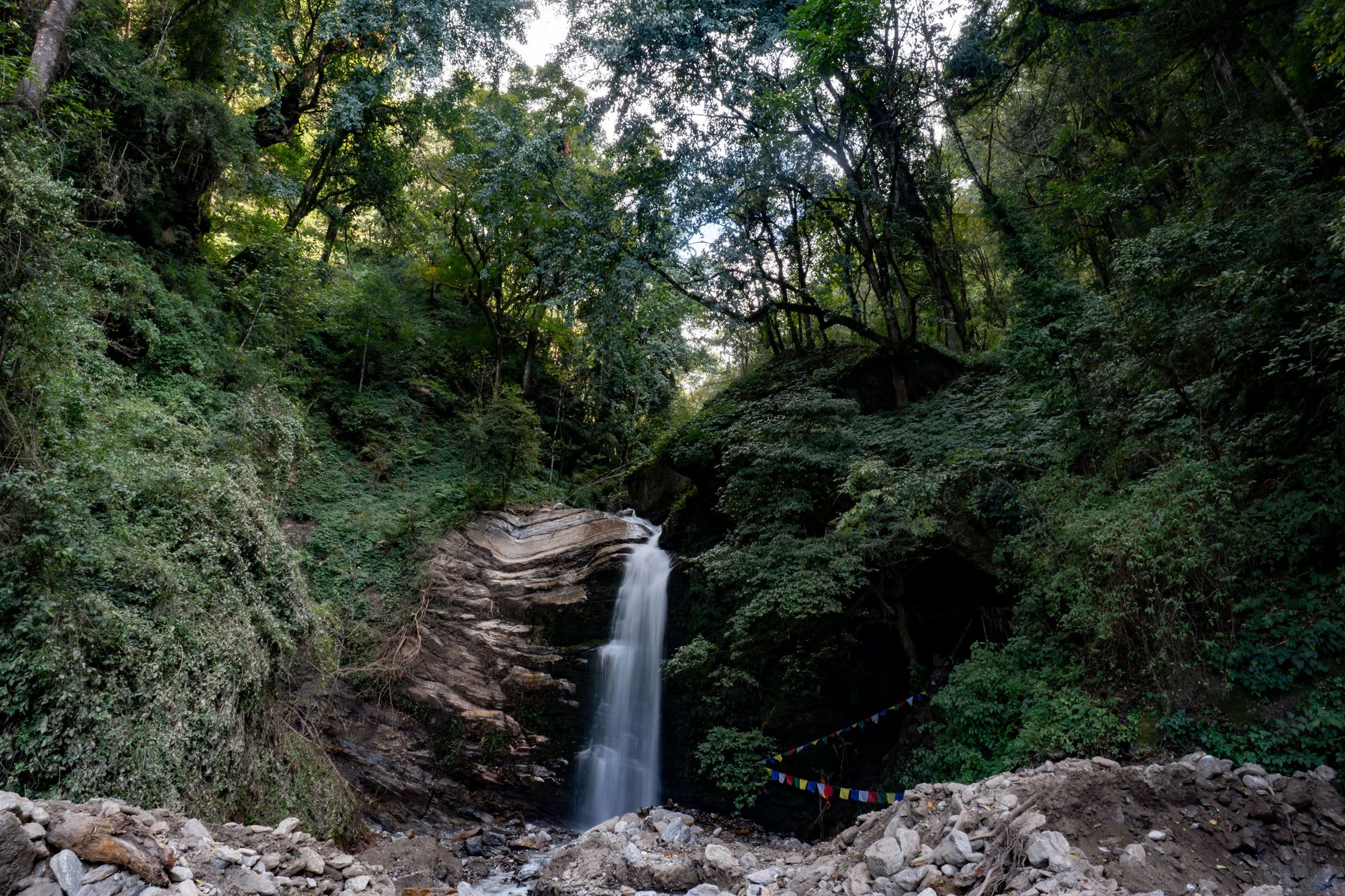
The Kuri Chhu river, running below the dzong, is clear enough in October to see the boulders on its bed through two metres of water. I swam in a pool above a small rapid in the early afternoon when the sun was directly overhead, the cold intense enough to produce a sound in my ears when I went under. A fisherman downstream watched me without comment, working his line around a mid-river rock. There are golden mahseer in these rivers — enormous freshwater fish considered sacred in Hindu and Buddhist tradition — and they are never taken. They grow enormous in the absence of any pressure. One passed me in the pool, slow and unhurried and about the length of my arm.
Getting to Lhuentse requires a full-day return to wherever you came from — there is no shortcut through to eastern Bhutan from here, or rather there is one, but it goes over a high pass and is often closed. Most visitors treat Lhuentse as a two-day excursion from Bumthang: one day driving north, one day in the dzong and villages, back the same road. The repetition is not a problem. The gorge looks different in the afternoon than it does in the morning, and the second crossing feels like seeing it properly.
When to go: October and November are ideal — the post-monsoon air is clear, the Kuri Chhu is at a level that allows swimming, and the light on the white cliff of the dzong is extraordinary at both sunrise and sunset. March and April are also good. Avoid December and January when the road can ice over the passes, and the June-August monsoon when landslides make the already-difficult road unpredictable.