Haa Valley
"In Haa, the absence of other travelers isn't an observation — it's a physical sensation."
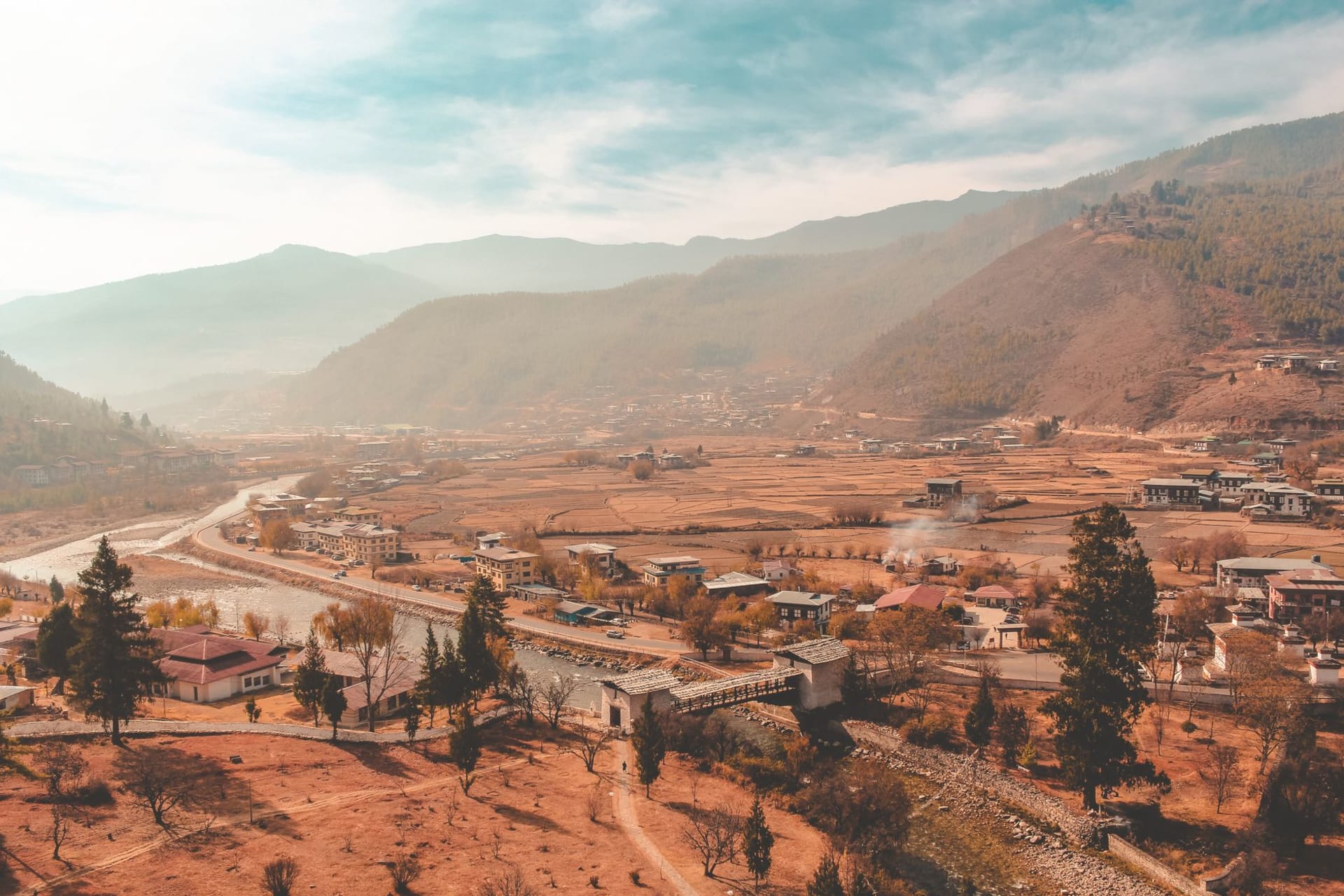
Getting to Haa requires crossing the Chele La pass, which at 3,988 metres is the highest motorable pass in Bhutan. I left Paro before dawn to avoid the clouds that typically settle on the pass by midmorning, and reached the summit as the sun was clearing the eastern ridgeline. The prayer flags here are old and wind-shredded, their colours bleached to the same pale blue-white by altitude and year-round exposure. Yaks grazed on the upper slopes. The drop into the Haa valley on the far side is steep and slow, the road switching back and forth through blue pine forest until the valley floor opens suddenly below — a wide green bowl edged by mountains that felt, in that early morning light, entirely uninvented.
Haa remained closed to foreign visitors until 2002. The valley sits close to the Tibetan and Indian borders and was long considered too strategically sensitive to open. Even now it receives a fraction of the visitors that Paro and Thimphu do, partly because the road is difficult and partly because there is no dramatic headline attraction — no Tiger’s Nest, no thundering dzong. What Haa has instead is the quality of a place that hasn’t adjusted itself for observation. People go about their business. A woman was winnowing grain in a field beside the road when I arrived, tossing it into a breeze she seemed to know the exact direction of. She didn’t look up.

In the heart of the valley, two temples face each other across a meadow: the Lhakhang Karpo (White Temple) and the Lhakhang Nagpo (Black Temple). The White Temple is older by some accounts and more visited — painted cream with a gilded roof, its prayer wheels freshly oiled. The Black Temple across the field is smaller, darker in colour and atmosphere, its interior lit only by butter lamps and the wan light that comes through a single high window. I went into the Black Temple alone while my guide waited outside, and sat for a long time with the lamps. The monk who appeared from the back room nodded and offered me butter tea in a tin cup. It was the saltiest tea I have had in Bhutan, and I drank it all.
The Haa valley also has a significant military presence — an Indian Army camp has been stationed here for decades under the India-Bhutan friendship terms, and Indian jawans in fatigues are part of the valley’s daily visual landscape. This juxtaposition of medieval temples and military practicalities is very Bhutanese — the country has always navigated its geography with pragmatism. The soldiers buy vegetables at the local market. The monks sell them butter.

Above the valley, hiking trails wind through oak and rhododendron forest toward high pastures where yak herders bring their animals in summer. My guide took me up one of these trails until we came to a clearing with a view back down the entire length of the valley — the temples tiny rectangles of white and dark brown in the green, the military camp a grid of rooftops near the river, the mountains on all sides so covered in forest they looked like green wool. We ate dried yak meat and hard cheese from his pack and drank water from a stream. Nothing about this required planning or effort. It was simply there.
When to go: June and July are unexpectedly good here — the monsoon that saturates Paro turns Haa into a vivid green valley with wildflowers on the upper slopes, and the crowds (already small) disappear entirely. The Haa Summer Festival in July offers yak racing and traditional archery. October brings crisp autumn light and the clearest mountain views from the Chele La pass.