Ouidah
"The sea beyond the Door of No Return looked exactly the same as any other sea. That's what stayed with me."
The Route des Esclaves is about three and a half kilometers of red dirt road running south from Ouidah’s central square to the beach, and I walked it in the early afternoon when the sun was at its worst, partly by accident and partly because I felt it would have been wrong to rush. The path is lined with statues and monuments marking stages of the slave trade — the Tree of Forgetting, where captives were made to walk in circles to erase their memory of home; the Tree of Return, where they walked so their souls would find the way back. The rituals of erasure built into this landscape are what haunted me most. Someone designed these not just as cruelty but as systematic psychological dismantling.

Ouidah itself is a town of maybe thirty thousand people that wears its history with a kind of unflinching composure. The Brazilian-style architecture in the center — pastel facades with wrought-iron balconies — is the physical trace of freed slaves who returned from Brazil in the nineteenth century carrying Portuguese surnames and a taste for tile work. The Python Temple, tucked behind an unremarkable doorway near the basilica, is home to sixty or seventy royal pythons considered sacred in the Vodou tradition; a man draped one around my neck with the calm of a pharmacist handing over change, and I stood very still trying to feel philosophical about it. The snake was warm and heavier than I expected.
Every January, Ouidah hosts the Vodou Festival — the Fête du Vodoun — which draws initiates, tourists, and practitioners from across the diaspora, from Haiti and Brazil and New York, all converging on a town that for a few days becomes the spiritual capital of a religion that crossed an ocean in the holds of slave ships and survived anyway. I visited outside the festival season and still felt the religion’s presence: in the Zangbeto masquerades that appeared around a corner one evening without warning, in the fetish market near the basilica where dried chameleons and calabash bowls sat beside Christian devotional cards, in the quiet way the town seemed to hold multiple cosmologies simultaneously without contradiction.

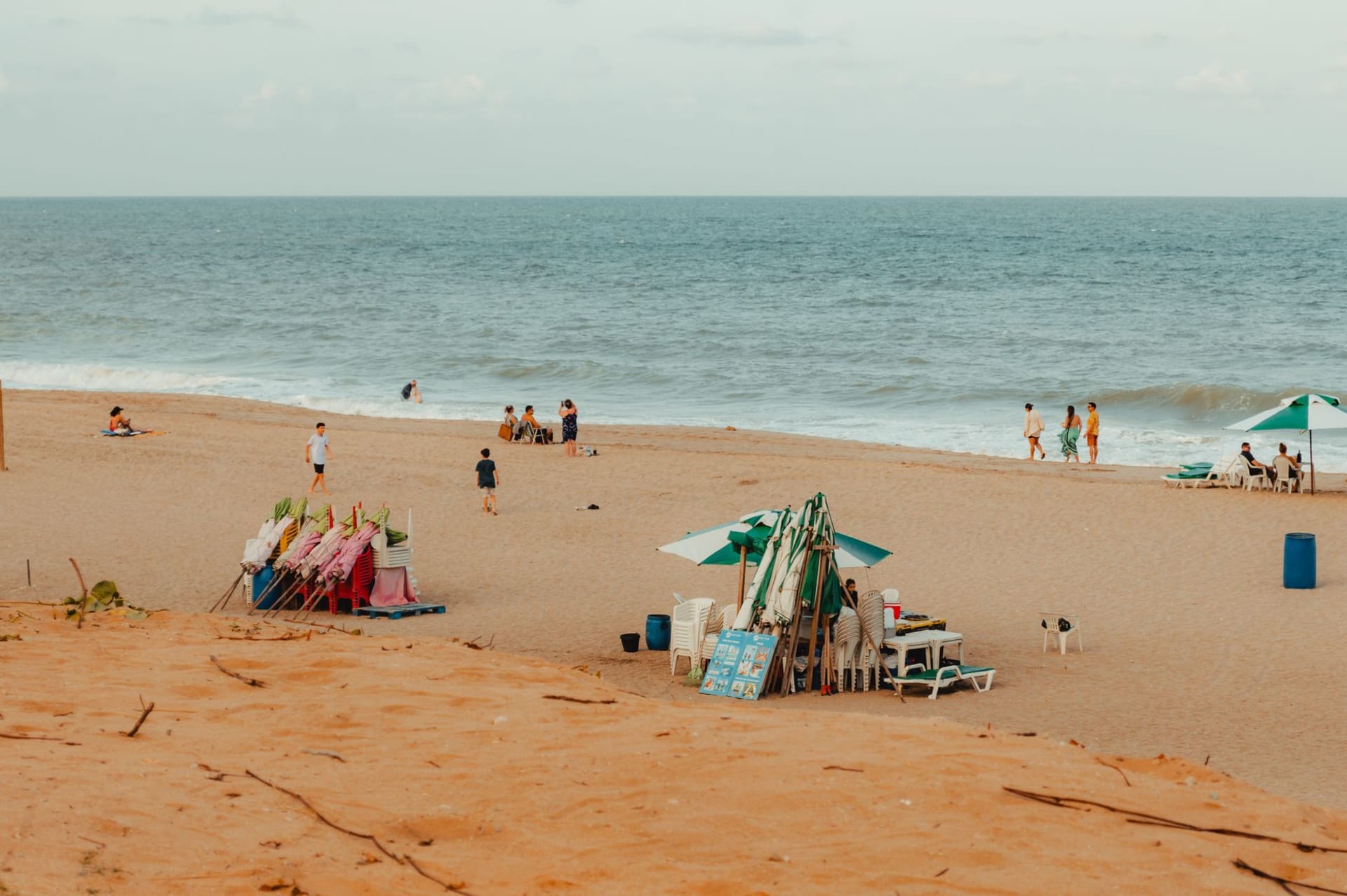
The beach at the end of the Route des Esclaves is wide and wild, the Atlantic coming in hard without any reef to break it. The Door of No Return stands a few meters from the water, an arch facing the sea. Children were playing in the surf. Fishing boats were beached nearby. The waves were the same waves they always are. I stood there for a while without thinking anything useful, and then I walked back up the road through the heat.
When to go: November to February for comfortable dry-season weather. January 10th is the Fête du Vodoun — spectacular but requires booking accommodation weeks in advance, as the town fills completely. Avoid the full rainy season (June–September), when the road south can flood.