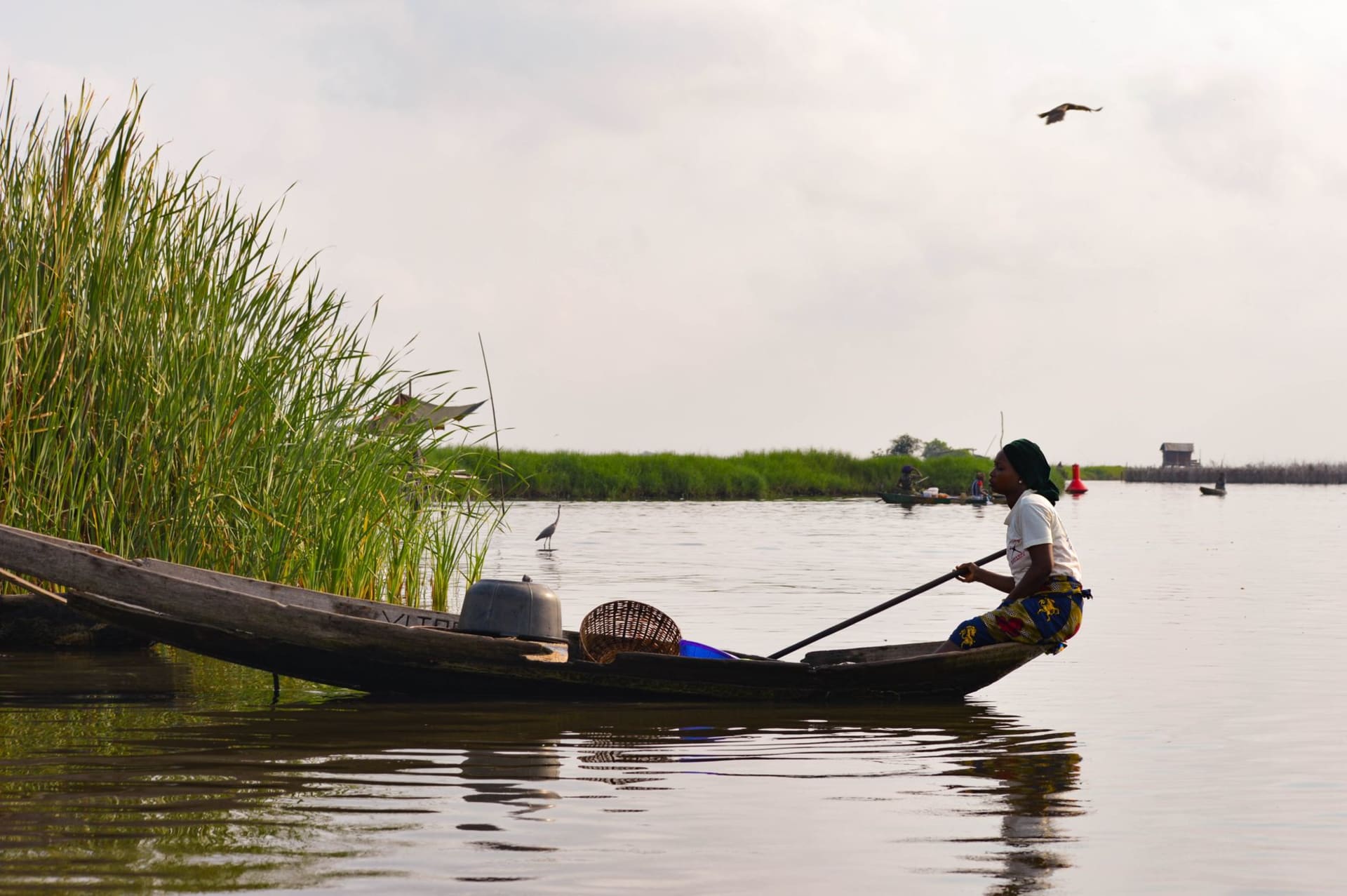
Grand-Popo
"Grand-Popo is the kind of place that makes you renegotiate your relationship with doing nothing."
I almost didn’t stop at Grand-Popo. It appeared as a small red dot on the map between Cotonou and the Togo border, and the name alone — which sounds like something a child would invent — didn’t inspire confidence. Then I arrived and found a town of maybe eight thousand people organized around a wide lagoon where the water barely moved, coconut palms leaning over it from both sides, and a beach on the other side of a narrow spit of sand where the Atlantic came in grey and serious. I stayed three nights, which is two nights more than I’d planned.
The town’s pace is the first thing you register — not lazy, exactly, but fundamentally unconcerned with urgency. The fishermen work with the tide, not the clock. The women drying shrimp on racks by the water take breaks that seem calibrated by light and heat rather than any schedule. The small pirogues that ferry people across the lagoon run when there are people to carry, and if there aren’t, the boatman sits and waits with the composure of someone who has correctly identified waiting as simply another form of useful activity. I found myself absorbed into this rhythm faster than I expected and slightly reluctant to leave it.
What Grand-Popo has geographically is the meeting of the Mono River and the Atlantic — the estuary creates a liminal zone of sandbars, mangrove channels, and shifting water that is different every season. I borrowed a pirogue from the hotel and paddled out into the lagoon on my last morning, getting turned around in a mangrove channel before finding my way back to open water by following the sound of surf. The birdlife in the mangroves is serious: kingfishers, egrets, herons working the shallows, and once, something I couldn’t identify that perched in dead tree and observed me with the composure of a bird that knows it’s rare.
There are a handful of beach lodges here — Auberge de Grand-Popo being the most established — where the hammocks are deep and the cook makes grilled barracuda with a chili-lime sauce that tastes better than the same dish would in any restaurant. The beach itself is never crowded. The Atlantic at this stretch is strong and the undertow is real; the locals don’t swim in it, which I took as useful information. But the beach is long enough and empty enough that walking it in the evening, when the fishing boats come in through the surf with their day’s catch, is its own complete pleasure.
When to go: November through February gives the best combination of manageable heat and low humidity. April through May brings slightly rougher Atlantic conditions but the lagoon is calm and the mangroves are vivid green. Skip the full rainy season unless you specifically want a near-empty village and don’t mind mosquitoes.