Caracol
"We climbed Caana and the forest just kept going, in every direction, like there was no edge to it."
Deep in the Chiquibul Forest, Belize's largest Maya city hides a pyramid taller than the jungle canopy itself.
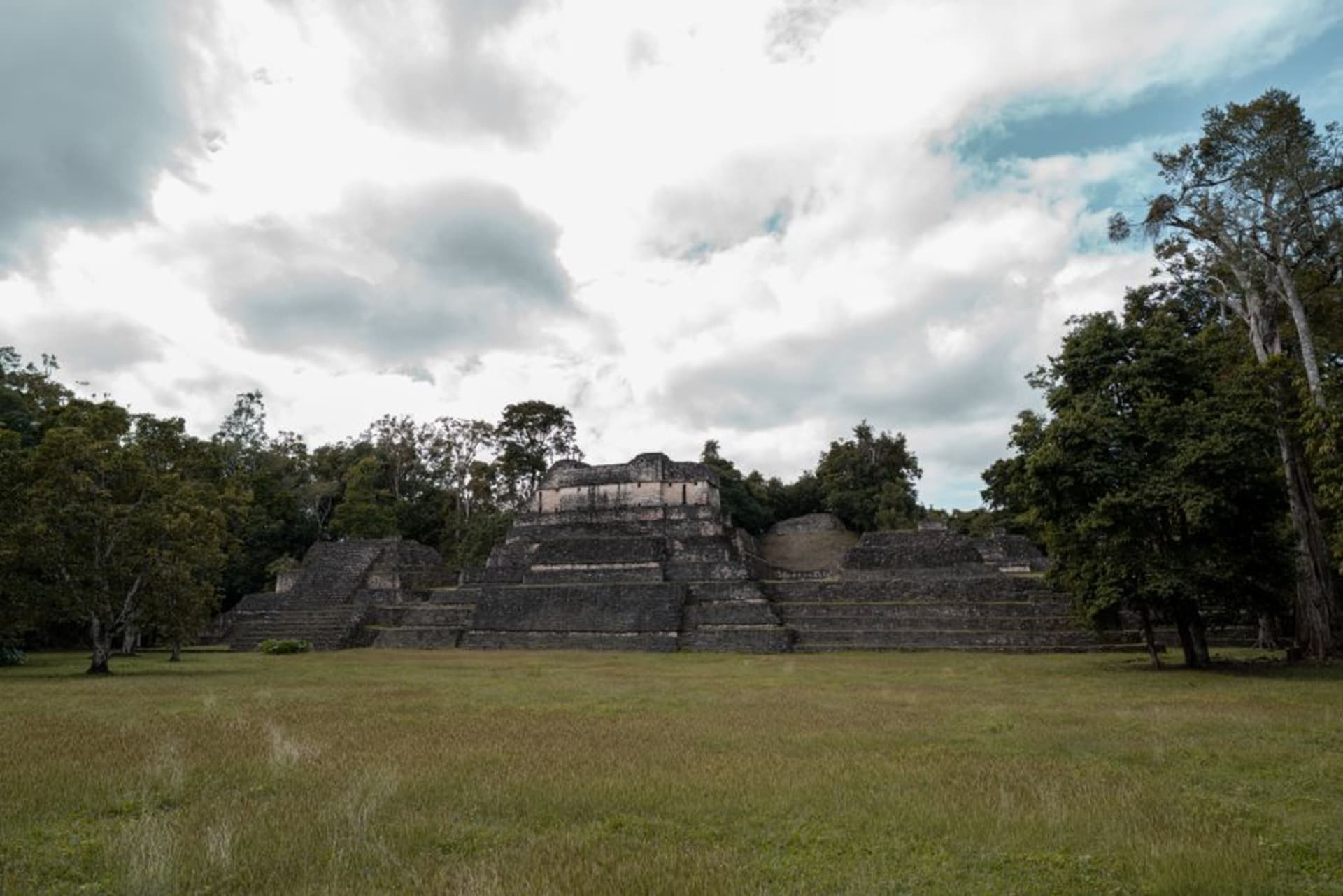
The road to Caracol takes almost as long to tell as the ruins themselves. Lia and I left San Ignacio before six, bumping along nearly two hours of unpaved track through the Chiquibul Forest Reserve, army checkpoint and all, before the trees finally broke open onto the plazas. I remember thinking that a city of over 100,000 people once lived out here, at the height of its power around 650 AD, rivaling Tikal just across the border in Guatemala — and now it’s just us, a guide, and the sound of howler monkeys somewhere up in the canopy.
Nothing prepares you for Caana. “Sky Palace,” the guide called it, and at roughly 43 meters it’s still the tallest man-made structure in the entire country — taller than any building in Belize City, taller than anything we’d seen since Guatemala. We climbed it slowly, stopping on the terraces to catch our breath, and Lia turned around halfway up and just stopped talking. The jungle rolled out flat and unbroken to the horizon, no roads, no rooftops, nothing but green.
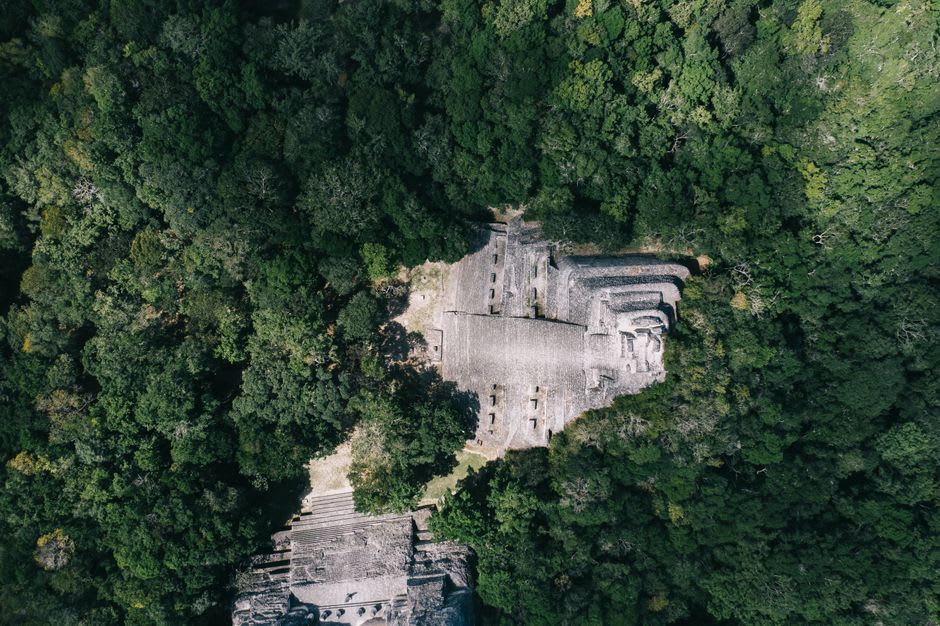
What got me, walking the site afterward, was how much of it is still hidden. A logger stumbled onto Caracol in 1937, and archaeologists have since mapped causeways radiating out from the center, ballcourts, and hundreds of tombs — and our guide kept gesturing at unexcavated mounds still swallowed in vegetation, saying almost casually that nobody’s opened those yet. We ate lunch on a stone bench near one of the smaller plazas, tortillas and cheese Lia had packed that morning, watching a coati root around near a stela like it owned the place.
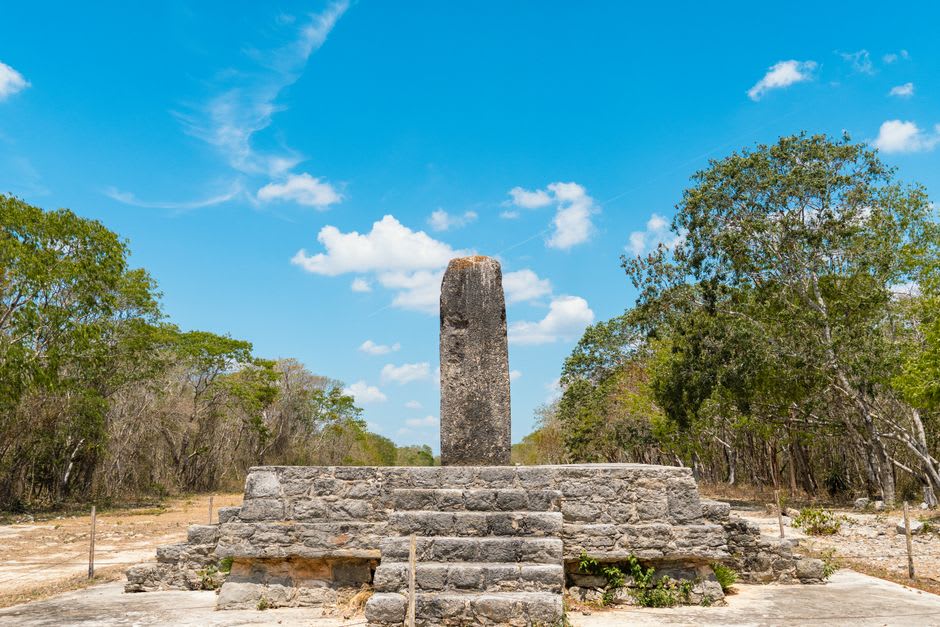
By the time we started the drive back, the light was doing that late-afternoon thing through the trees, and neither of us said much. Caracol doesn’t hit you the way a busy, restored site does — there’s no gift shop energy to it. It felt more like being let in on something the forest hadn’t quite finished giving back.
When to go: Aim for the dry season, February through May, when the unpaved roads through the Chiquibul hold up well enough to actually get you there — we heard from other travelers that the same drive turns brutal, sometimes impassable, once the rains set in.