Namur announced itself from the train window: first the Meuse, wide and grey-green, then the Sambre joining it from the left, and above the confluence, the citadel climbing its rock in stages like an argument for strategic location. I’d been told Namur was a stopping point rather than a destination. This turned out to be wrong in the specific way that’s worth correcting — the city is quiet in a way that’s earned rather than accidental, and it holds its pleasures without advertising them.
The Citadel
I took the cable car up — there’s a path too, but the cable car deposits you above the trees into a different world of grass fortifications, underground tunnels, and views that explain immediately why this rock was contested for centuries. Romans, Burgundians, French, Austrians, Dutch — the citadel’s history is essentially a ledger of European power changing hands. The fortifications are extensive enough to take seriously and the underground tour through the tunnels (carved by hand over centuries) passes through chambers where the temperature drops ten degrees and the walls are still blackened from old fires. At the top, the Meuse and Sambre describe the city below in a single glance. Lia photographed the view three times and still said it was impossible to get right.
The Old City on Foot
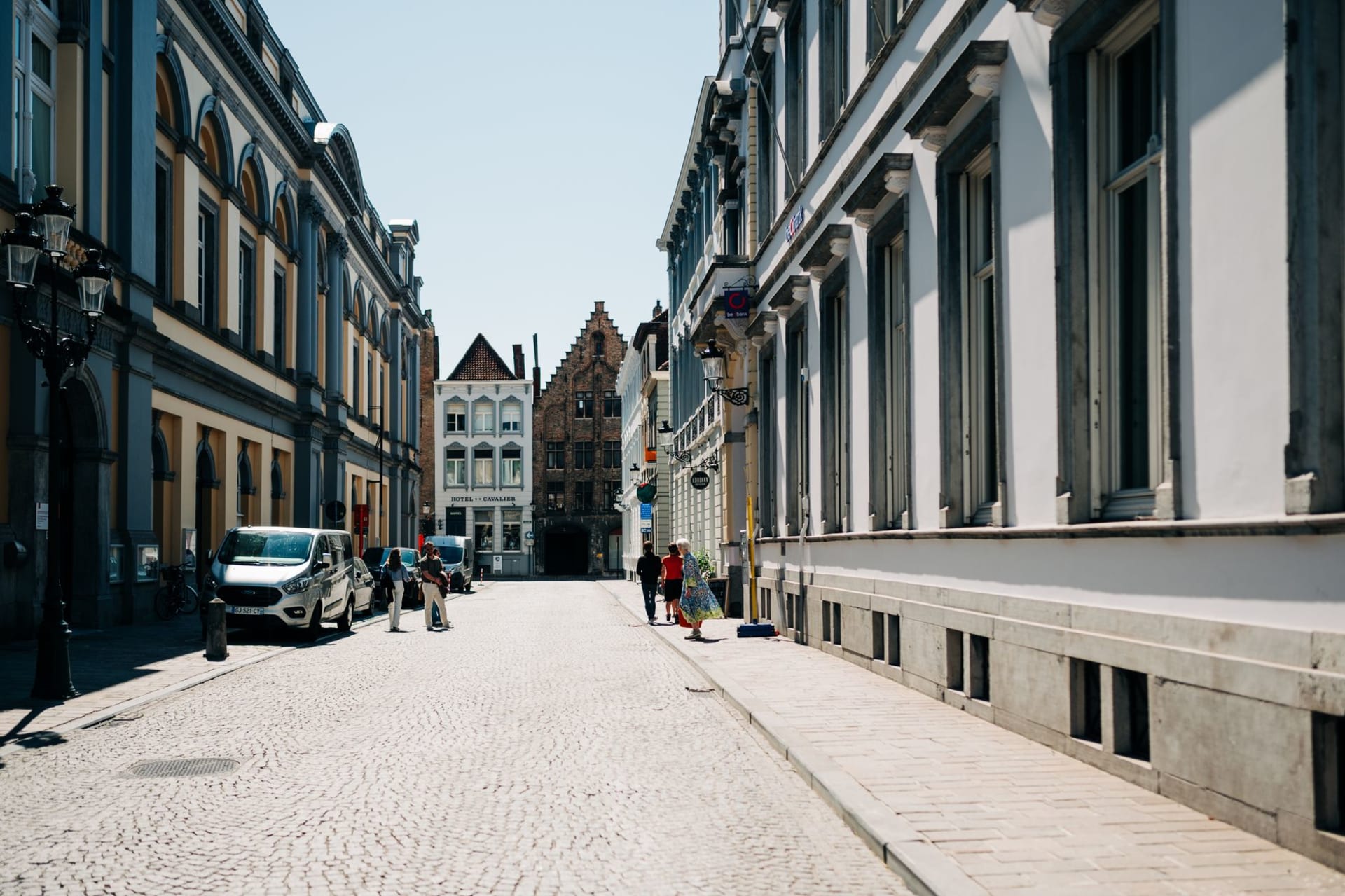
Coming down, I walked the old center rather than taking the cable car back. The streets in Namur’s historic quarter are narrower than you’d expect for a regional capital, and the city’s architectural character — Flemish baroque blended with French provincial — shows in small details: iron window grills, shuttered stone facades, covered passages connecting streets. The Place du Marché aux Légumes is the kind of square that works as a square should: café terraces, a market on weekday mornings, people sitting without obvious purpose. I had a coffee and watched the pigeons with a contentment that’s easier to feel than to explain.
River Light and the Waterfront
The banks of the Meuse below the citadel are where Namur exhales. A converted waterfront stretches along the river with rental kayaks, cycling paths, and a barge-bar that looked too cheerful to ignore. I didn’t kayak, but I watched others do it and the river looked genuinely inviting in a way that rivers don’t always look. The light in Namur — and this is specific to the confluence, to the way the two rivers create a wider sky than either could alone — has a quality I associate with river cities in France. Soft, diffuse, the kind of afternoon light that makes time feel optional.
Eating in Wallonia
Lunch in Namur is serious. I found a small restaurant near the cathedral doing regional Wallonian cooking — boulets à la liégeoise (meatballs in a sweet-sour sauce of sirop de Liège and vinegar), a local chicory gratin, bread from that morning. The sirop de Liège, made from reduced fruit, shows up all over Wallonian cooking in ways that took me a meal or two to notice and then couldn’t stop noticing — that sweet-tart undertow threading through sauces and condiments. The restaurant was half-full of people who appeared to work nearby and eat here often. I took that as a recommendation and ate as slowly as I could justify.
When to go: May through September for river activities and terrace weather. The Namur en Mai festival in late May brings outdoor performances to the squares and parks. Avoid the citadel on wet weekday mornings when tour groups arrive by bus — go early or late afternoon for the best light and thinner crowds. Namur is an excellent base for day trips into the Ardennes and fits naturally into a Wallonia loop with Dinant and Liège.