
Brussels
"The Grand Place at dusk made me forget, briefly, that I'd eaten a waffle for breakfast and called it research."
A city that perfected the art of contradicting itself — baroque grandeur one block from surrealist wit, EU bureaucracy five minutes from the best frites on earth.

Brussels resists the single-sentence summary. That’s partly why I keep coming back. It’s the capital of Europe in theory and a deeply odd, slightly disheveled Belgian city in practice — and the gap between those two identities is where the interesting stuff lives.
The Grand Place After the Crowds Leave
I arrived in the late afternoon on purpose. The tour groups thin out, the light goes syrup-thick and low, and the guild houses along the Grand Place start glowing in a way that feels genuinely unreal. The gilded facades were rebuilt after Louis XIV’s bombardment in 1695, which makes them younger than they look — Brussels has always been good at reconstructing itself with more flair than the original. I stood in the middle of the square for longer than I normally stand anywhere. The detail work on the facades rewards patience: stone merchants, brewers, archers, each guild asserting its place in a city that has always been defined by commerce and a certain competitive pride.
Art Nouveau and the Horta House
Victor Horta built his own home on Rue Américaine in 1898 and made every surface flow. I’d seen Art Nouveau facades before, but the Horta Museum is different — it’s the interior that stuns. The staircase cascades light through iron tendrils and colored glass; the dining room feels like eating inside a living organism. Lia ran her hand along the banister slowly, the way you touch something you’re trying to memorize. The whole house is an argument that functional objects — stairs, radiators, light fixtures — deserve as much thought as sculpture. It’s a short visit but I left feeling slightly dissatisfied with every room I’d ever lived in.
Frites, Moules, and the Business of Eating Well
Belgium takes its street food seriously in a way that France, for all its culinary reputation, sometimes doesn’t. A proper cone of frites from a friture in the Saint-Géry neighborhood — fried twice, in beef fat if you’re lucky, served with a mayonnaise that has actual flavor — is a lesson in the virtue of doing one thing correctly. I ate moules-frites at a brasserie on Place Sainte-Catherine, watching the last of the fish market stalls fold up for the evening. The mussels came in a pot large enough to be embarrassing, steamed with celery and white wine. I finished them anyway.
The Magritte Museum and the City’s Dry Humor
Brussels produced Magritte, which tells you something about the local sensibility. The museum near the Royale district holds the largest collection of his work, and walking through it in order is like watching a mind systematically dismantle the reassurance of everyday objects. The bowler hats, the pipes that aren’t pipes, the men with apples for faces — it’s funnier than most painting, and stranger. The city itself shares something of this quality. The Manneken Pis, the tiny bronze boy urinating in a fountain who has become Belgium’s unlikely national symbol, wears elaborate costumes on public holidays. There’s a whole wardrobe. The Belgians are not embarrassed by this. If anything, they seem quietly pleased.
When to go: May and June offer mild weather and the Grand Place flower carpet arrives in August (even years only). December brings Christmas markets that are genuinely atmospheric rather than just commercial. Avoid July and August if you dislike crowds — Brussels in summer is dense with EU conference overflow and tourism. March and October are underrated: fewer people, cheaper rooms, and the Art Nouveau open-house weekends in mid-October are worth timing a trip around.
Keep exploring
More from Belgium
 belgium
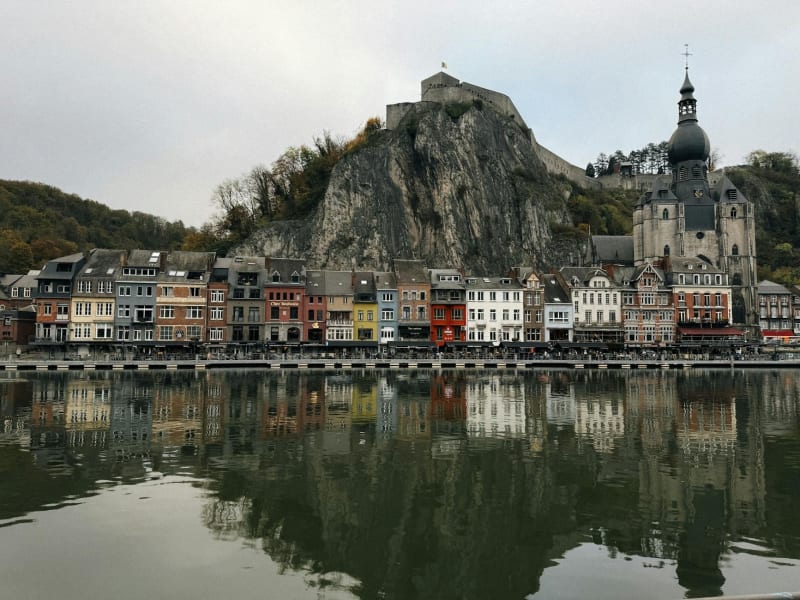
Dinant
A dramatic cliffside citadel looms over this Meuse valley gem, birthplace of the saxophone and village of impossible beauty.
Explore belgium
Durbuy
A pocket-sized medieval town on the Ourthe that calls itself the smallest city in the world, and somehow earns it.
Explore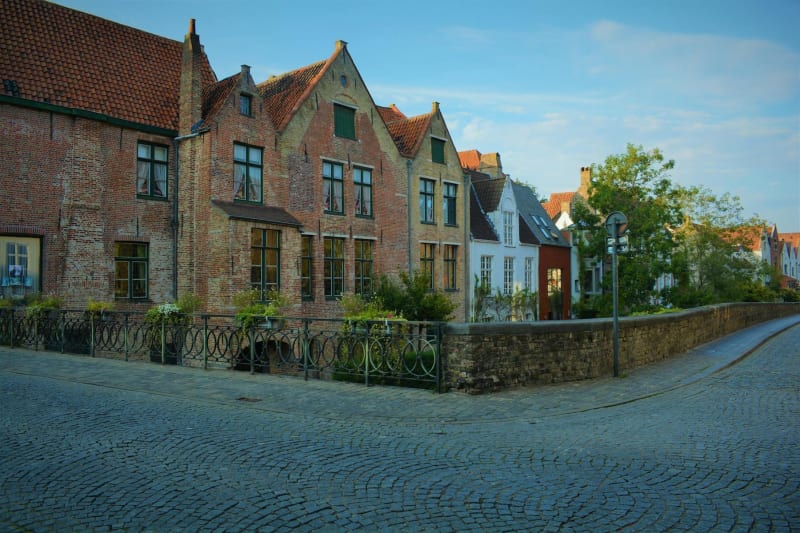 belgium
Bruges Region Flanders Coast
The understated Belgian coast carries tram-connected seaside resorts, flat dune landscapes, and a WWII battlefield history that sobers and moves.
Explore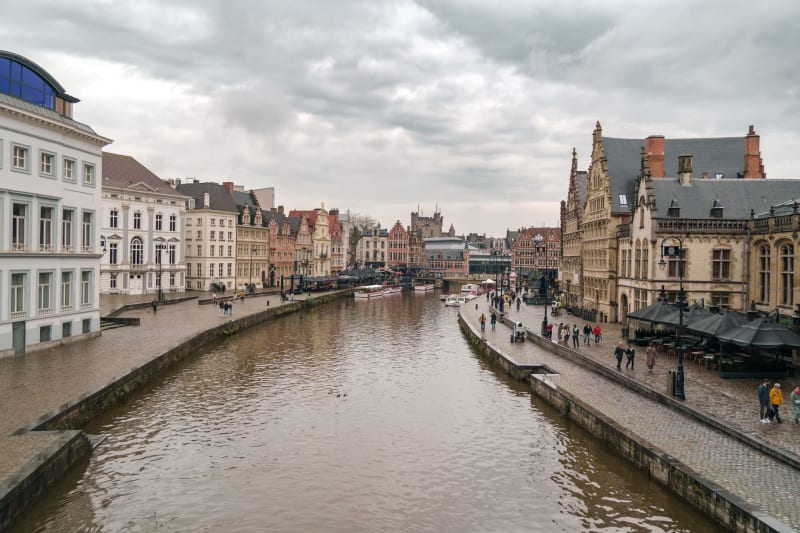 belgium
Ghent
Belgium's best-kept secret: a university city alive with street art, craft beer, and a medieval skyline that refuses to be tamed.
Explore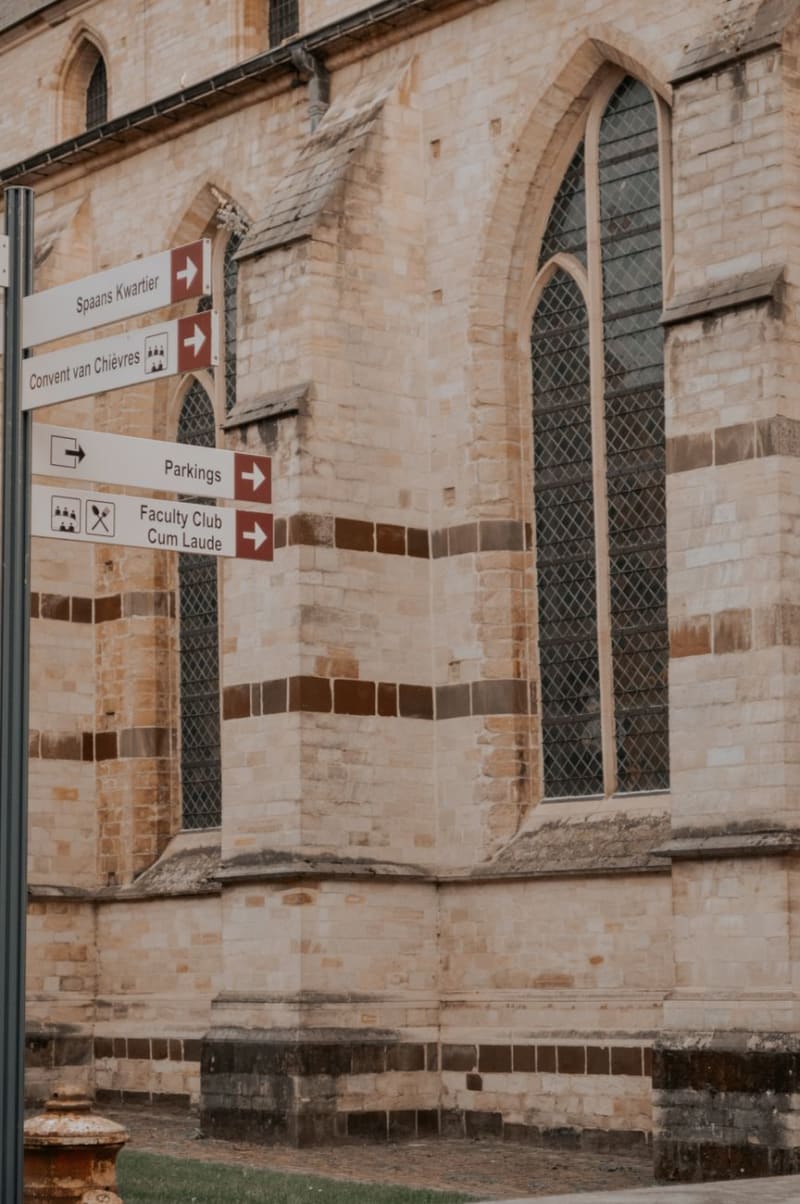 belgium
Leuven
A small Flemish university city where a flamboyant Gothic town hall, the world's longest bar, and six centuries of students keep the whole place perpetually, cheerfully half-drunk on its own youth.
Explore belgium
Liège
A fierce, working-class Walloon city where the waffles are lighter, the beer is stronger, and the spirit is unbreakable.
Explore