Brest
"The fortress held for a month. Walking through it, that month feels simultaneously very recent and very long."
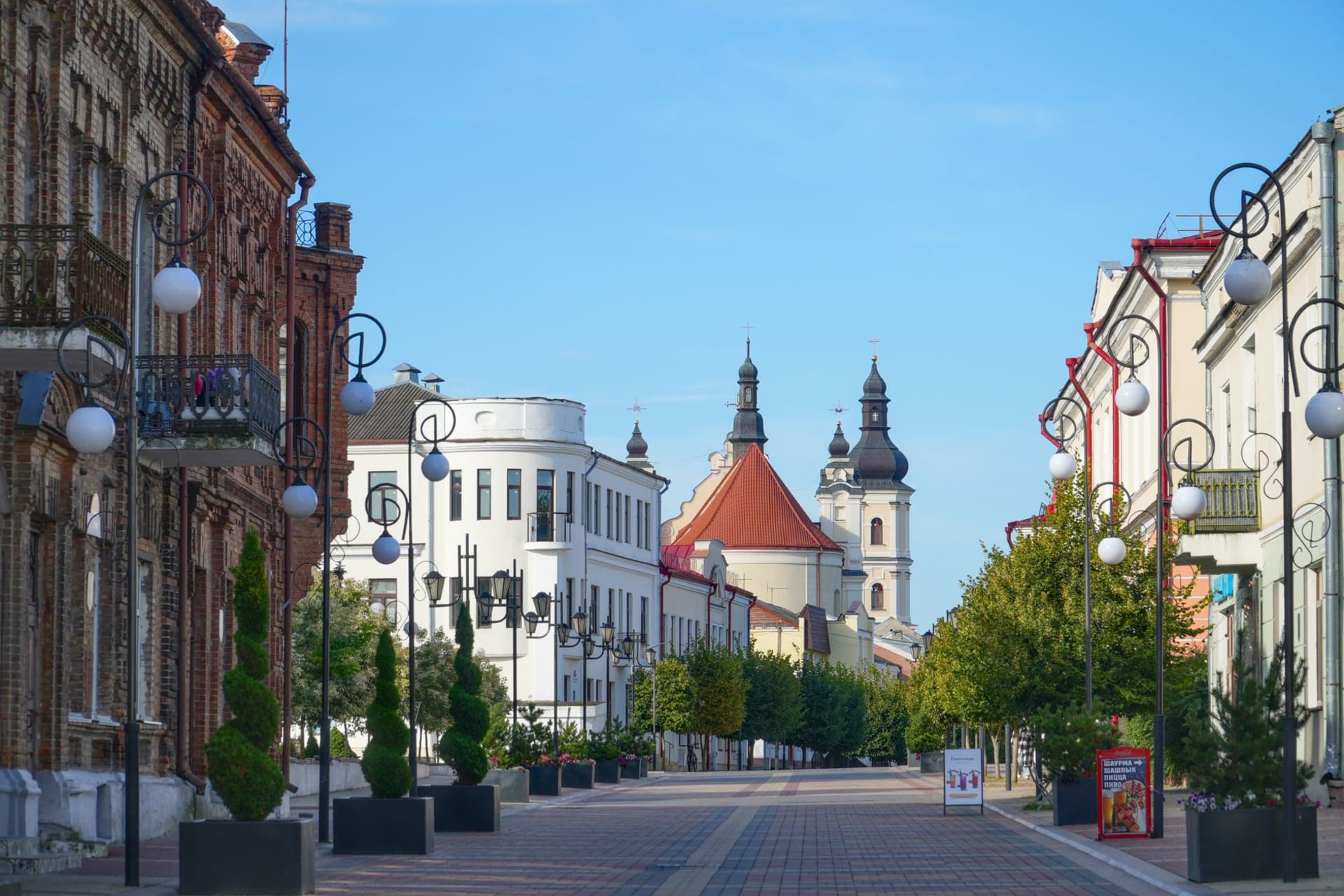
I came to Brest expecting to stay one night and stayed three. Part of that was the fortress; part of it was the street. Brest’s pedestrianised central boulevard, Ulitsa Sovetskaya, is lit every evening by gas lamplighter — an actual man who walks the street at dusk with a long pole, lighting the old-style lanterns one by one while residents and visitors walk beneath them eating ice cream and paying him the kind of attention you pay someone doing a beautiful anachronistic thing. It is the most pleasant tourist ritual I have encountered, partly because it does not feel like a ritual — the lamplighter moves with purpose and complete indifference to the phones being pointed at him.
But the fortress is the reason to come. The Brest Fortress — built in the nineteenth century on the confluence of the Bug and Mukhovets rivers, on the western edge of what is now Belarus — is where the Soviet Union’s war began, at 4:15 a.m. on June 22nd, 1941, when German forces crossed the border and began the bombardment. The garrison was expected to fall in a few hours. It held, against sustained artillery and air attack, for a month. By the time the last defenders were killed or captured, most of them were surviving in the fortress’s underground passages, drinking water from the cellars, eating almost nothing, communicating through graffiti scratched on the walls: “We will die but will not leave the fortress.” Those words are still there.

Walking through the fortress takes at least two hours if you want to see the museum, the ruins of the barracks, the restored sections, and the monuments. The main monument — the enormous stone head titled “Courage,” rising from a ruined wall — is one of the most affecting pieces of war memorial sculpture I have stood in front of. Not because it is subtle, but because the scale of it is proportional to the scale of what it is commemorating. The eternal flame at the entrance burns in a star-shaped setting, and even in summer, when the site has visitors, the approach along the central causeway carries weight.
The city of Brest itself is livelier than Minsk in a more compact way — the centre is walkable, the restaurants along the main streets serve Belarusian-Polish border cooking that reflects the city’s history as a place that has been in Poland, in Russia, and in independent Belarus within a single lifetime. The pierogies here are different from the dumplings in Minsk — slightly crispier at the edges, served with fried onion, closer to their Polish cousins. The beer in the bars is local and very cold and unremarkable, which is exactly right.

When to go: May through September for warm evenings on Sovetskaya with the lamplighter in full effect. The fortress is open year-round and is, in winter, even more austere and moving — though you will want warm layers. The anniversary date of June 22nd brings organised commemorations that are worth witnessing if military ceremony and collective memory interest you.