Ramsau bei Berchtesgaden
"The photograph you've already seen a thousand times looked nothing like itself in November fog."
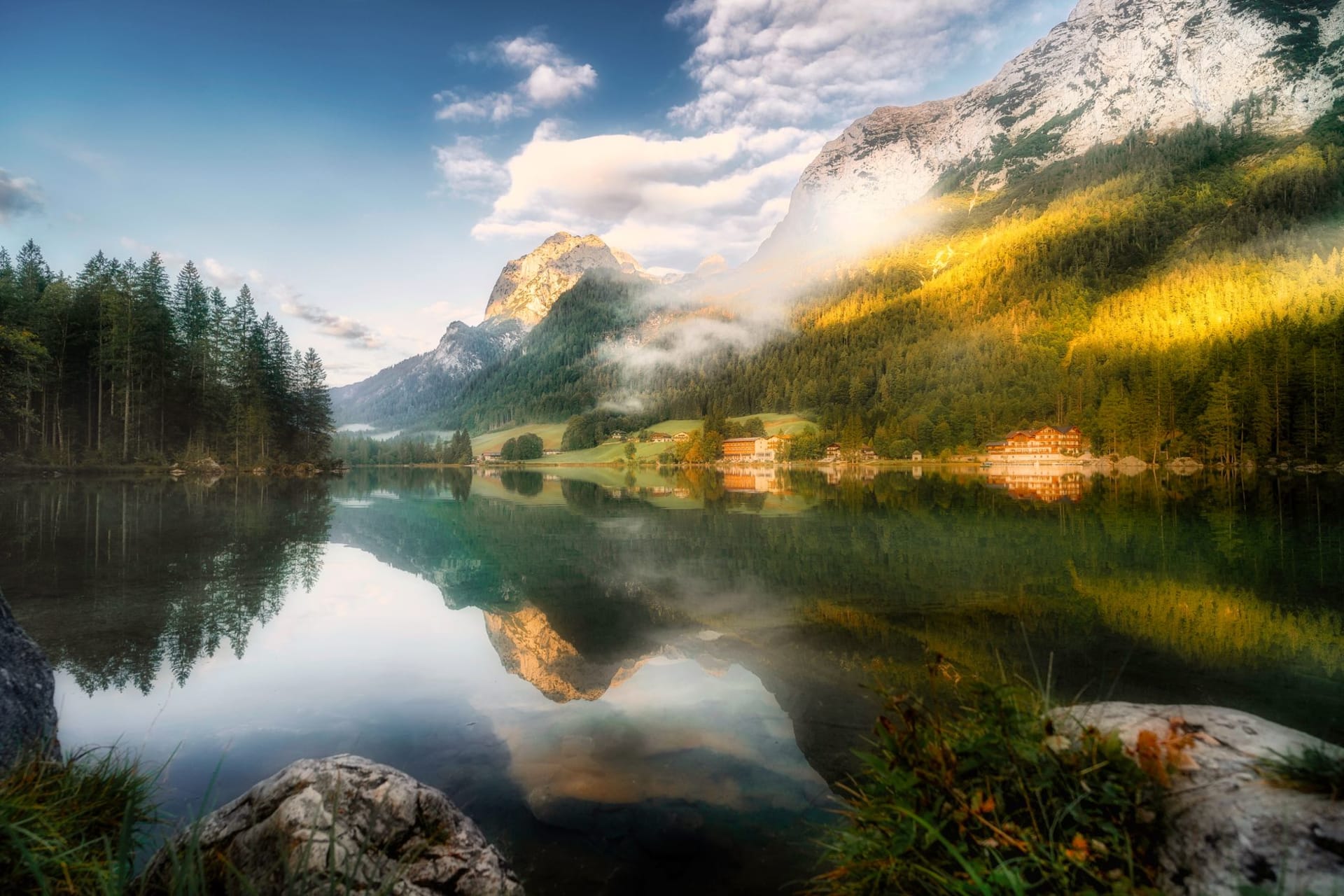
I came to Ramsau bei Berchtesgaden in November because I had seen the photograph too many times and wanted to see the thing itself. The photograph — St. Sebastian’s church, white-walled with its pointed steeple, positioned on a rocky bank above the Ramsauer Ache stream with the Reiter Alpe rising behind — is one of those images that has been reproduced so thoroughly that the original has come to feel like a copy of itself. Photography is strange that way. The more often an image circulates, the more the actual place retreats behind its representation. I wanted to find the place before the image.
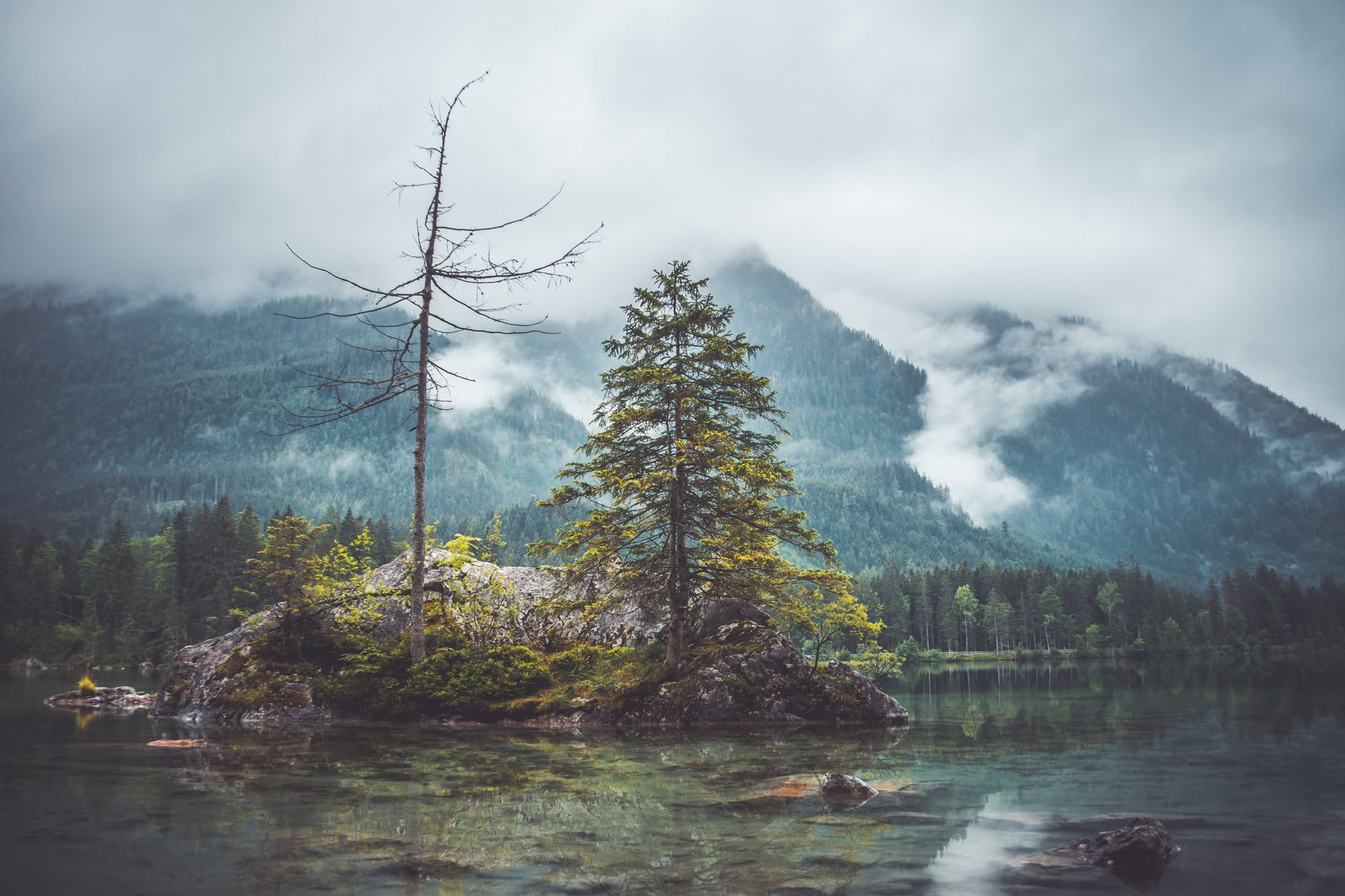
In November, the stream was running fast with early-season rain, and the light was the particular gray of an overcast Bavarian morning — flat and even and, as it turned out, ideal for the kind of looking that doesn’t involve shadows. The church sat exactly where the photograph said it would sit, and the stream ran exactly the shade of pale green that the photographs suggest, and the mountains behind were buried in low cloud. None of the shots I’d seen showed the mountains buried in cloud. What the clouds did was remove the backdrop entirely, compressing the scene into the immediate — the church, the water, the forest on the far bank, nothing else. It was smaller and more specific and more real than any photograph had prepared me for.
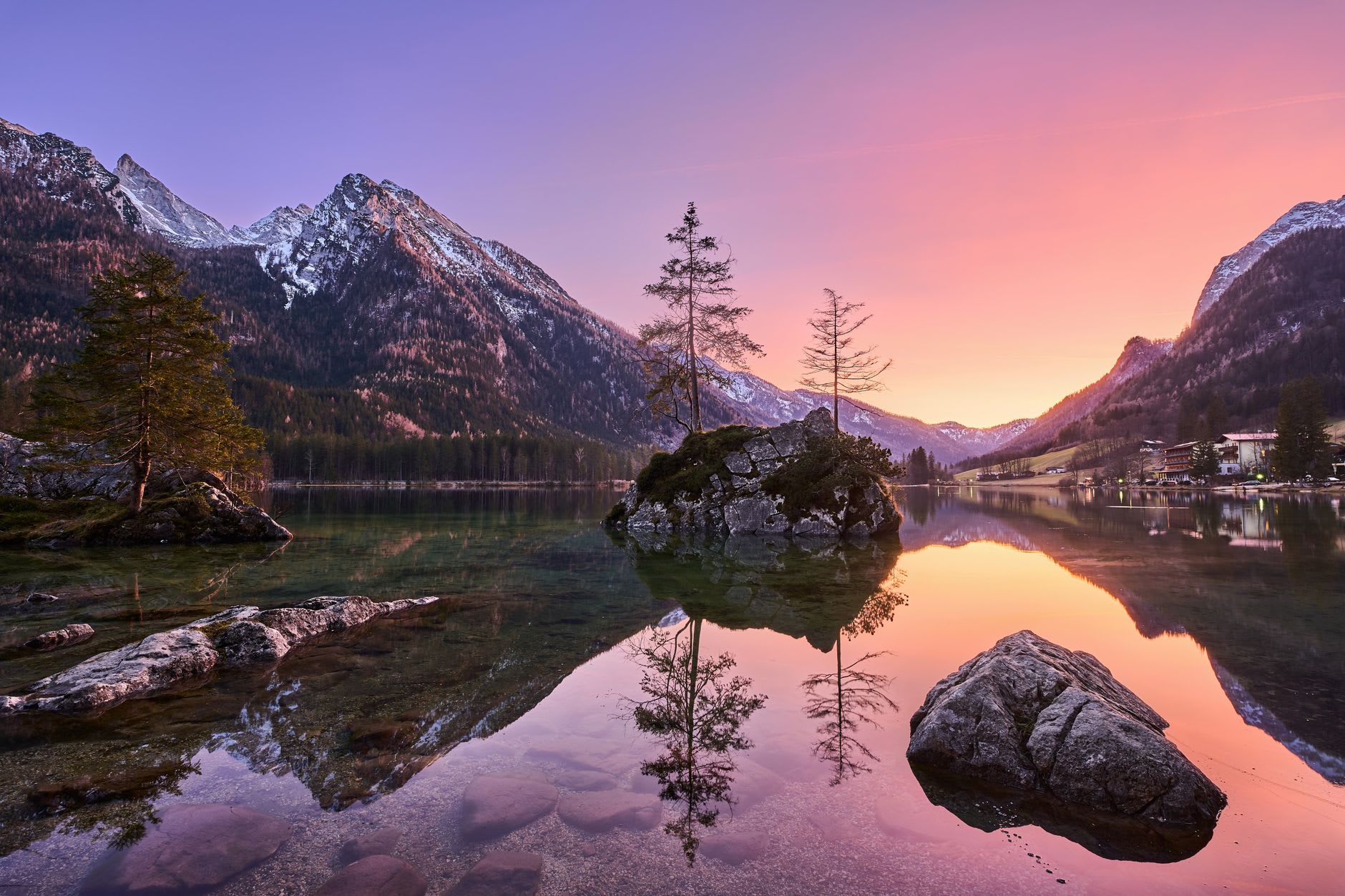
The village of Ramsau occupies a valley that branches west from Berchtesgaden and narrows as it climbs. There are a few hundred permanent residents, a scattering of farmhouses and guest houses, and the kind of local infrastructure — butcher, bakery, Gemeindeamt — that serves a community rather than a tourist population. The people I encountered were doing the things people do in villages: walking dogs, collecting mail, carrying shopping bags from the small Edeka up the road. The church and its photogenic stream coexist with all of this, unremarked.
The Wimbachklamm gorge at the valley’s end was what occupied my afternoon. Less visited than the Partnachklamm, more austere — the Wimbach stream runs through a sequence of shallow pools in the lower gorge before the path climbs steeply to the cirque at the head of the valley, a glacially carved bowl enclosed by the Hochkalter and the Watzmann massif. I went as far as the first viewpoint above the gorge entrance, where the valley opened and the snow on the Hochkalter appeared for the first time through a break in the cloud. The stream below ran white with glacial flour. The silence in the lower gorge, in November, was complete enough that I stopped walking periodically just to listen to it.
The farm guesthouse where I stayed — a working farm that took two rooms in the farmhouse, not a hotel but a Zimmer frei — served dinner at a table in the kitchen, which was warm in the particular way of rooms that have had fires burning in them for decades. The farmer’s wife made Schweinshaxe — the roasted pork knuckle that is the gravitational center of Bavarian cooking — and set it on the table with a bowl of potato dumplings and Blaukraut, the sweet-and-sour braised red cabbage that functions as the default counterpoint. The skin on the Haxe crackled when I cut it. The jus was dark and deeply reduced. Outside, the Ramsauer Ache made its continuous noise, and the clouds sat on the mountains, and November did what November does.
When to go: November and early December for the fog-and-stream atmosphere that the summer postcards omit. June and July for the Wimbachklamm trail at its best, with full water flow. The church is always there, in every season, and in every season it looks different from the photograph — which is, ultimately, the argument for going.