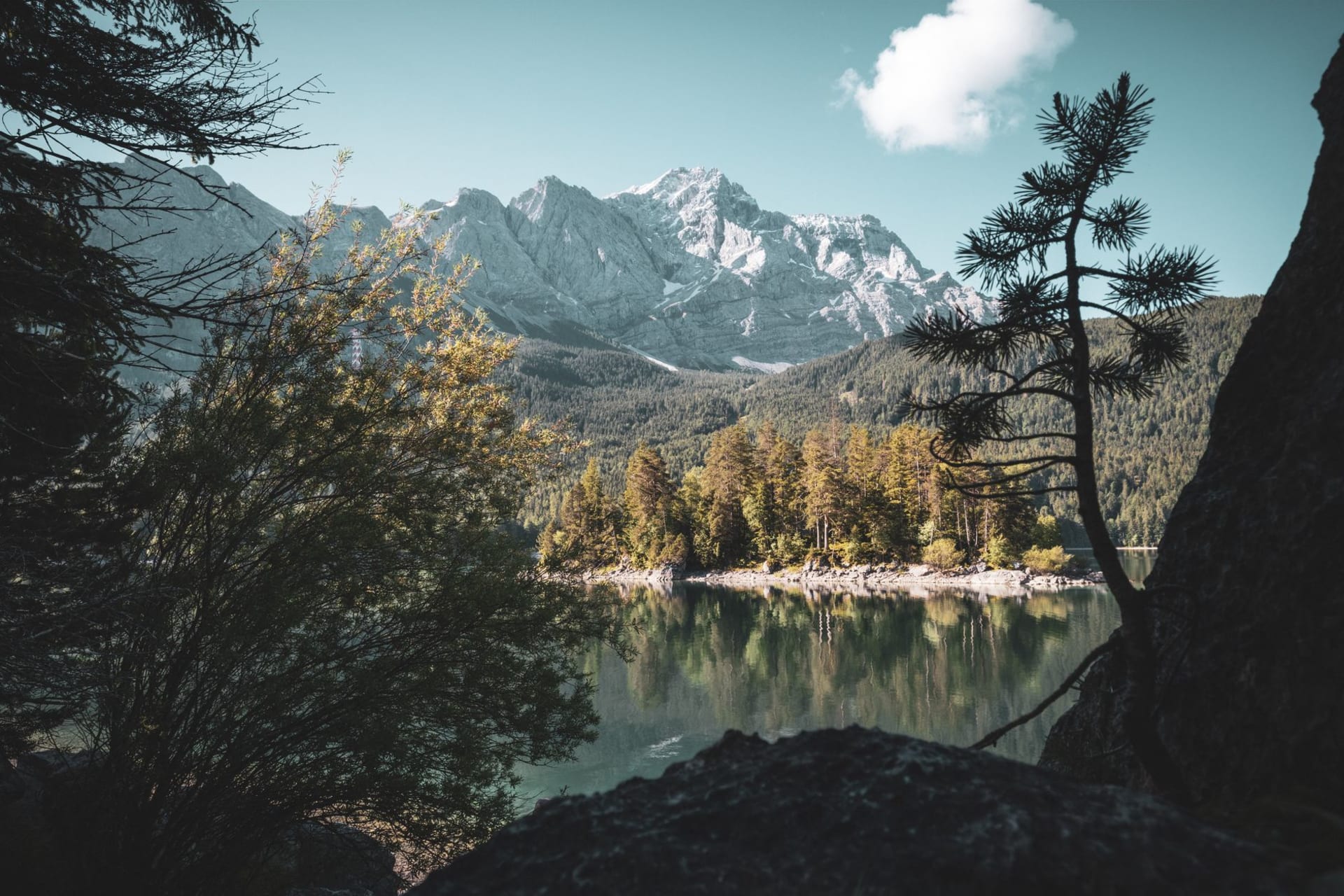
Garmisch-Partenkirchen
"The painted walls made me feel like the town was telling me something the tourist brochures had decided to leave out."
The train from Munich deposits you at Garmisch-Partenkirchen on a single platform, and the first thing you notice is not the mountains — which are immense and unavoidable and positioned above the town like a theatrical backdrop that keeps reminding you where you are — but the painted facades. The old Partenkirchen side of town, the half that still feels like a medieval market settlement rather than a ski resort, is covered in Lüftlmalerei: fresco cycles on exterior walls depicting saints, angels, hunting scenes, the Last Judgment, the occasional domestic comedy. I spent an entire morning just walking slowly and reading the walls. No map. No agenda. The Alpine light at that hour, angled and clean in a way Munich light never quite manages, made every color on those plaster surfaces glow from within.
Garmisch-Partenkirchen is technically two towns — two independent municipalities forced into a shotgun marriage by Hitler in 1935 in preparation for the 1936 Winter Olympics. The Bavarians here do not always let you forget this distinction. Garmisch is the ski resort side, sleeker, with Olympia Ski Stadium and the cable car terminals and the international hotels that fill every February when the World Cup races come through. Partenkirchen is the older, quieter, more stubbornly Bavarian half, where the butchers still hang sausages in hand-lettered windows and the churchyard at St. Anton fills on Sunday mornings with a seriousness that tourism hasn’t managed to dilute.
I ate Weisswurst on my second morning — the white veal sausage that Munich claims but that tastes better here, at altitude, with a pretzel still warm from the bakery around the corner and a small Weissbier that nobody judged me for ordering before ten in the morning. There is an etiquette to Weisswurst: you peel the skin back with your fingers or you suck the meat out through a small incision, never cutting it with a knife the way the rest of the world would. I had the skin-peeling method explained to me twice, by two different people, with the patience of someone teaching a child to tie their shoes. I did not take offense. In Garmisch-Partenkirchen, food customs are taken seriously because the food itself is taken seriously.
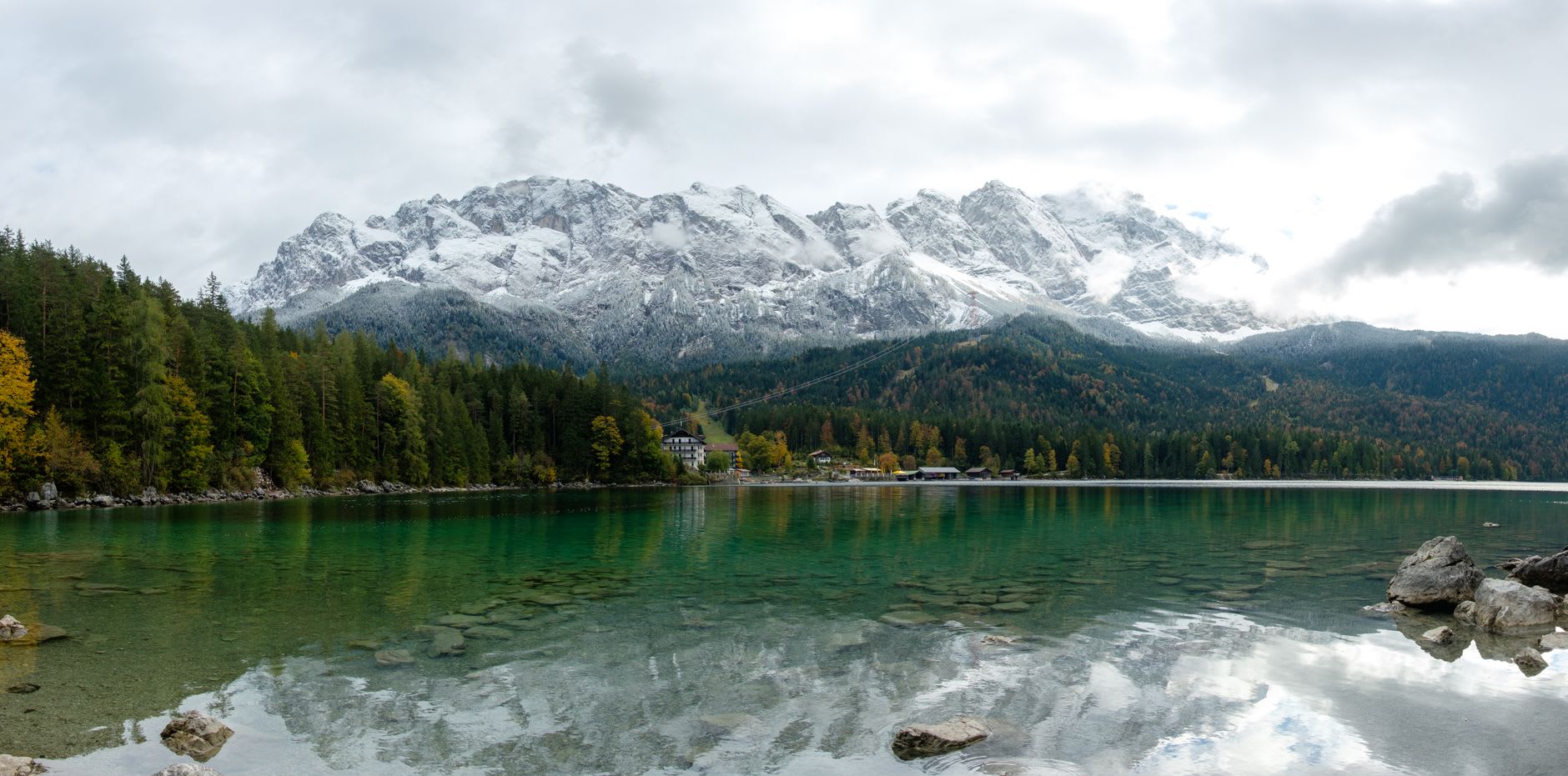
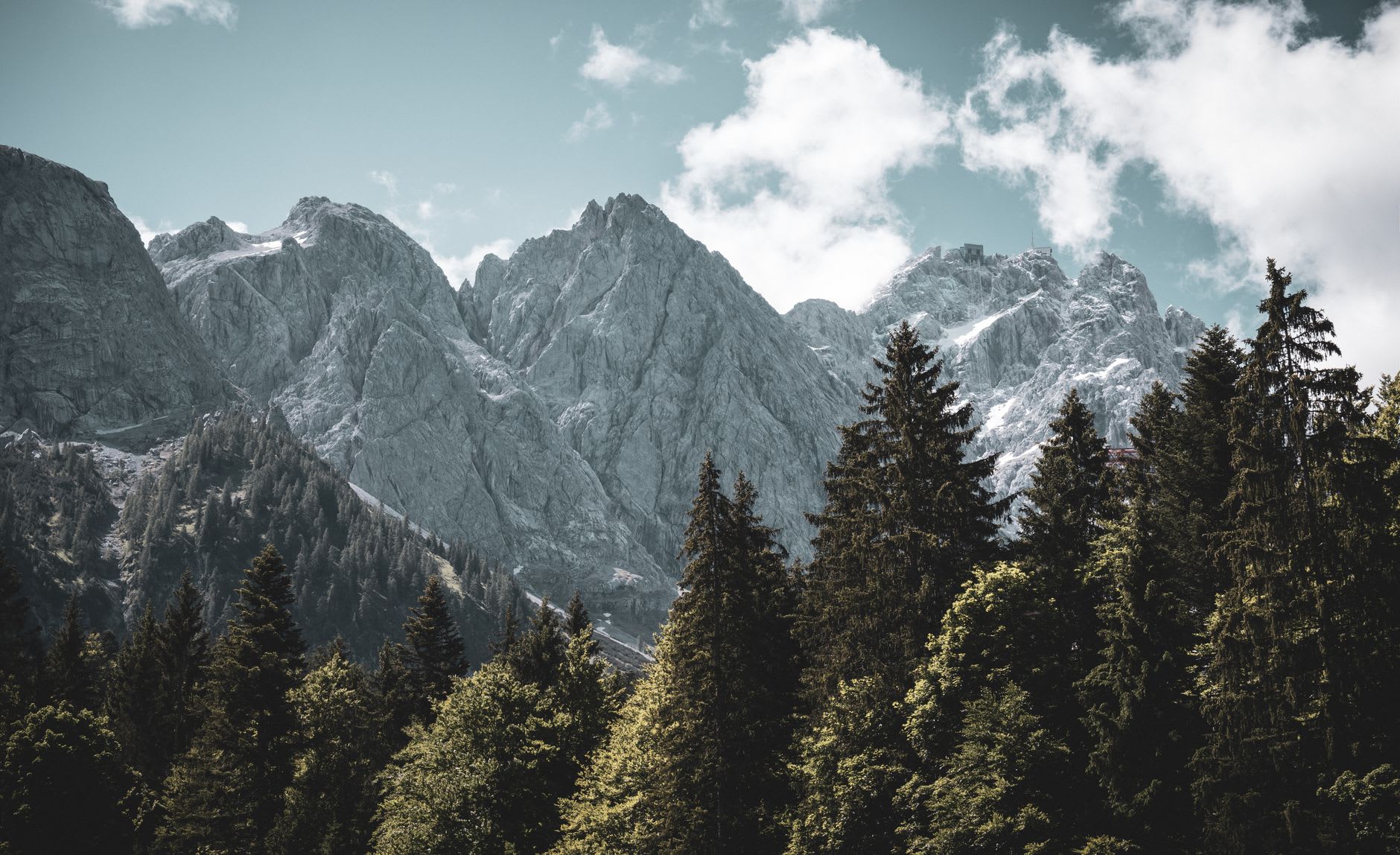
The Zugspitze looms over everything. At 2,962 meters it is Germany’s highest point, and from the center of town you can see the cogwheel railway disappearing into the mountain’s base and emerging, somehow, at the summit. The mountain shapes the town’s rhythms in ways that are hard to articulate until you’ve spent a few days here. Local conversation involves the weather at the top almost as a reflex — the way people in coastal towns talk about the tide. When the summit is in cloud, the whole town seems to settle into a lower gear. When it clears and the snow catches the afternoon sun, something lifts.
What surprised me most, though, was the Partnach Gorge — the Partnachklamm — just a twenty-minute walk from the Olympic ski stadium. The gorge deserves its own attention (and gets it elsewhere), but the path there, along the valley floor where the Partnach river runs cold and fast, felt like something the town had set aside from the business of tourism. Older Bavarian couples walked it ahead of me, not for exercise particularly, but in the particular way of people revisiting something they have returned to for decades. I found myself matching their pace, which was slower than I would naturally walk, and arriving at the gorge entrance not breathless but composed.
When to go: Late June through September for hiking and the full drama of the surrounding peaks in clear weather. February brings World Cup ski racing crowds and genuine winter-sport energy. October is quieter and colder, but the painted facades seem to glow differently against the gray sky, and the town functions almost as it does for itself rather than for visitors.