Berchtesgaden
"You cannot separate the mountain from what was built on top of it. The view earns nothing from ignoring that."
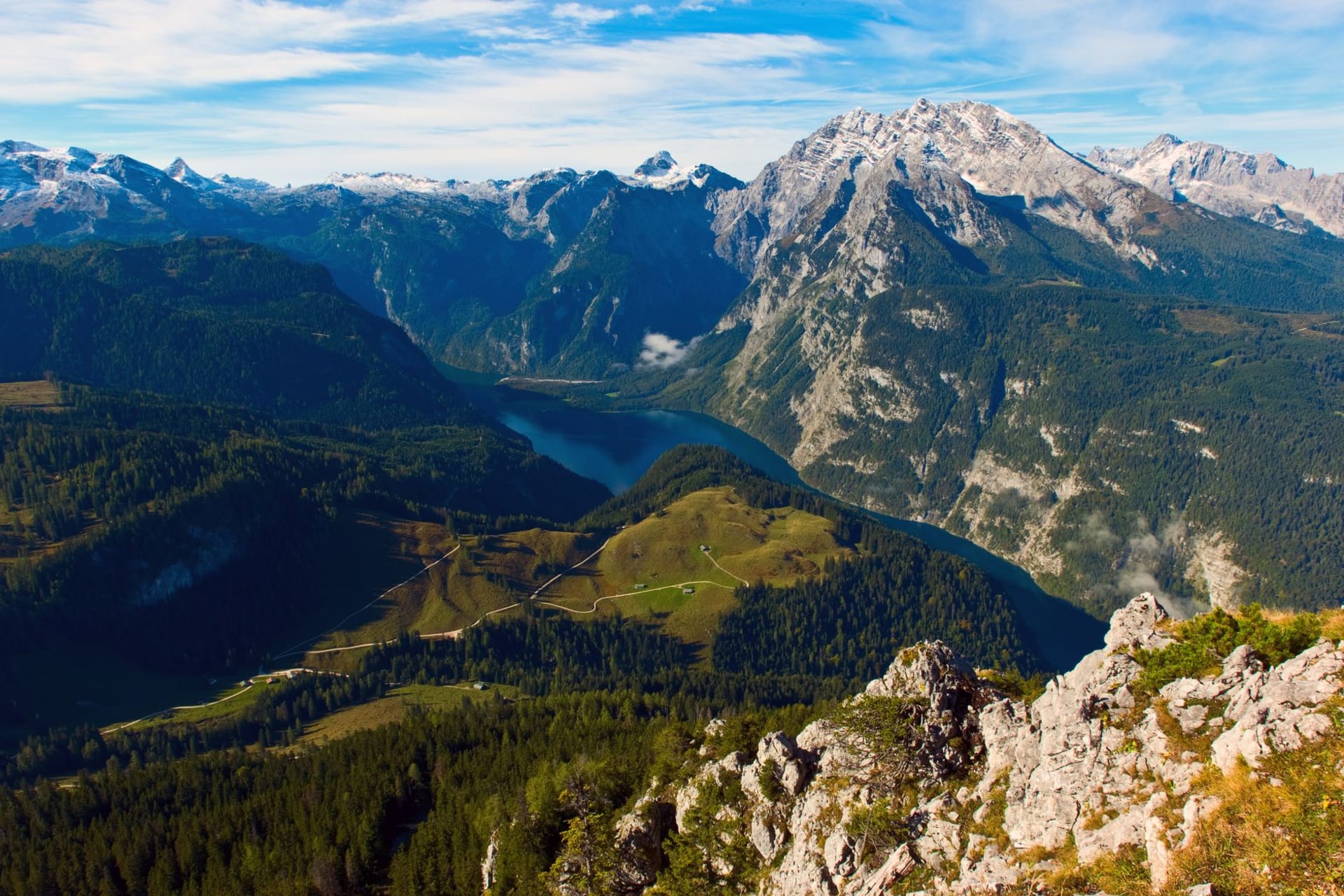
I rode the bus up to the Kehlsteinhaus on a clear Thursday in late September, and I spent most of that hairpin journey looking at my hands. The panoramic view from the Eagle’s Nest — Hitler’s 50th birthday gift, a teahouse perched at 1,834 meters above the valley — is by any neutral measure one of the most spectacular in Bavaria. The Berchtesgaden valley laid out below, the Watzmann’s east face white and absolute to the south, the Austrian Alps extending into the distance. I was not able to look at it cleanly, and I did not try to. There is a version of travel writing that would tell you to separate the landscape from the history. That version is wrong. Standing where I stood, in a building that stands because one man was given a spectacular present by people who wanted him pleased, the mountains themselves felt implicated.
The town of Berchtesgaden below is something different — a medieval salt-trade settlement that became a royal residence, then a Nazi retreat, and is now a market town and tourist base that negotiates all of this simultaneously. The Berchtesgadener Land, the administrative region that includes the town and the national park and the Königssee and the village of Ramsau, is some of the most beautiful terrain in Germany. This is both true and strange to hold in your head.

The Salzbergwerk — the salt mine — is something I had not expected to find genuinely absorbing. You go down into the mountain on a miner’s cart, wearing the traditional white mining suit over your clothes, and you emerge into caverns that have been carved out over four centuries. The underground lake in the King’s Cave, which you cross on a small wooden raft, lit from below with an eerie green light, was for reasons I cannot fully explain the thing I thought about most on the drive back to Munich. Salt built this town. The trade route between here and Salzburg — Salzburg, literally “Salt Castle” — was one of the most important economic corridors in medieval Bavaria. The mountains above are hollow with it.
I ate lunch in the old town at a place that did not have an English menu and did not seem to feel the lack. The Berchtesgadener Brettljause — a wooden board of cured meats, pickles, Obatzda (the pungent whipped cream-cheese-and-paprika spread), and a rye bread dark enough to seem architectural — came with a half-liter of dark beer that was cold in the particular way that Alpine cellars produce, a cold that doesn’t feel mechanical. The cheese in Berchtesgaden has a different character from the Allgäuer Bergkäse I’d eaten in Oberstdorf — milder, more herbaceous, with a sweetness that the local farmers told me comes from the high-altitude meadow grass.

The Documentation Center at the Obersalzberg is a few kilometers above town — a serious, unflinching museum built into what remains of the Nazi leadership compound. I spent two hours there. It is not the kind of place you rush through, and the design works against rushing: text-heavy, deliberately unglamorous, the photographs selected to show the ordinary face of evil rather than its stagecraft. Leaving it and walking back down toward the town through the forest, I found the trees and the air and the mundane beauty of the valley harder to dismiss than they had been before. Not cleaner. Just more there.
When to go: May through October for full access to hiking trails and the Kehlsteinhaus, which closes in winter. September and early October offer the best combination of clear mountain air, reduced crowds, and the first dusting of snow on the Watzmann. The Königssee boat service runs year-round, making Berchtesgaden a viable base in any season.