Europe
Bavarian Alps
"I came for the castle. I stayed for the silence between the peaks."
Where a 19th-century fairy-tale castle built by a mad king turned out to be less fantastical than the landscape it sits in.

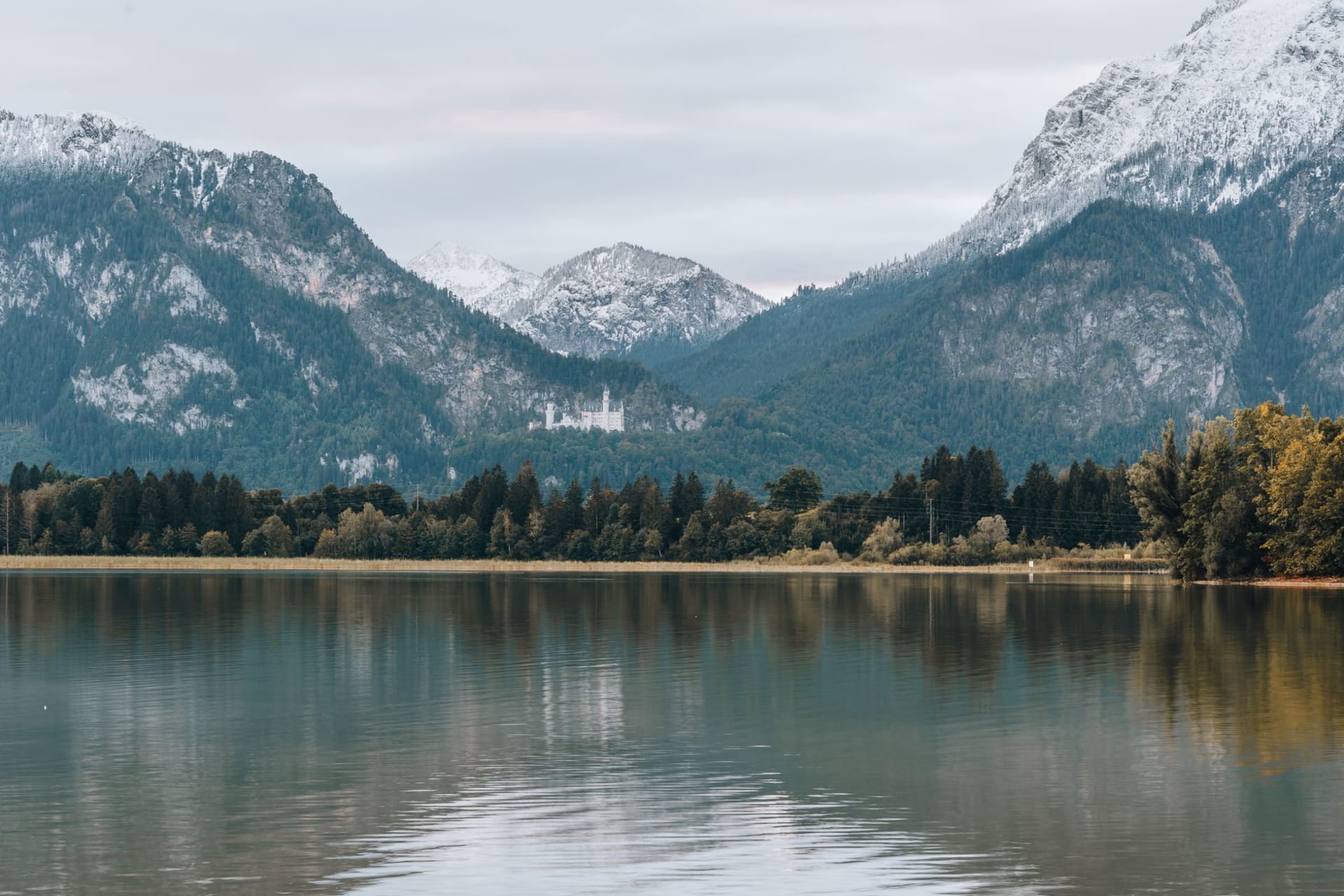
I arrived at Füssen on a Tuesday in October, when the tourist buses had thinned and the forest above the Alpsee had gone amber. The train from Munich takes a little over two hours and deposits you at one of those small Bavarian stations that look like they were painted by someone who had never actually seen a train station but had a very strong opinion about window boxes. From there, you walk. Or you take a bus. But mostly you walk, because the Allgäu air at this altitude has a quality I can only describe as aggressive clarity — the kind that makes you feel guilty for spending any of it indoors.
Neuschwanstein is, yes, the image everyone has seen. Ludwig II commissioned it in 1869 as a personal retreat from reality, a stage set built for a man who preferred Wagner operas to political meetings. The interior is genuinely extraordinary — the Singers’ Hall with its murals half-finished when Ludwig died, the grotto tucked between the study and the bedroom — but it is the view from the Marienbrücke bridge above it that undoes you. Standing there in the early morning mist, looking down at the castle positioned against the gorge and the lake below, I understood for the first time why the phrase “too good to be real” exists. Most landscapes that qualify as dramatic announce themselves loudly. This one is simply, quietly there, and it asks nothing of you.
Beyond Neuschwanstein, the Alps reveal what the castle cards and Instagram grids systematically omit: this is working mountain country. The villages of Oberstdorf, Berchtesgaden, and Mittenwald exist on their own terms, not as backdrop. Oberstdorf particularly surprised me — a spa town and ski resort that in October becomes something else entirely, a place where elderly Bavarians walk the Loretto Chapel trail with a seriousness that has nothing to do with tourism and everything to do with the fact that they have been doing this their whole lives. The cheese sold at the farmers’ market there — Allgäuer Bergkäse, aged in Alpine cellars — has the sharpness of something that could not have been made anywhere else.
When to go: Late September through October for fall color with manageable crowds and crisp hiking weather. Late June and July for wildflower meadows and full trail access at altitude. Avoid August — the castle queues stretch to two hours and the Marienbrücke feels like a theme park. January and February are excellent for skiing around Garmisch-Partenkirchen, and the snow transforms even the tourist corridors into something worth enduring.
What most guides get wrong: They sell the Bavarian Alps as a day trip from Munich, which is the equivalent of spending one afternoon in Provence and considering yourself done. The real experience requires at minimum three nights, ideally based in a smaller village rather than Füssen itself. The guides also overweight Neuschwanstein relative to the rest — it is spectacular, but it is one hour of a region that rewards days of walking, eating, and sitting on a terrace with a Weissbier while the clouds drag themselves across the Zugspitze.
Explore
Places in Bavarian Alps
 bavarian-alps
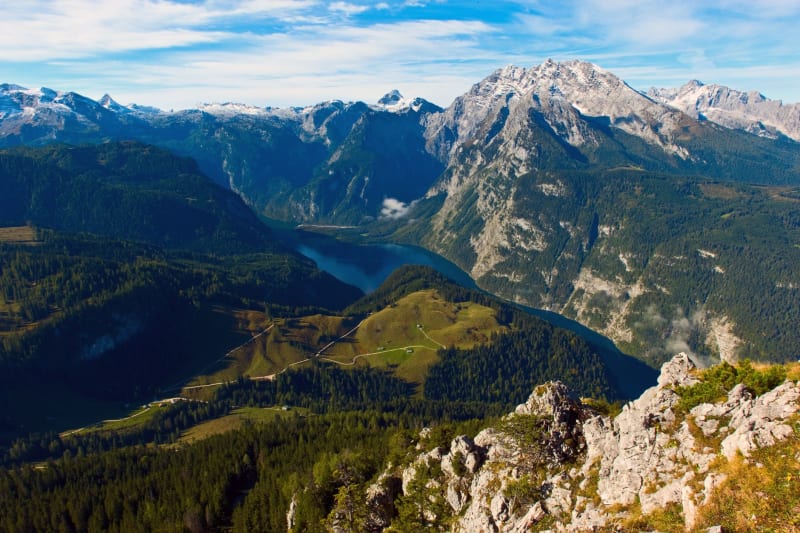
 Berchtesgaden
A market town of extraordinary beauty carrying the weight of the worst chapter of the 20th century a thousand meters above it.
Explore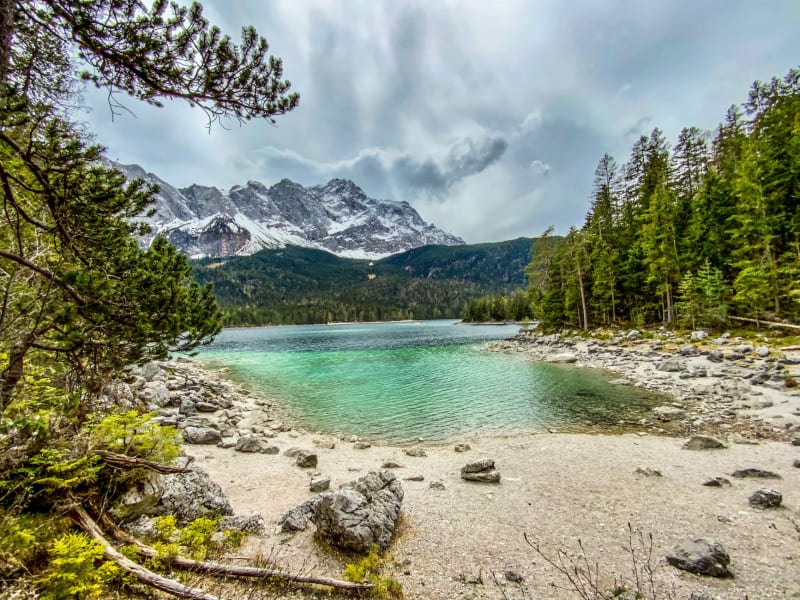 bavarian-alps
 Eibsee
A startlingly turquoise lake at the foot of the Zugspitze, ringed by forest and quietly upstaging the mountain above it.
Explore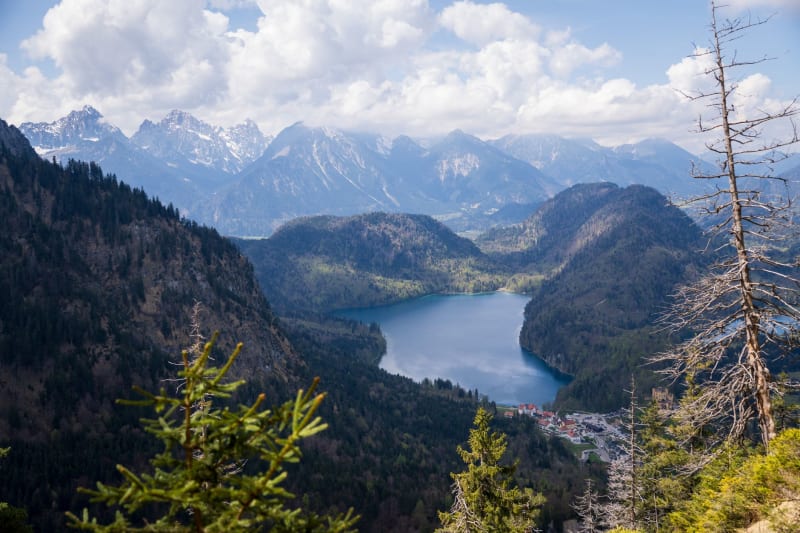 bavarian-alps
 Füssen
The medieval town at the end of the Romantic Road that most people pass through in fifteen minutes on their way to a castle.
Explore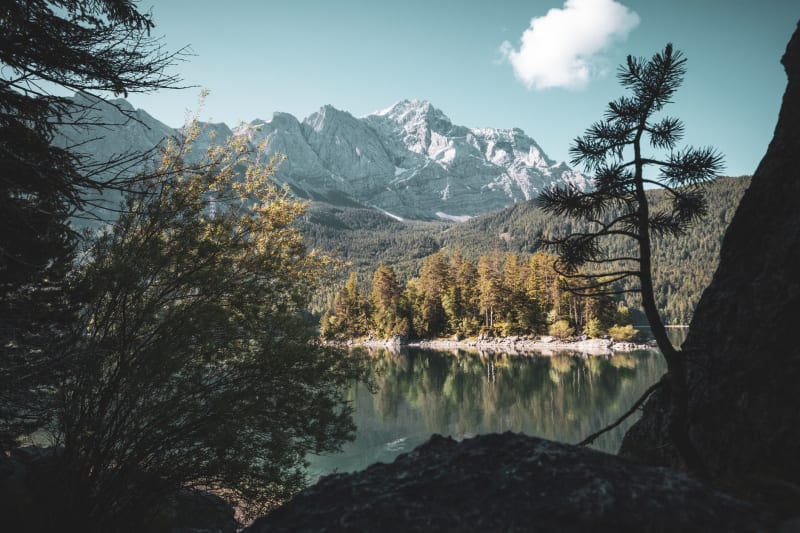 bavarian-alps
 Garmisch-Partenkirchen
A twin town where Olympic legacy and painted Baroque facades share the same cobblestoned streets under Germany's highest peak.
Explore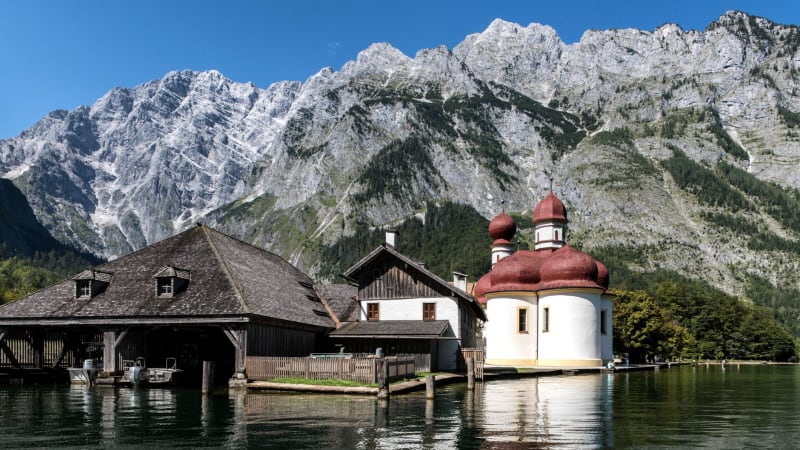 bavarian-alps
 Königssee
A fjord-like lake so enclosed by vertical walls that the boatmen play trumpet to prove the mountains answer back.
Explore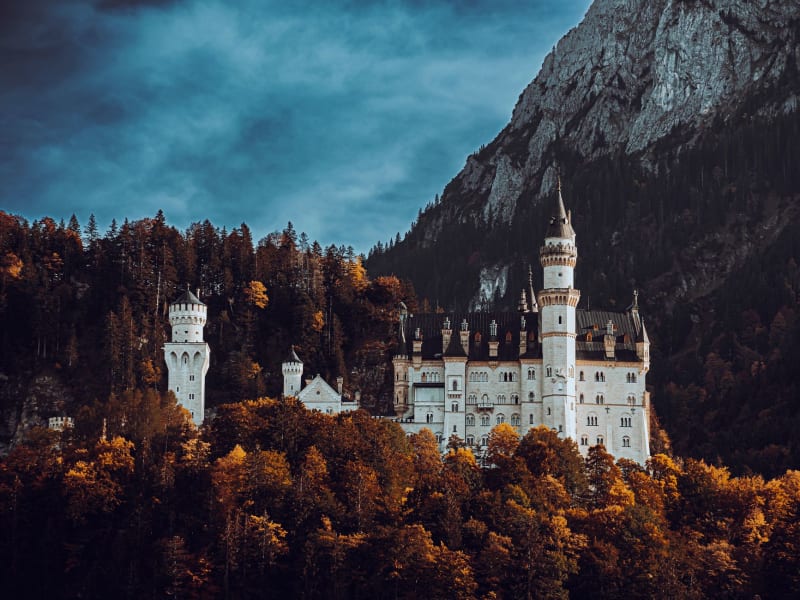 bavarian-alps
 Linderhof
Ludwig II's only completed palace — a Versailles-scaled fantasy in a mountain valley, built for one person who was rarely there.
Explore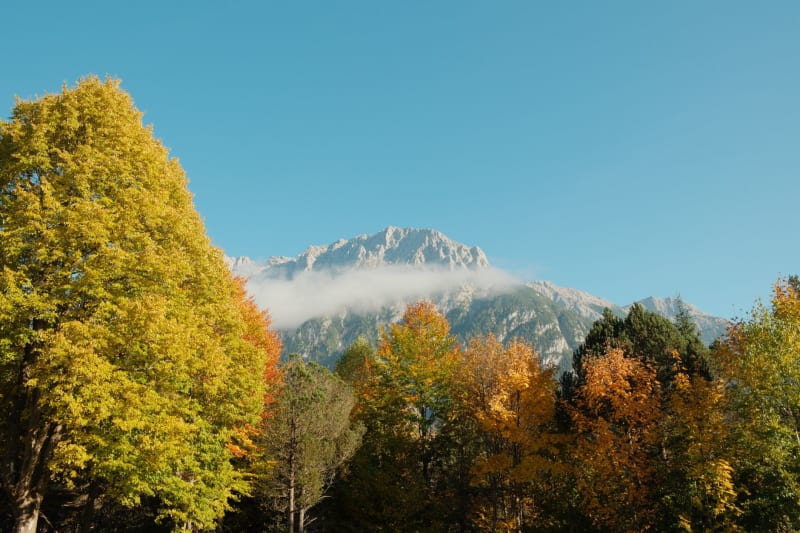 bavarian-alps
 Mittenwald
A village that has been making violins since 1684, with painted houses and the Karwendel range rising so close it feels personal.
Explore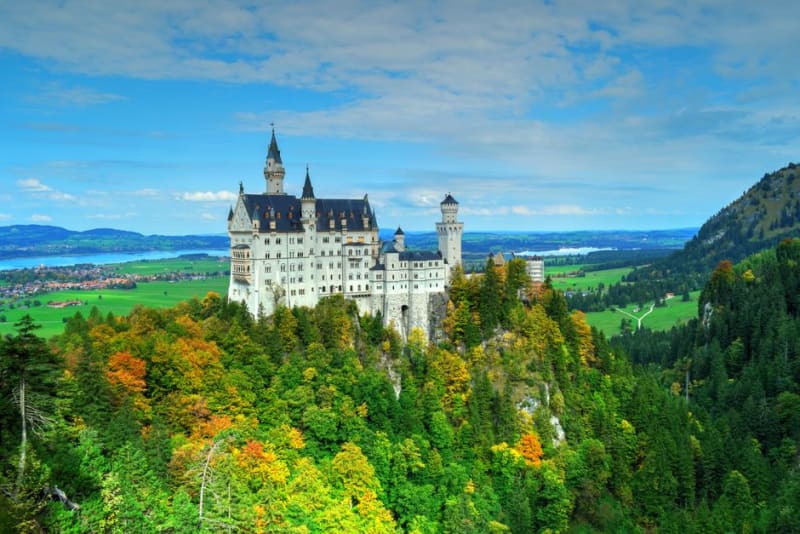 bavarian-alps
 Neuschwanstein Castle
A fairy-tale palace built by a doomed king who never meant it to be seen, perched above a lake of Alpine mist.
Explore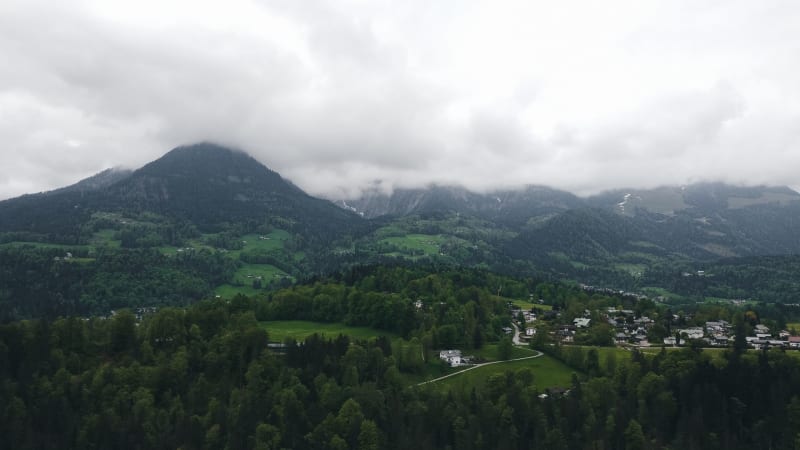 bavarian-alps
 Oberstdorf
A spa town tucked into Germany's southernmost dead-end valley, where the Allgäu cheese is sharper than the air and that is saying something.
Explore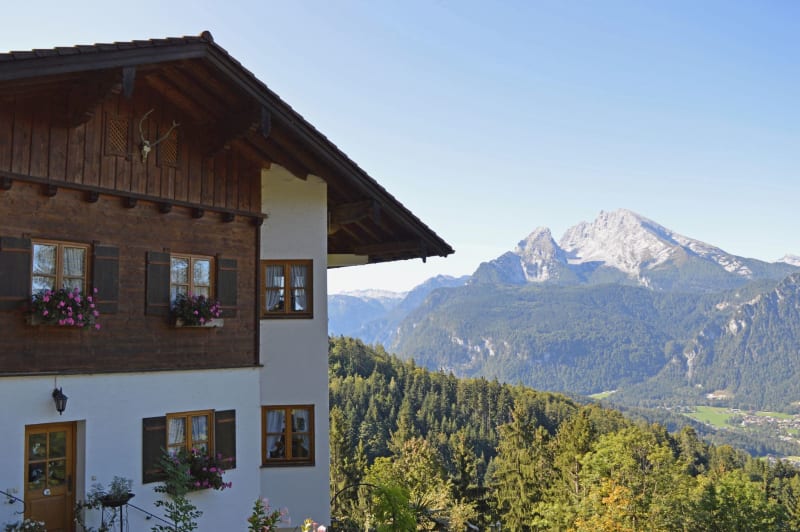 bavarian-alps
 Partnachklamm
A gorge carved so narrowly into the rock that the sky above becomes a thin stripe and the noise of the water is everything.
Explore bavarian-alps
 Ramsau bei Berchtesgaden
A village where the church by the stream is photographed a million times a year and somehow remains completely itself.
Explore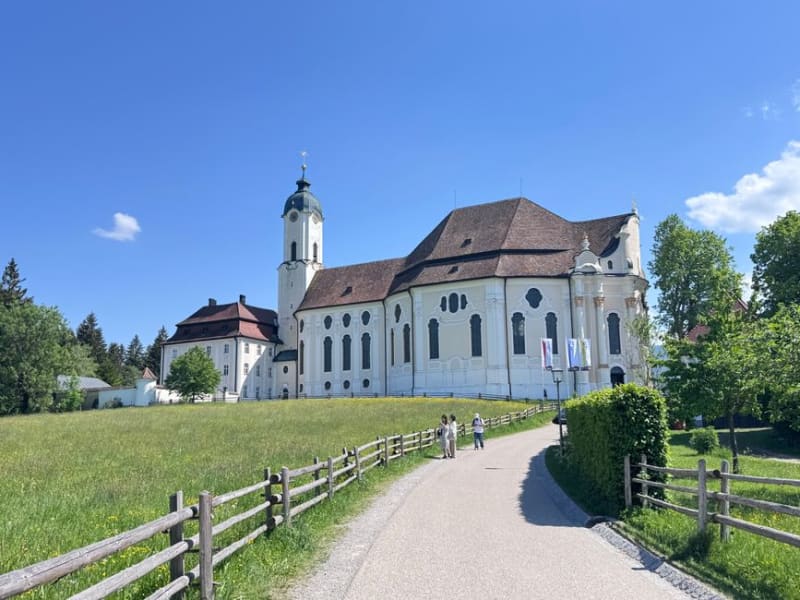 bavarian-alps
 Wieskirche (Church in the Meadow)
A Rococo masterpiece hidden in a Bavarian meadow, built around a weeping wooden statue and still drawing pilgrims two centuries later.
Explore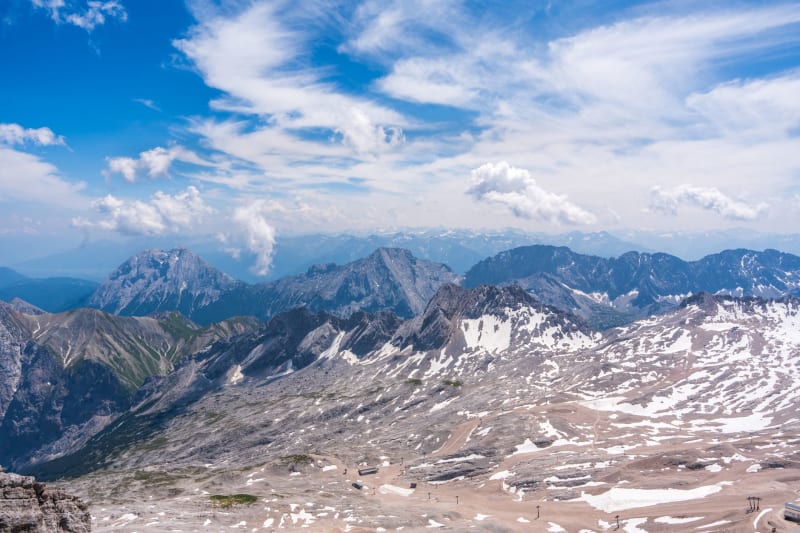 bavarian-alps
 Zugspitze
Germany's highest point at 2,962 meters, where the cogwheel train emerges from solid rock into a world that has nothing to do with the valley below.
Explore