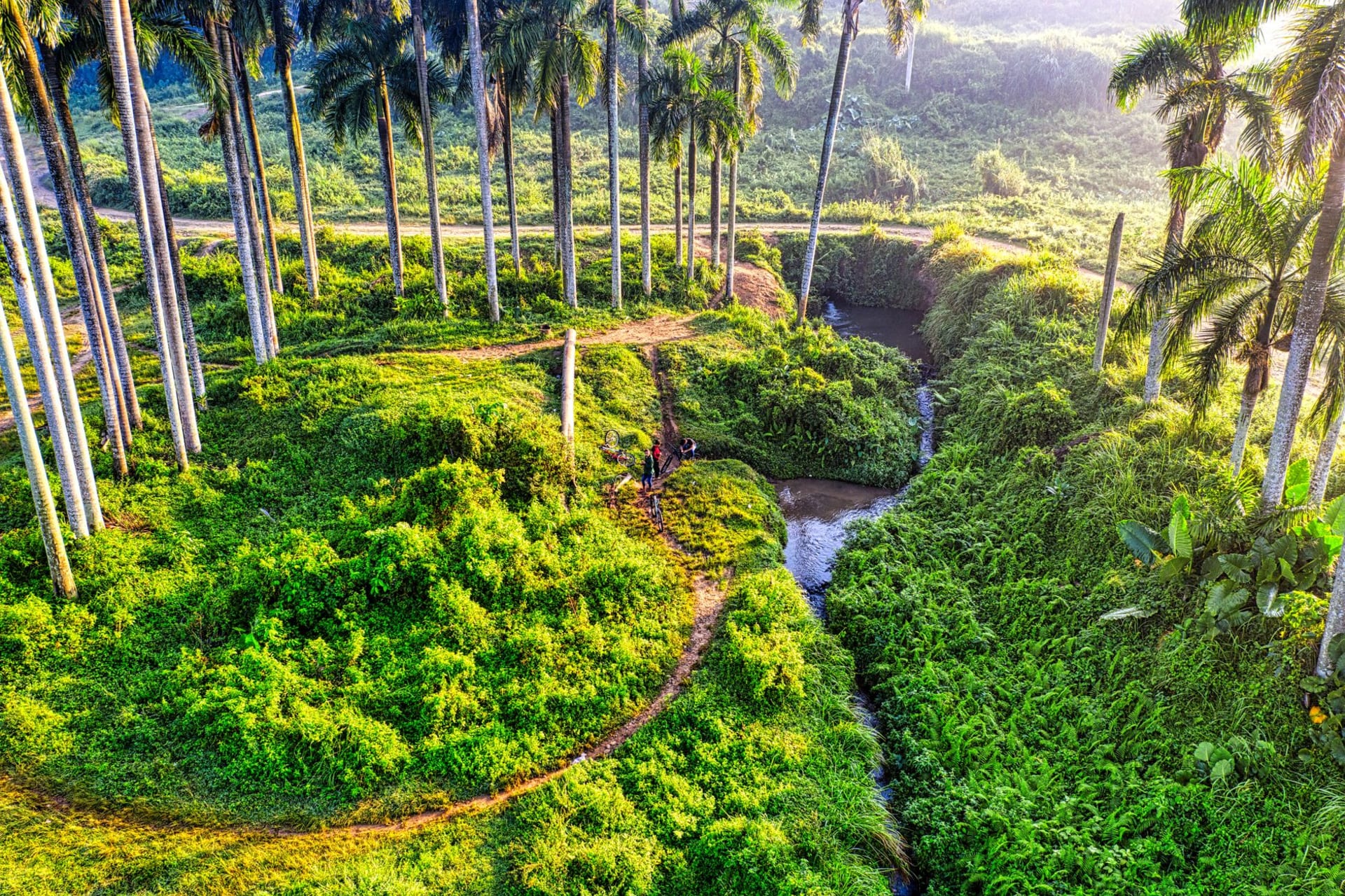
Welchman Hall Gully
"I came for the trees and forgot I was in the middle of an island that is largely a flat resort."
Barbados is not supposed to have a gully like this. The island in the imagination is beaches and rum shops and flat coral limestone stretching to the sea. And then you step into Welchman Hall Gully and the forest closes over you and the temperature drops by a perceptible degree and the sound of traffic from the highway above disappears entirely, replaced by birdsong and the drip of water through vegetation so thick it seems to breathe.
The gully is a collapsed limestone cave — the roof fell in over thousands of years, leaving a natural ravine roughly half a kilometre long and thirty metres deep in places. The National Trust of Barbados manages it as a nature reserve, and the path through is a well-maintained trail that winds between palms, tree ferns, breadfruit trees, and species that were planted by the original estate owners in the eighteenth century and have since grown to something approximating their natural height. The nutmeg trees that line the northern section were planted in 1750 and are still producing fruit. I stopped under one and breathed in — that warm, sweet, faintly medicinal smell that I associate with Christmas spices and which makes no sense at all in a Caribbean rainforest setting until you remember that everything in the spice trade came from somewhere like this.
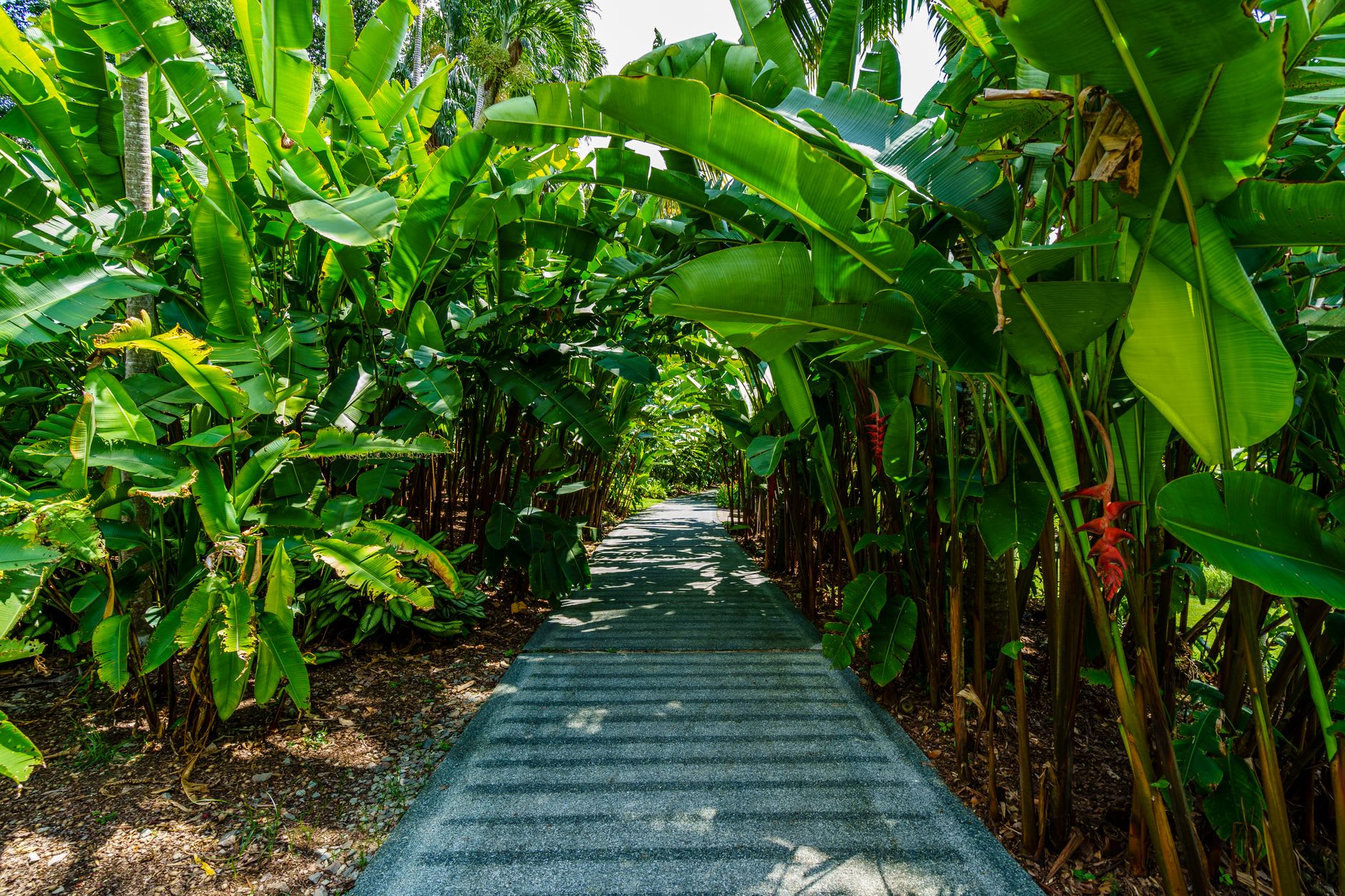
The green monkeys found me about ten minutes in. Green monkeys — technically West African vervets, brought to Barbados by ship in the seventeenth century — are not popular with Bajan farmers, who consider them agricultural pests. But in Welchman Hall Gully, removed from cane fields and gardens, they are simply themselves: curious, unhurried, moving through the canopy with a fluency that makes human locomotion seem laborious. A group of four sat about five metres above the path watching me with the politely restrained curiosity of people on a bus. I watched back. We reached an unspoken agreement and I continued walking.
The gully takes perhaps forty-five minutes to walk through at a comfortable pace, more if you stop to identify plants. The trail is one-way and emerges at the northern end near the St. Thomas road. What I’d suggest, if you have a car, is to park at the exit end, walk the trail, and walk back along the road ridge above — the view of the gully canopy from above, all that green compressed into a sinuous slash through the limestone, is a different experience entirely. In the late afternoon the light through the trees from the western side turns the whole ravine amber.

Combine this with a visit to Harrison’s Cave a few kilometres south and you get an afternoon in Barbados’s interior that most visitors to the island never access — a version of the place that predates the hotel industry and the platinum coast and the rum punch sunset cruises, that exists on its own ancient geological terms.
When to go: The gully is richest in the wet season (June through November) when the vegetation is fullest and the colours most intense — but the path can be slippery after heavy rain. The dry season trail is easier underfoot. Mornings are best for green monkey sightings, which tend to be more active before the midday heat. Allow two hours including the walk back.