Holetown
"The plaque on the monument has the date wrong. No one here seems particularly bothered."
The first thing you notice about the monument in Holetown is that it gets the date wrong. A plaque on the old cannon memorial declares 1605 as the year of English settlement; it was actually 1627. A Barbadian man sitting nearby on a bench told me this without looking up from his phone, with the calm of someone who has been correcting tourists on the same error for years. I liked that — a place comfortable enough with its own history that it can afford to find the errors charming rather than embarrassing.
Holetown is where it all began for Barbados. The British ship Olive Blossom anchored in this bay four centuries ago, and the settlement that grew around the landing site eventually became the island’s first town. You can feel the age of the place in the stones of St. James Parish Church just behind the high street — the oldest church in Barbados, built on the site of an original 1628 wooden structure, its registers containing baptisms and burials from the first decades of the colony. I spent a quiet half-hour inside reading the memorial plaques, the afternoon light coming in slanted through the louvred windows.
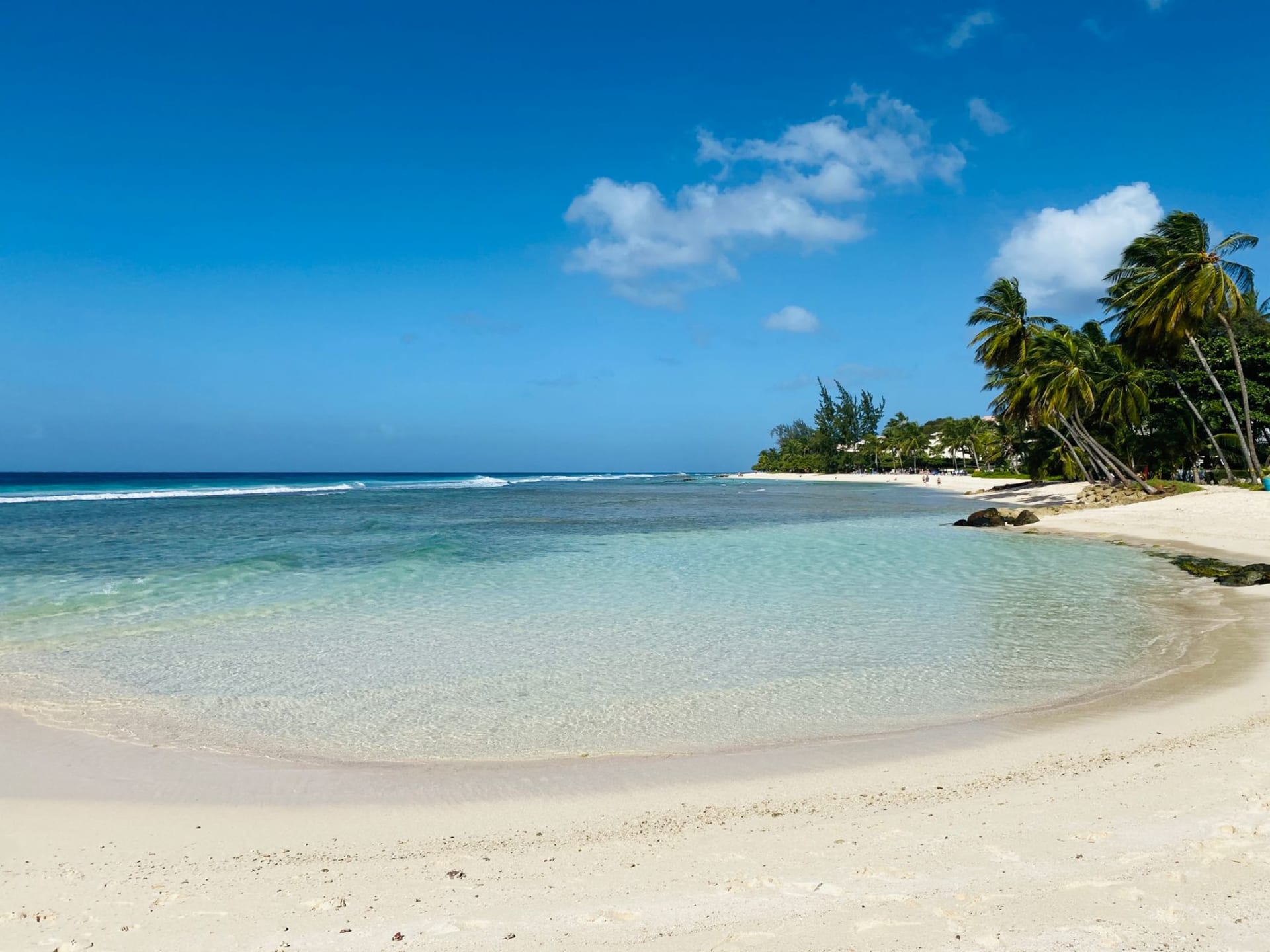
The Holetown beach itself sits at the end of a short walk from the church, calm and west-facing with that characteristic Platinum Coast turquoise. This is proper wealthy-tourist Barbados — the shops along 1st Street sell coral jewellery and designer linen, the restaurants have printed menus and wine lists. I had a snapper at Surfside Beach Bar that was perfectly grilled over open flame, the kind of simple preparation that only works when the fish is that fresh. I ate it watching a catamaran ease out of the bay as the sun started its descent, and I understood why people save for years to come here.
But the Holetown I found more interesting was one street back from the beach. The Chattel House Village — a collection of small colourful wooden structures in the chattel house style — has a Thursday evening farmers market that draws both tourists and locals. A woman sold me a bag of Bajan seasoning paste — garlic, herbs, pepper, and something I couldn’t identify — and gave me two minutes of instruction on how to use it that I’ve been applying to fish ever since.

The February Blues festival happens in Holetown during the third week of February, and the main beach transforms into an outdoor concert venue. The name is slightly misleading — there’s blues in the genre sense, yes, but also calypso, jazz, and soca, and the combination of music and the January-perfect dry-season air makes for evenings that feel genuinely blessed.
When to go: January through March for the dry season and the Festival of Holetown (February) which commemorates the original settlement. The Holetown Festival also runs in mid-February with a street fair, parade, and live music. The beach is swimmable year-round, but the west coast water is flattest in these months.