The avenue hits you before the view does. Two rows of enormous mahogany trees — planted by the Drax Hall estate in the eighteenth century, now three centuries old and towering — line the road as it crests the ridge at Cherry Tree Hill, their canopies meeting overhead to form a green tunnel that turns the afternoon light to something filtered and cathedral-dim. I stopped the car without quite intending to and got out and stood in the middle of the road. There was no other traffic. The wind came through the canopy in long exhalations and the only other sound was something unseen in the branches, probably one of the green monkeys that work this ridge.
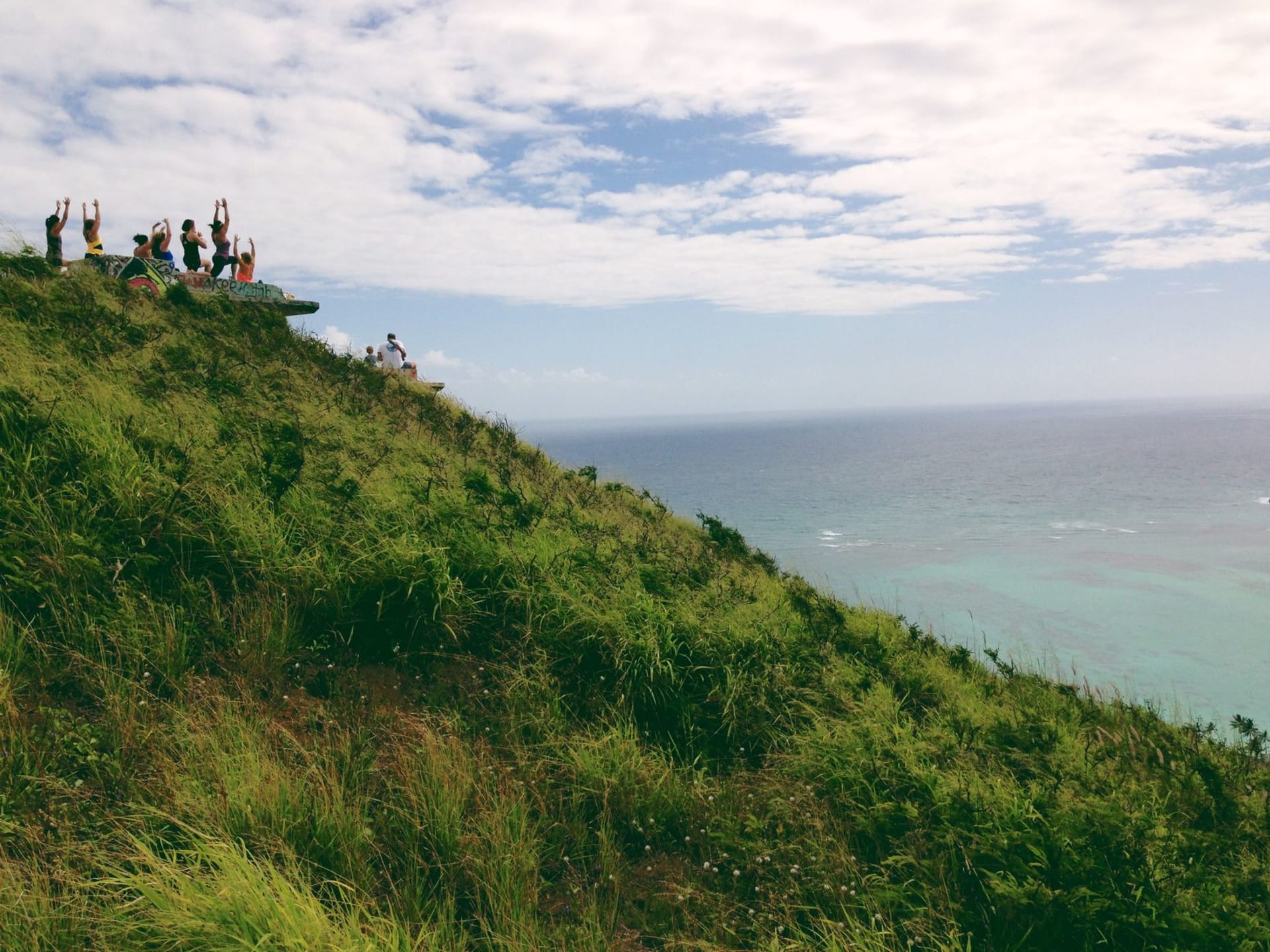
Then I walked to the edge of the hill and the whole Scotland District opened up below me.
The view from Cherry Tree Hill is the view that changes how you understand Barbados. The island is not flat — not here, in the island’s northeastern interior, where the land folds into the green ridges and valleys of the Scotland District, the limestone giving way to older sedimentary rock that weathers differently, more dramatically, in sharp cuts and rounded hills that roll toward the Atlantic coast. From up here you can see the ribbon of white surf where the sea meets the east coast, and between the ridge and the sea, a landscape of cane fields and gullies and chattel houses and parish churches that has looked roughly like this for two hundred years.

The hill is not an attraction with a ticket booth. There is a small car park — generous word for a widening of the road — and the views are just there, free and unmediated. A couple of vendors sometimes set up with coconuts and cut fruit, and I bought a chilled coconut from a man who had driven up from Bathsheba specifically because he knew where the tourists stopped. He was not wrong.
The road down from Cherry Tree Hill into the valley runs past Farley Hill National Park, where the ruins of a nineteenth-century plantation great house stand in a landscape of old trees — sandbox trees, mahogany, the enormous samaan trees whose canopies spread wide enough to shade a tennis court. The great house burned in 1965 during the filming of a movie and was never rebuilt; the roofless stone walls now frame the sky in a way that is accidentally beautiful. The park grounds are a popular Sunday picnic spot for Bajan families, and on weekend afternoons the atmosphere is cheerfully domestic, children running between the trees while their grandparents supervise from folding chairs.

The road continues north toward St. Nicholas Abbey — a seventeenth-century Jacobean plantation house that is one of the three surviving buildings of its type in the Western Hemisphere, which is a remarkable thing to be. The abbey now produces rum from its own cane fields, distilled in a nineteenth-century pot still, and the tour is as much about the history of sugar and slavery in Barbados as it is about the building, which is worth the honesty.
When to go: The ridge is best in the morning before the cloud builds over the Scotland District — by early afternoon the valley can fill with haze. The mahogany avenue is extraordinary in any season but most dramatic in October and November when the wet season has brought the vegetation to its most intense green. Pair with Animal Flower Cave for a full northern Barbados day.