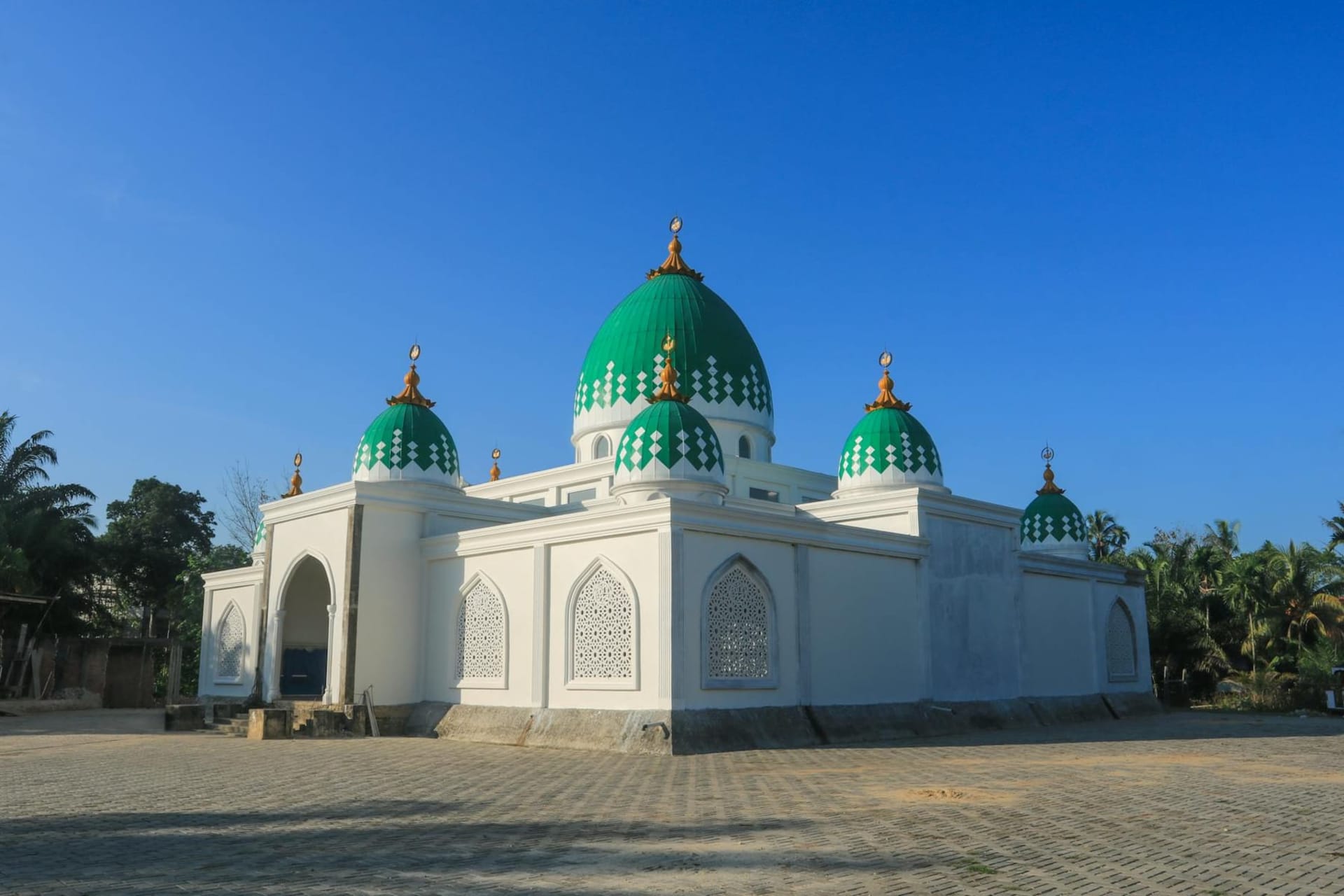
Sixty Dome Mosque Bagerhat
"The Sixty Dome Mosque hides in the mangrove delta like a civilization that decided the jungle was a fair trade."
A 15th-century mosque city of 360 domes rising from the jungle, Bangladesh's most important UNESCO site.
Nobody warns you about the silence. I’d read about the domes, seen photographs of the terracotta vaults multiplying toward the tree line, but nothing prepares you for stepping off the CNG auto-rickshaw near Shat Gombuj Mosque Road and hearing — nothing. No call to prayer at that hour. No vendors. Just the low percussion of crows and the smell of wet laterite baking back to dry in the afternoon heat.
Bagerhat sits three hours southwest of Dhaka by bus and feels like a city that chose to stop mid-sentence. Khan Jahan Ali built it in the 1450s, a Bengali Sultanate governor who apparently looked at the Sundarbans delta and decided this particular tangle of mangrove and tidal creek was worth taming. Six hundred years later, the jungle is still pressing back.
What the Domes Actually Are
The name is a lie, and I mean that as a compliment. There are not sixty domes — there are seventy-seven, arranged in a seven-by-eleven grid that covers a prayer hall big enough to hold hundreds. The translation from Bengali, Shat Gombuj, means “sixty” the same way “a hundred things” means “a lot” in French. When you stand at the western entrance and look down that forest of stone pillars, the domes seem to multiply, to breathe. Lia put her hand on a pillar and said it felt warm, as if the mosque had retained some medieval body heat.
The columns themselves are slender, almost delicate for a structure this old, salvaged or cast from the same dark basalt that darkens the whole complex. Where the light enters — through the arched windows along the eastern wall — it does something strange to the interior air, thickening it, making the stone glow amber.
The Surprise Nobody Mentions
I had expected the mosque. I had not expected the tombs scattered across Bagerhat like afterthoughts. Khan Jahan Ali’s own mausoleum sits a few hundred meters away, fronted by a tank — a sacred pond — where two saltwater crocodiles have lived for generations. Locals call them Kalo and Dhola, black and white. The caretaker told me they have never harmed anyone. I watched Kalo surface once, slow and prehistoric, while a crow landed on his back without ceremony, and I understood exactly why this place was considered holy.
We ate late, at a small rice-and-curry stall near the Thana Road junction — mustard-heavy shutki, dried fish that smelled like the delta itself, rice still steaming in a clay pot. It cost almost nothing. It tasted like something specific to this muddy, layered, extraordinary country.
When to go: November through February, when the delta humidity drops and the light turns golden rather than blinding white. Avoid June through September — the monsoon floods the surrounding roads and the crocodile pond turns opaque brown.