Tirta Gangga
"The water at Tirta Gangga doesn't run so much as it meditates — it moves with the unhurried certainty of something that has been doing this for centuries."
I arrived at Tirta Gangga at seven in the morning, when the gates had just opened and the ticketing booth was still staffed by a single sleepy attendant. The mist was sitting in the lower garden, obscuring the base of the stone fountains and softening the edges of the koi ponds into something impressionistic. A man was skimming fallen frangipani blossoms from the surface of the largest pool, working slowly with a net, collecting them in a bucket. The sound of water was everywhere — through channels, over carved stone lips, into pools that held enormous orange and white carp. I stood at the gate for a minute without going in, not wanting to alter whatever was happening.
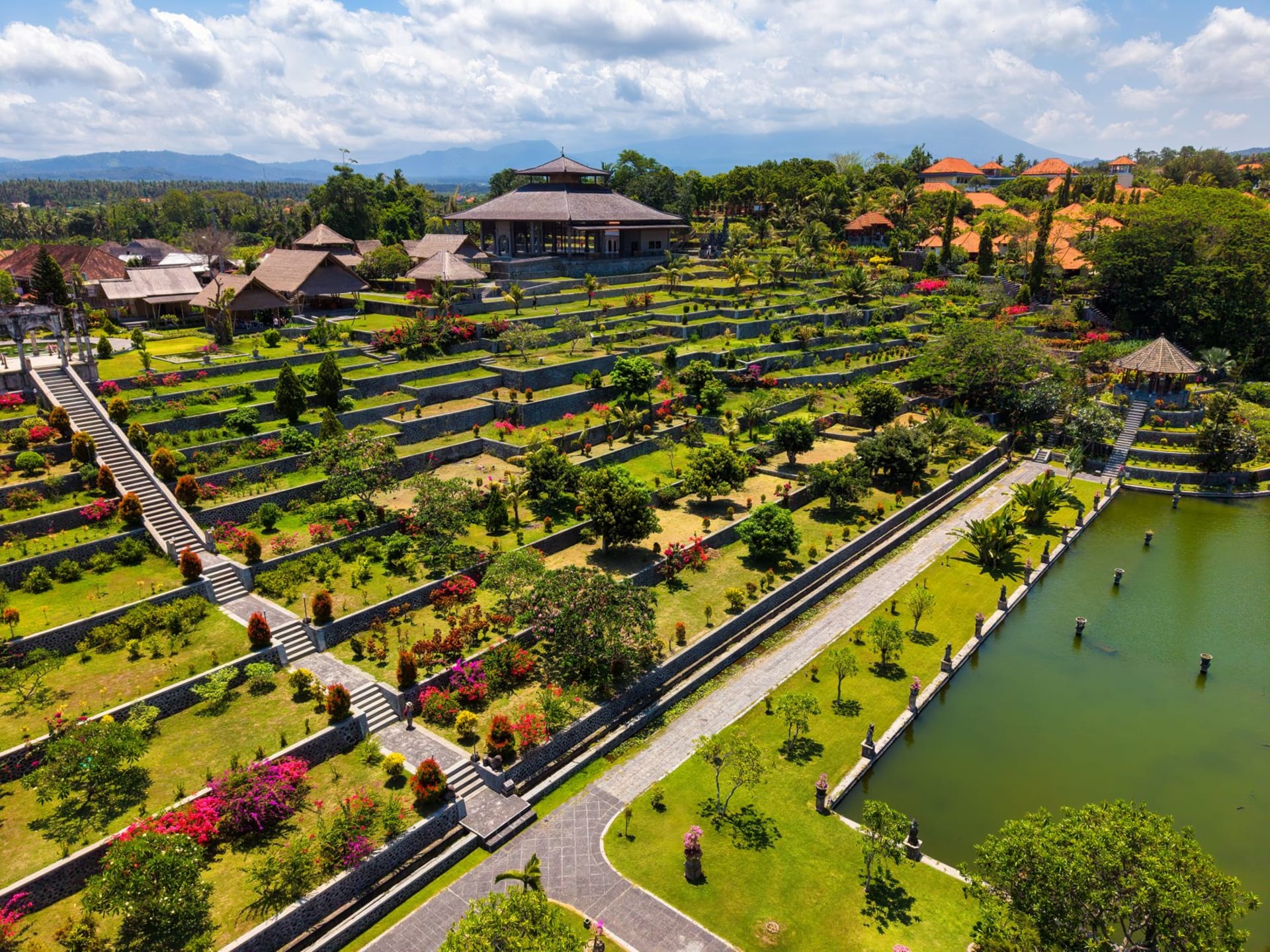
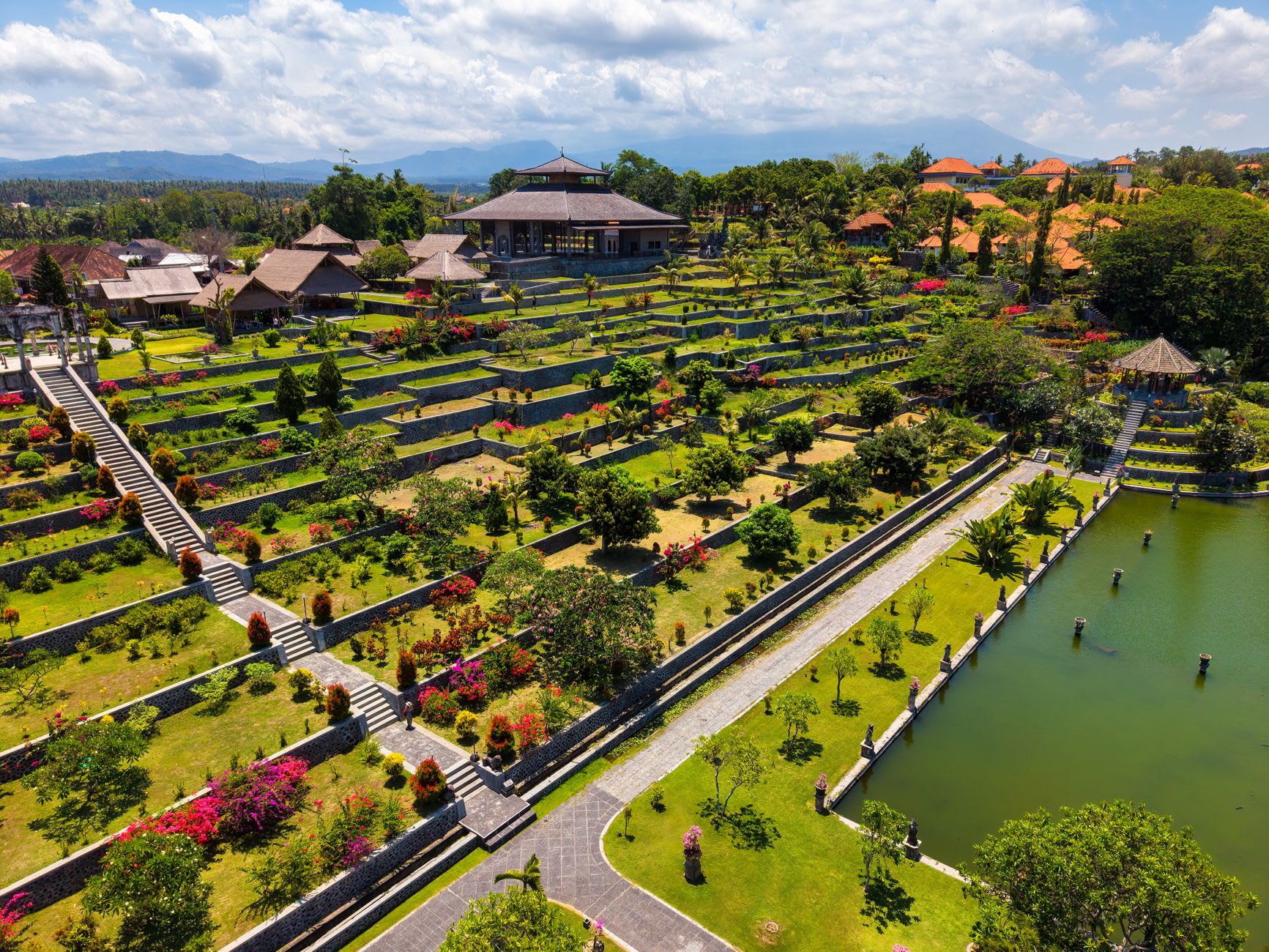
Tirta Gangga — the name means Water of the Ganges — was built in 1948 by Anak Agung Anglurah Ketut Karangasem, the last raja of the Karangasem kingdom in eastern Bali. The palace was designed as a place of royal meditation and ritual purification, its water drawn from sacred springs and blessed by Brahmin priests before being released into the network of pools and fountains that still flow today. An earthquake damaged much of the complex in 1963, the same year Mount Agung erupted catastrophically and remade the landscape of the entire east. What stands now is a reconstruction — but a thoughtful one, and the water is still sacred, and the springs are still the same springs.
The palace gardens themselves reward slow walking. The tiers descend from the entry gate through a series of terraced water features — leaping stone fish, multi-tiered fountains, the great rectangular pool where locals swim in the late afternoon, its water cold and very clear with a faint mineral taste if you let any in your mouth by accident. Stone nagas and guardian figures line the paths, moss-covered and half-lost in vegetation. The gardening philosophy here seems to be one of gentle collaboration with what grows naturally, and the result is a lushness that feels ancient rather than manicured.
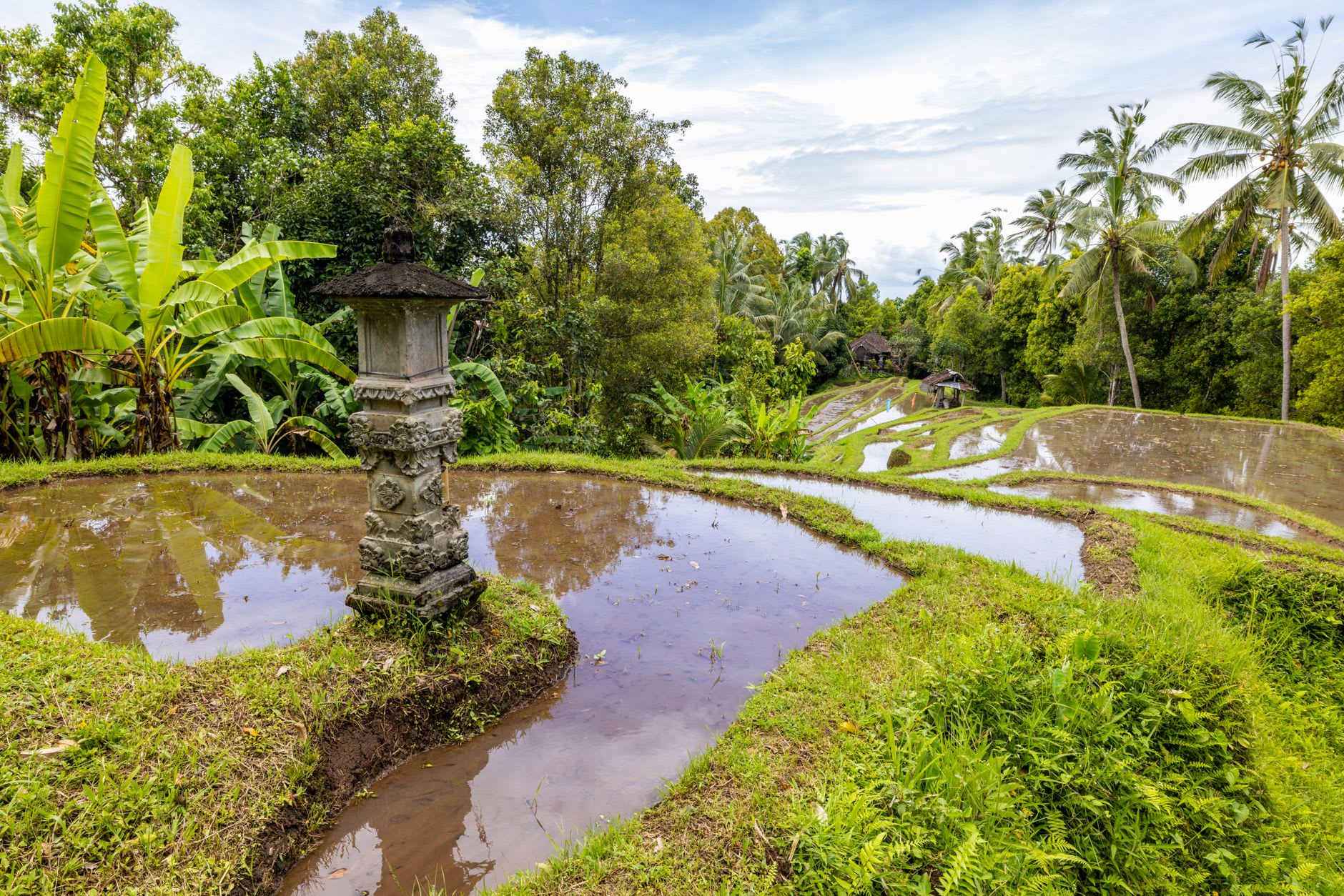
The surrounding landscape is the other reason to come east. Between Tirta Gangga and the coast road, rice terraces hang on the hillsides in stacked arcs, the subak water channels running between them along paths that are technically public but feel private in the way that agricultural land often does. I walked them for two hours after leaving the palace, following channels into the hills above the valley, meeting exactly two other people — a farmer who nodded and kept walking, a woman leading a duck with a stick. The paddies here have a quality of colour I have not seen elsewhere in Bali: a particular dense green, almost blue in the shade, that seems to absorb the light rather than reflect it.
The village of Ababi, a twenty-minute walk up the hill from the palace, holds a morning market that starts at five AM and is done by eight. Vegetables from the surrounding gardens, grilled corn, turmeric-yellow coconut cakes wrapped in banana leaf, an old woman selling eggs from a basket. The prices are not tourist prices. I bought four bananas and a packet of sticky rice and ate breakfast on a wall looking down toward the water palace far below, the mist by then burning off in the growing heat.
When to go: The dry season from April through October offers the clearest views of Mount Agung from the surrounding rice terraces — though the mountain generates its own weather and can vanish behind cloud regardless of season. Early morning, ideally before eight AM, gives you the palace gardens before the tour groups arrive from Ubud and Candidasa. The water temperature in the swimming pools is cold year-round; locals consider it therapeutic.