Sidemen
"I woke up and Agung was there through the window, completely clear, and I thought: that is why people build temples near volcanoes."
I woke up on my second morning in Sidemen and the volcano was there. Mount Agung, which had been buried in cloud since I arrived, appeared at six in the morning through the open window of my homestay — enormous, perfectly conical, the summit catching the first pink light while the valley was still in shade. I lay there for twenty minutes without moving, not wanting to do anything that might break the scene. The family in the compound below were already making offerings in the courtyard, the smell of incense reaching the upstairs room. Outside, a rooster was announcing the morning to no one in particular. The volcano did not move.
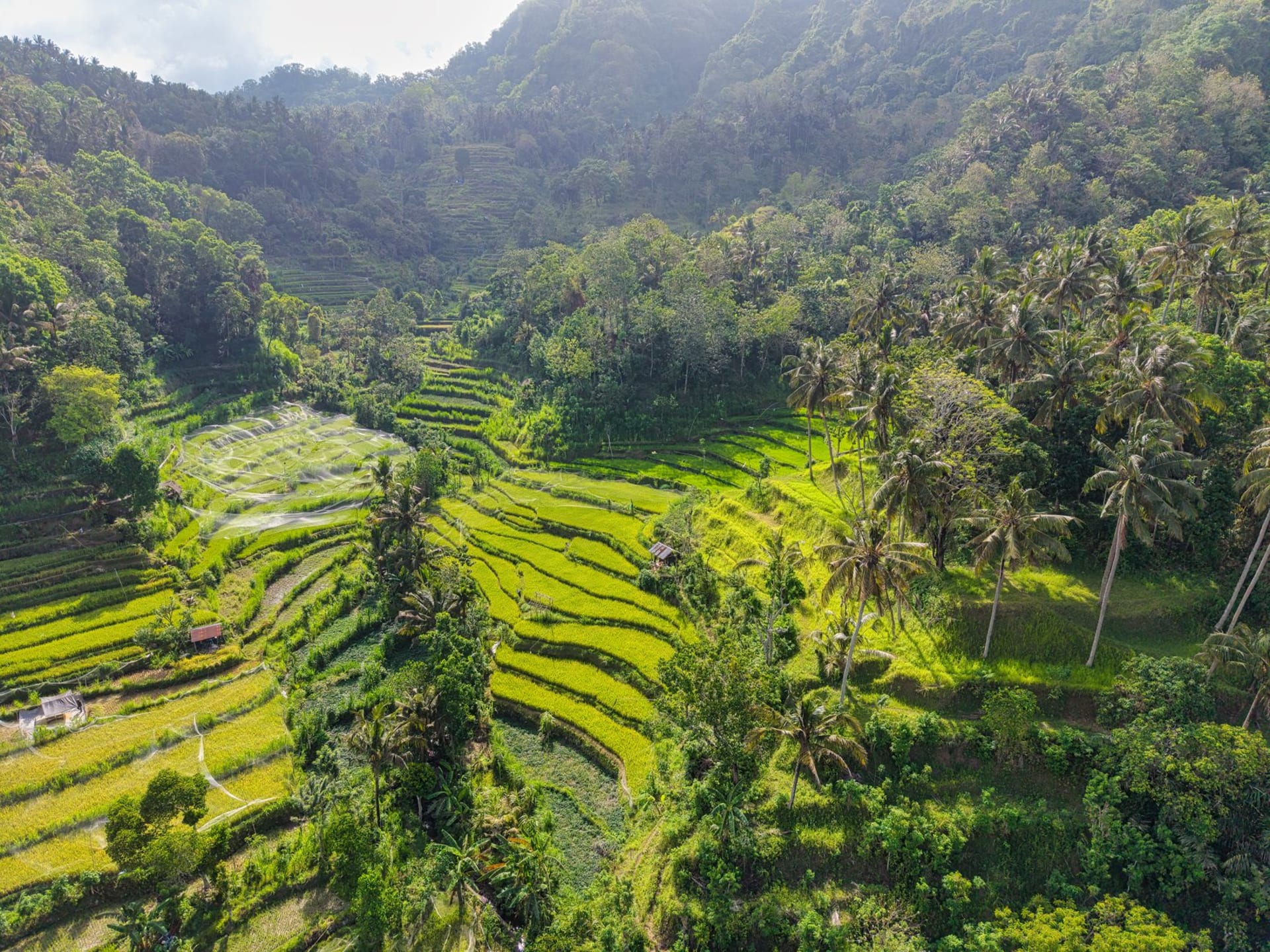
Sidemen sits in a valley in the eastern foothills of Bali, far enough from Ubud to feel like a different island and from the beach resorts to feel like a different century. The road in from the main highway descends through dense vegetation, past bamboo stands and clove trees and small temples with flowering offerings, into a valley floor where the rice paddies are worked by hand in the same patterns they have been worked for hundreds of years. There are guesthouses here now — some of them very good, set into the hillside with infinity views across the terraces — but Sidemen has not yet tipped into the kind of tourism that changes a place’s character. The village still belongs to the village.

The weaving here is the other thing worth understanding before you arrive. Sidemen is one of the last remaining centres of traditional songket weaving in Bali — the intricate hand-loom process that produces the gold and silver thread cloth worn in ceremonies across the island. Walking through the village, you hear the looms before you see them, a rhythmic clacking from inside open-sided workshops where women sit at large frame looms threading shuttle back and forth in patterns that take weeks to complete. A single ceremonial sarong can represent forty hours of work. Several cooperatives in the village sell directly, and the price reflects the labour honestly.
I walked the valley path one afternoon without particular direction, following the irrigation channels between paddies, stepping over ducks that waddled along the path with their characteristic nonchalance, watching a group of schoolchildren in white uniforms make their way home along the ridge above me. The path eventually brought me to a small temple in a grove of trees where an older man was lighting incense and placing flowers with the focused attention of someone doing something important. He glanced up, nodded, continued. I sat on a stone wall twenty metres away and ate a banana from my bag and felt, without being able to fully articulate why, that I was in exactly the right place.

The food in Sidemen is homestay food — whatever the family is cooking, presented without a menu, eaten with gratitude. I had the best duck curry of my life at a family compound at the south end of the village: bebek betutu, slow-cooked with lemongrass and turmeric and wrapped in banana leaves, served with rice and vegetables and a sambal that I ate until my ears were ringing. The owner was pleased but unsurprised. She had been making it the same way for thirty years.
When to go: The dry season from May through October gives the best chance of clear Agung views, though the mountain makes its own weather and can disappear in cloud at any time of year. June and September are particularly good — the rice is often at its most photogenic green in these months, and the crowds that fill Ubud barely reach this far east. If you come in the wet season, the valley takes on a different, more intense green and the ceremonies run through the rain undeterred.