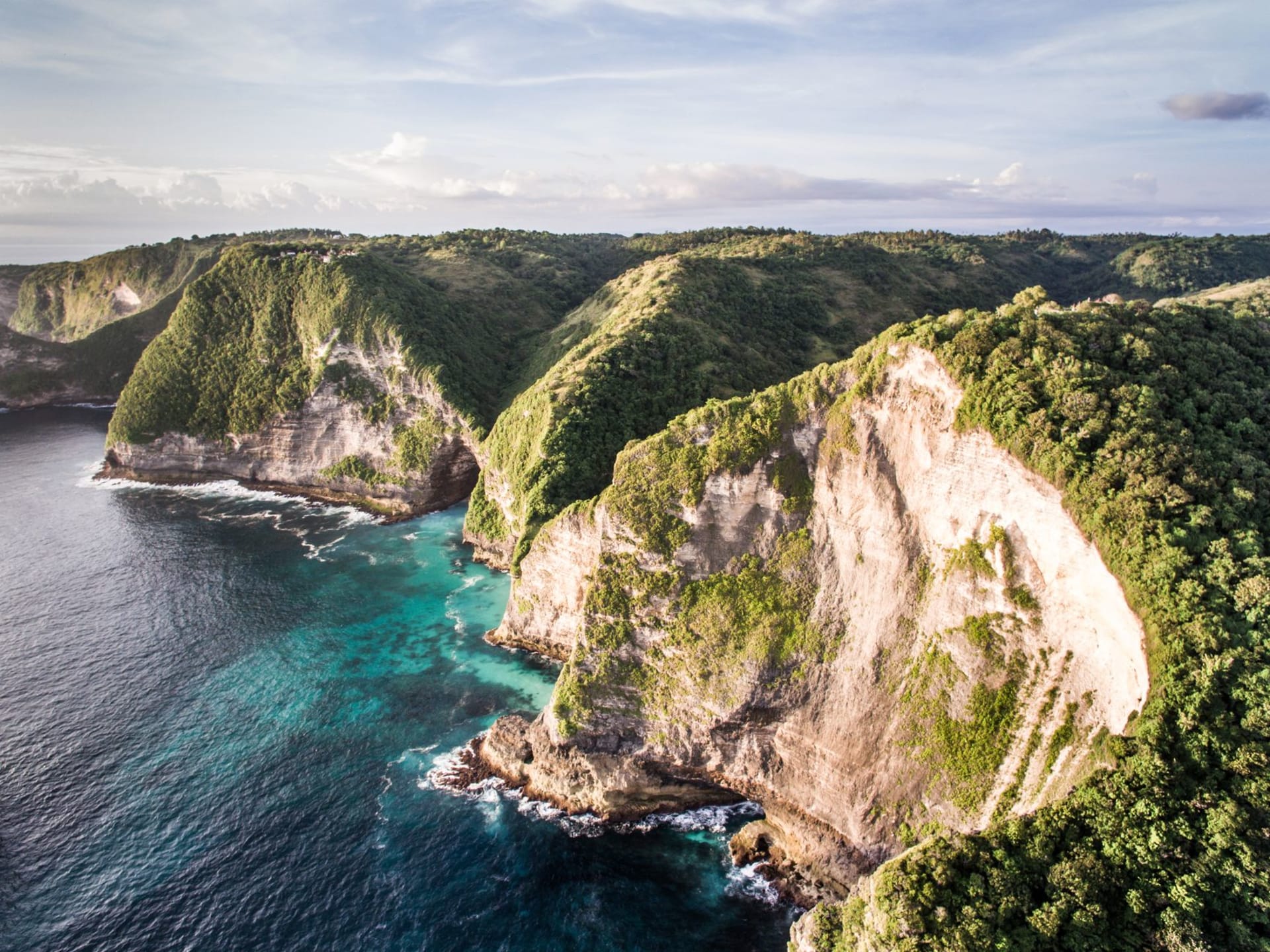
Nusa Penida
"Nusa Penida is Bali's rougher, wilder twin — the one who didn't get the polishing and is better for it."
The fast boat from Sanur takes forty-five minutes on a good day. I spent the crossing sitting on the deck watching the water turn from the grey-green of the mainland coast to a deeper, more saturated blue as the depth increased under us, and by the time the cliffs of Nusa Penida appeared ahead — limestone bluffs rising straight from the sea, white and dramatic against the blue sky — I understood why people make the trip. The island announces itself before you arrive.
The port at Toyapakeh is a controlled chaos of motorbike taxis and boat hawkers and returning day-trippers with wet hair. I had rented a scooter through my guesthouse, which turned out to be the only rational decision I made that day. The roads on Nusa Penida are a category unto themselves — steep, potholed, frequently washed out, occasionally disappearing into the hillside altogether. They were not built for the volume of traffic that now uses them, and in places the surface is more aspiration than road. I drove in low gear most of the afternoon, which gave me time to look at things.
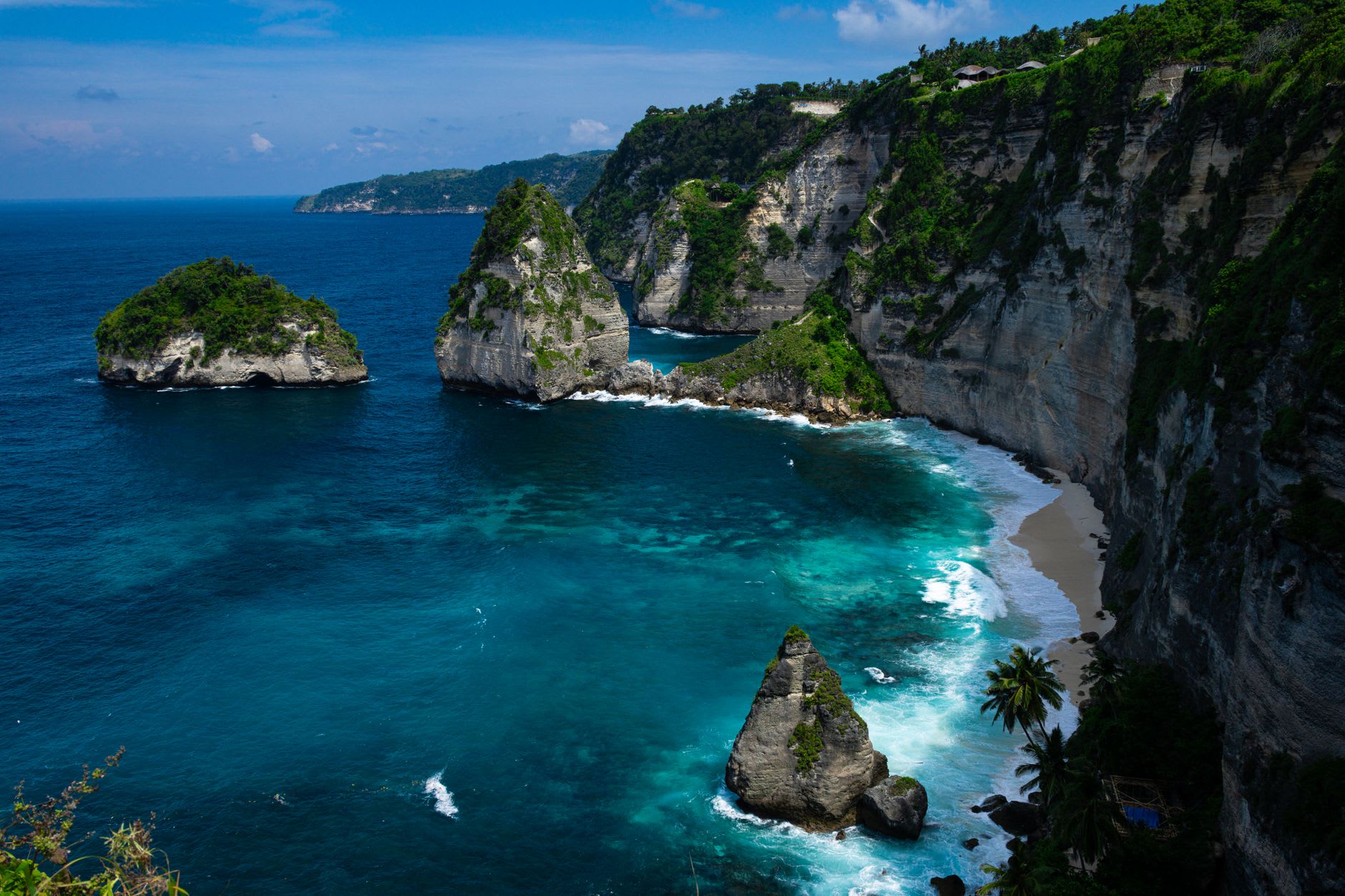
The viewpoints at Kelingking Beach and Angel’s Billabong are the two that appear on every itinerary, and both are worth the approach even though the approach to Kelingking involves a steep concrete path clinging to the cliff face that makes me think seriously about my life choices. The beach itself — a white crescent cradled between limestone arms — is accessible at low tide but the descent to it takes forty-five minutes each way and the return is almost vertical. I went to the viewpoint, took in the scale of what I was looking at, and did not attempt the path. Some views are complete from the top.
The interior of the island is the part that surprises. Past the tourist viewpoints, Nusa Penida becomes a different place — dry, hilly, the vegetation scrubby and aromatic in the heat, traditional villages where people look up when you pass because you are not a common sight. The temple of Pura Dalem Ped, on the north coast, is one of Bali’s most spiritually significant, and on the days I was there, pilgrims from the mainland were arriving by boat for ritual bathing in the sacred springs that emerge at the cliff base. It had nothing to do with the Instagram version of this island and everything to do with what the island actually is.
The diving here is some of the best in Southeast Asia. Manta Point, on the southwest coast, is a cleaning station where oceanic manta rays gather in numbers that seem implausible — ten, fifteen, sometimes more, banking and hovering in the current while small fish remove parasites from their skin. The current at most dive sites runs strong and cold, and occasionally the deepwater current pulls cold upwellings that bring visibility down and temperature sharply up. I dived with a Balinese instructor who had grown up in Nusa Penida and had been underwater here for twenty years. His knowledge of the current patterns was instinctive. He moved through the water with the ease of someone completely at home.
When to go: April through October is the prime season — calm seas for the boat crossing, best diving visibility, and manageable roads. The manta rays at Manta Point are present year-round but most reliably sighted May through September. July and August see the highest visitor volumes; arrive on the first boat from Sanur and leave after the day-trip crowds depart if you want any perspective at the cliff viewpoints. Avoid the crossing in the wet season when the strait can be rough enough to cancel fast boat services.