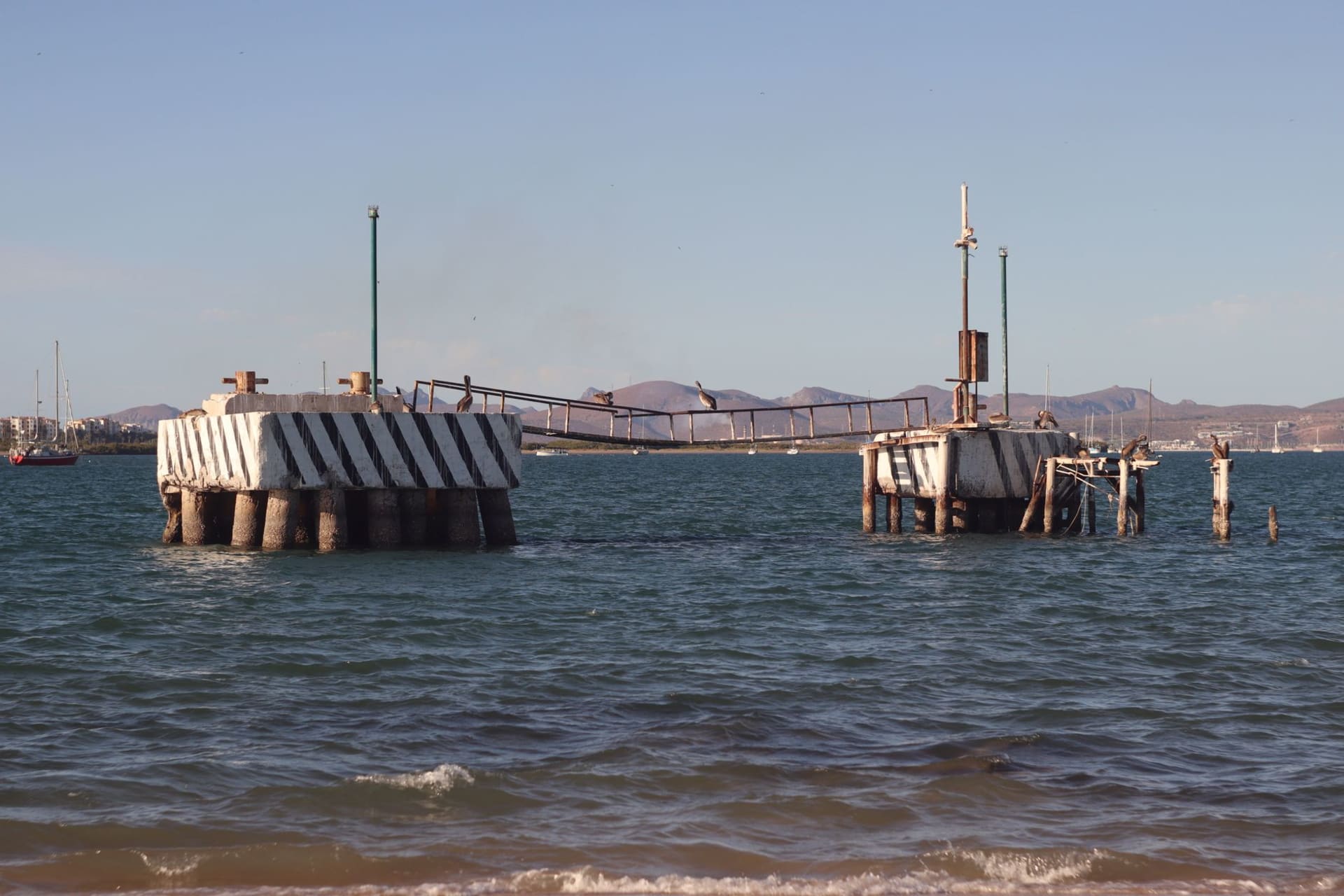
La Paz
"I swam with a whale shark for twelve minutes and it felt like twelve seconds and also like an hour. Time does that, sometimes."
The malecón in La Paz is not the most dramatic waterfront in Baja — that distinction probably belongs to some unnamed sea cliff between San Quintín and Guerrero Negro — but it is the most lived-in. Every evening from about five o’clock onward the promenade fills with people doing nothing in particular: families pushing strollers, couples sitting on the seawall with helado from one of the paleterías, old men in good shirts who seem to arrive and depart according to some social schedule I could not decipher. The bay is calm because the bay is large and shallow and protected by the Espíritu Santo archipelago across the water, and the light on it at the hour before sunset goes through such a range of amber and rose and finally a deep cobalt blue that staying to watch the full sequence starts to feel like an obligation.
La Paz is the capital of Baja California Sur and has the institutional weight of a capital — government buildings, a cathedral, a university, neighborhoods that were not built for tourism. This gives it a texture that distinguishes it immediately from Los Cabos, an hour south, which is essentially a resort economy in the shape of a city. In La Paz there are taco stands that serve the municipal workers at lunch, not the cruise passengers. There are mechanics’ shops and furniture stores and a public market where the vendors know each other’s names.
The whale sharks come between October and April, drawn by the dense plankton blooms in the shallow waters just outside the city. The operation for swimming with them is well-established but carefully managed — snorkel only, no touching, fins off when the animal is close, guides who take their responsibility to the sharks as seriously as to the tourists. My group of six found a whale shark within twenty minutes of leaving the dock. She was approximately seven meters long and swimming slowly at the surface, her spotted back just breaking the water, and our guide said “in the water” and we went in and swam alongside her for twelve minutes. She was neither curious nor afraid. We were simply there, and she was simply swimming, and the ocean was simply around us, and it was enough.
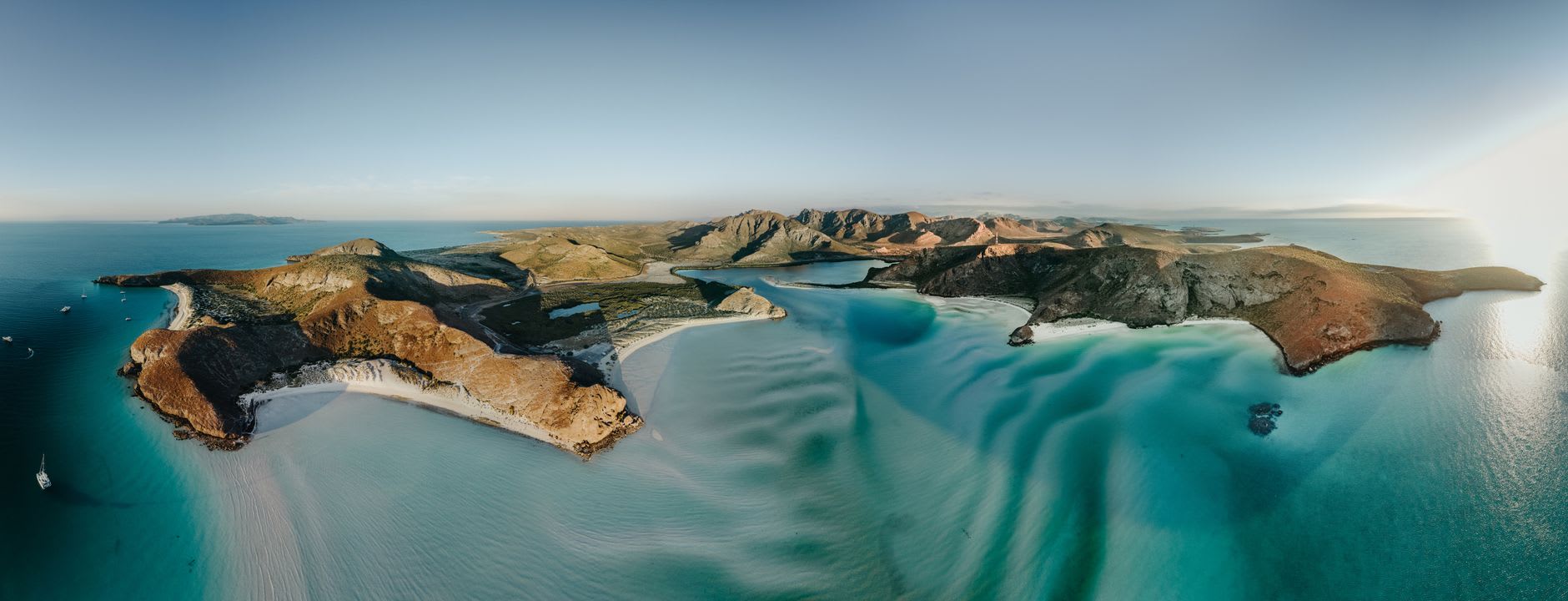
Espíritu Santo island deserves a full day if not two. The archipelago twenty kilometers offshore holds a sea lion colony, sea bird nesting grounds, beaches that appear in photographs and look like they were staged, and kayaking routes through mangrove channels where the water goes still and green. I arrived by panga, snorkeled the sea lion colony where young sea lions performed elaborate aerial maneuvers about thirty centimeters from my mask, and then ate lunch on the beach in a state of the specific contentment that comes from having used the body well.
The food in La Paz keeps pace with its civic pride. There is a stretch on the malecón itself and in the streets one block back where the eating is serious — proper mariscos restaurants with ceviche made from the catch that morning, aguachile with local shrimp in a lime and serrano chile bath that tightens the jaw pleasantly, and the clam tostadas that are, I think, the city’s signature dish: a crisp tostada loaded with fresh clams, pico de gallo, avocado, and a squeeze of lime. I ate three. I considered a fourth.
When to go: October through April for whale sharks and ideal weather. The city is pleasant year-round for exploration, but summer brings intense heat and humidity. February and March see the convergence of whale shark season and the Carnaval celebration, which is one of the more spirited in northwest Mexico.