Tree of Life
"Nobody knows why it's alive. Standing there, you feel the full weight of that not-knowing."
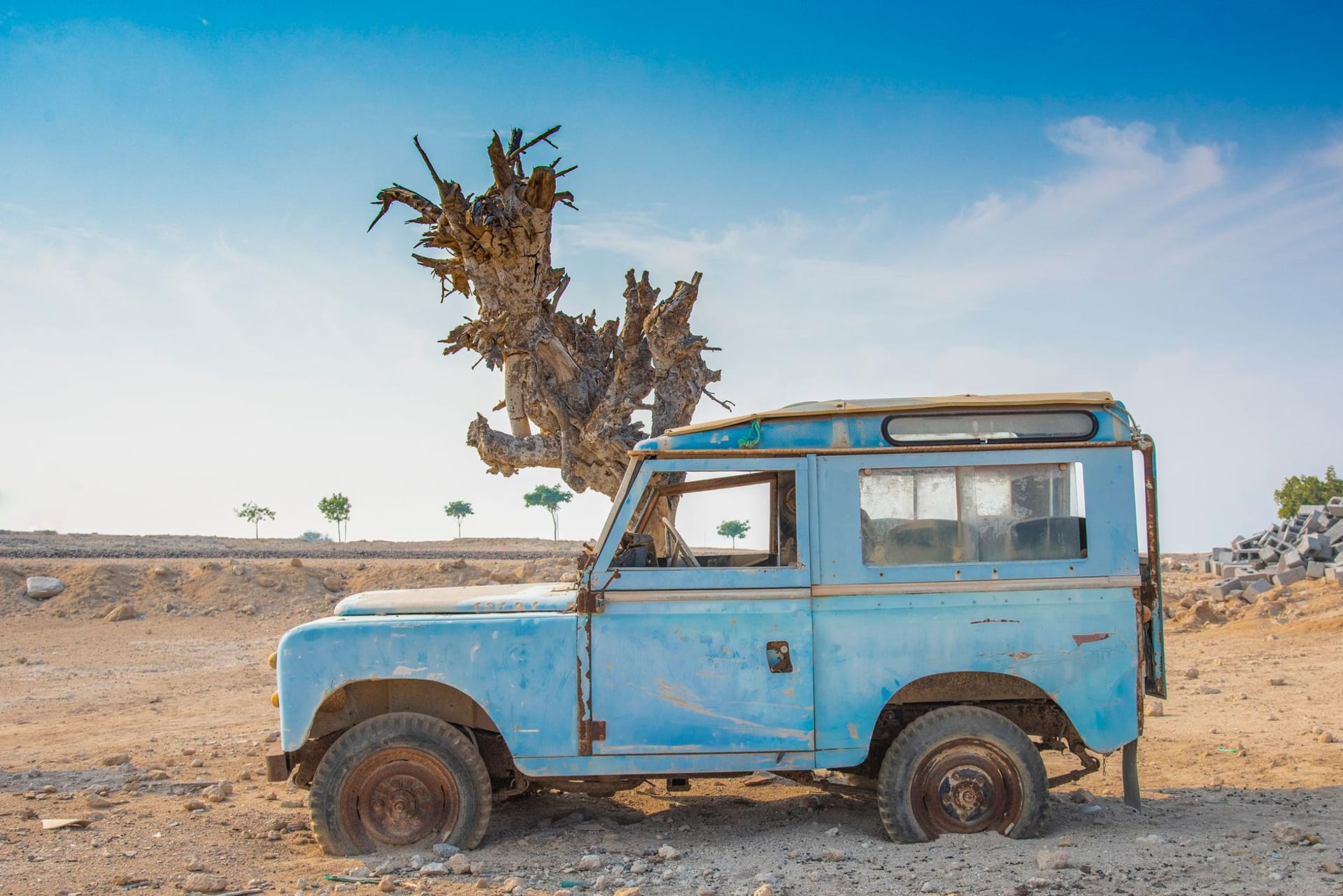
I drove south through the oil fields — the skeletal silhouettes of pump jacks against a sky the color of bleached linen, the faint persistent smell of petroleum that I associate with every road in Bahrain once you leave the city — and the landscape flattened further, if that was possible, until it became a plateau of cracked earth with no reference points and no shade. And then, on the horizon, a dark shape that resolved, as I got closer, into a tree. One single tree. No other vegetation anywhere in any direction. Just this thing, standing in the middle of nothing, alive.
The Tree of Life — Shajarat-al-Hayat — is a mesquite tree about four hundred years old, and the extraordinary thing about it is that there is no water source anywhere nearby. No stream, no spring, no irrigation. The water table in this part of Bahrain sits far below the surface and nobody has been able to satisfactorily explain why the tree survives when nothing else does. Some people attribute it to supernatural causes. Others posit undiscovered underground channels. Geologists have studied it and offered careful, qualified answers. The tree offers no comment.
I arrived at around four in the afternoon, when the light had started to angle and the heat was backing off toward something tolerable. There were two other visitors — a couple who photographed it from every distance, then left quickly, as if the tree was an item to be checked and moved past. I stayed. I sat under it, in the shade that should not exist here, on ground that should not support any of this, and tried to understand what I was actually feeling. It wasn’t reverence, exactly. It was something more like the low-grade unease of being in the presence of something you cannot account for. The shade was real. The leaves rustled. These facts seemed mildly miraculous in context.
The roots of the tree spread visibly across the surface of the earth — thick cables of wood reaching out in every direction, looking for something. They make the tree look like it’s holding on, which may be exactly what it’s doing. The leaves are small and tough and make a dry, papery sound in the wind. I picked one up from the ground and held it for a while. It seemed implausible, like a prop left by someone who wanted the scene to be more interesting.
On the drive back, the sun was going down over the oil fields and the pump jacks were moving in their slow mechanical rhythm against a sky turning the color of rust. Bahrain is a small island with a lot packed into it, but the Tree of Life sits in the part of it that feels least managed, least explained. That’s its real appeal, I think — not that it’s beautiful, though there is something beautiful about it, but that it doesn’t make sense and it doesn’t apologize for that. Every other thing in Bahrain has been explained. This one hasn’t.
When to go: November through February for the most comfortable outdoor conditions. Late afternoon light is particularly striking on the tree and the surrounding plateau. Avoid summer entirely — the drive out is hot and the site has no shelter at all. The tree is accessible by car and the last stretch is unpaved; most sedans manage it fine.