Hawar Islands
"The silence on Hawar isn't the absence of noise — it's a presence, like the water itself."
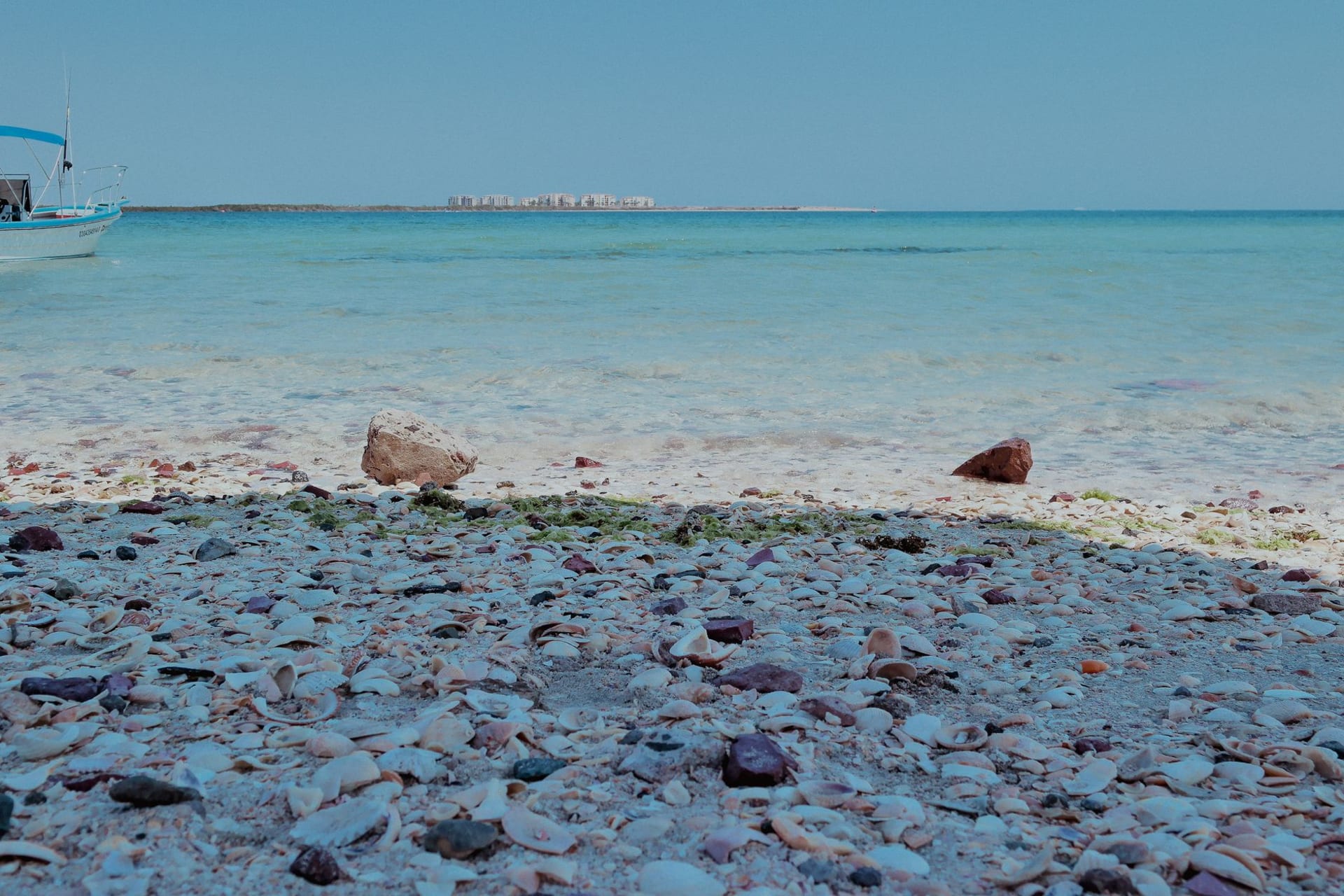
The boat left from the jetty at Zallaq, at the southwestern edge of Bahrain, in the early morning when the Gulf was flat enough to see the bottom through most of the crossing. I was the only non-Bahraini on board — the other passengers were a family and a group of men with fishing rods, all of them appearing entirely comfortable with the fact that they were heading somewhere that most people have never heard of. The island of Hawar appeared after about forty minutes: low, pale, fringed with mangroves, the water around it running from pale green to turquoise to a deep blue that looked implausibly tropical for the Gulf.
Hawar is the largest of a small archipelago at the southern edge of Bahraini waters, less than two kilometers from the Qatari coast. The proximity to Qatar was the subject of an extended legal dispute between the two countries that went all the way to the International Court of Justice and wasn’t resolved until 2001. Bahrain kept Hawar. Standing on the island, you can see Qatar across the water on a clear day — not the towers of Doha but the low coastline, the same Gulf light falling on both sides of a border that the sea appears not to recognize.

The islands are a protected nature reserve, and the protection is real in the sense that most of them have no infrastructure at all. The main island has a small resort that has been here for years and a wildlife research station, and that’s essentially it. The mangrove forests along the eastern edge shelter egrets and herons and species of wading bird that I failed to identify but watched for a long time. In the shallow waters off the western side, dugongs come to feed on the seagrass beds — slow, grey, enormous animals that surface for air and then slide back below without urgency, as if they have all the time in the world, which apparently they have had since the Eocene.
I hired a small boat for two hours and went looking for dugongs with the help of a man from the resort who knew where they tended to be. We found them, or rather found evidence of them — disturbed seagrass, the occasional surfacing — and I sat in the boat in the shallow water and felt the specific quality of silence that comes from being somewhere genuinely remote. No traffic, no construction, no human ambient sound of any kind. Just the water moving against the boat’s hull and a pair of ospreys arguing over a fish somewhere behind me, and the very occasional exhalation of something large rising to breathe.

The crossing back in the afternoon was rougher — the Gulf wind gets up in the afternoon and the boat moved with a seriousness that kept everyone focused on the horizon. Bahrain’s main island appeared first as a smudge, then as buildings, then as the full coastal sprawl of a modern country. The contrast with where I’d been was so complete that it took a moment to recalibrate. Hawar operates on a different timescale entirely. The one it runs on is longer than ours, and spending a day there makes that legible in a way that stays with you for longer than you expect.
When to go: November through March for comfortable temperatures and calm seas. The crossing can be rough in strong north winds — confirm conditions before you book. Bird populations peak in winter when migratory species supplement the residents. Dugong sightings are possible year-round but more reliable in the calmer, clearer winter months when the seagrass beds are easier to read from a boat.