
A former fishing village on Bahia's Coconut Coast where turtles nest, a ruined castle watches the sea, and nobody's in a hurry.
We drove up from Salvador on a Tuesday, about eighty kilometers along the Costa dos Coqueiros, and I remember Lia saying the coconut palms started looking less like decoration and more like the whole point of the road. Praia do Forte announces itself slowly — no big arrival, just sand creeping closer to the asphalt until suddenly you’re parking under a tree and the ocean is right there, calm and reef-flattened. The village used to be a fishing outpost, and even with the pousadas and the surf shops now lining Alameda do Sol, that cobblestone spine still feels like a place people actually live, not just a set dressed for tourists.
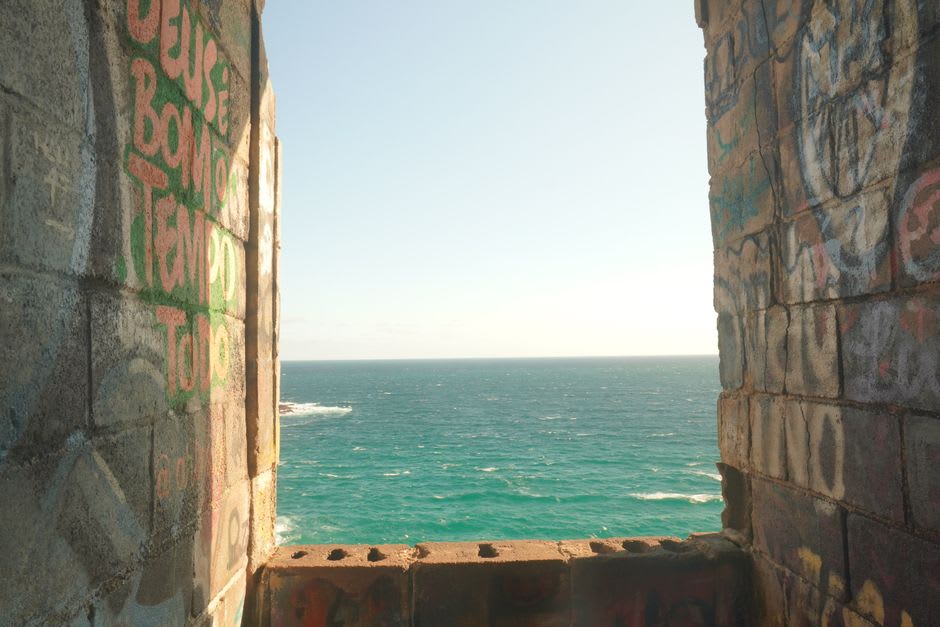
The first afternoon we walked out to Castelo Garcia d’Ávila, the ruined fort the whole village is named for, built in the 1500s by the Garcia d’Ávila family when this coast was still frontier. It’s not a grand ruin — more a stubborn shell of stone against the sky — but standing in what used to be a window, looking out at the same ocean those first Portuguese settlers watched, gave me one of those quiet, time-collapsing moments I keep chasing when we travel. Lia found a lizard sunning itself on the lowest wall and refused to move until it did.
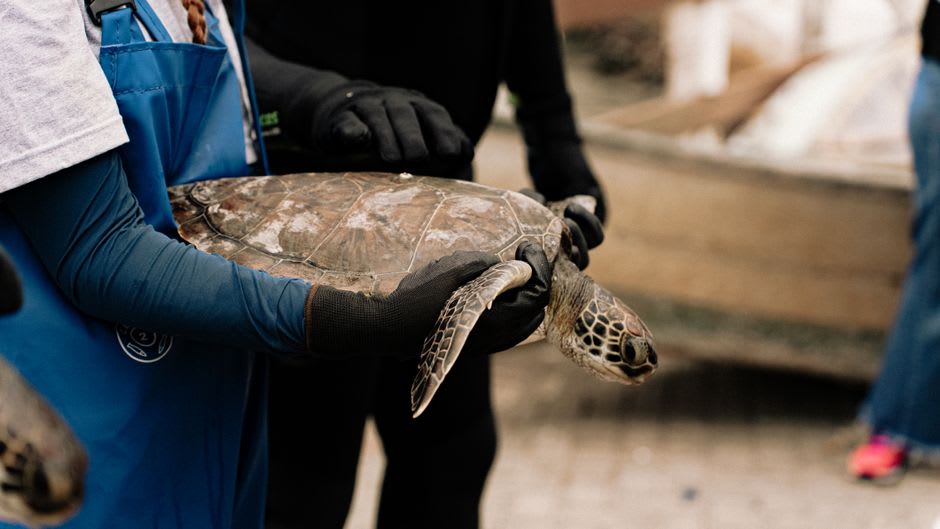
The next morning we went to Projeto TAMAR, and I’ll admit I expected a small roadside exhibit — instead it’s the actual research heart of Brazil’s national sea turtle program, running since 1980, with pools where you can watch juveniles that were rescued or hatched on this exact stretch of coast. A biologist there told us five species nest along these beaches, and that September through March is when the females come ashore at night to lay. We didn’t see a nesting turtle ourselves — wrong week — but watching the hatchlings paddle in their tanks, knowing they’d be released onto the same sand outside, made the whole conservation effort feel less abstract than any documentary ever had.
What I didn’t expect was how much I’d love the tidal pools. The reef sits far enough offshore that at low tide it turns the water in front of the village into a string of shallow, warm pockets — kids wading, old men fishing with hand lines, Lia floating on her back reading the sky. One morning we hired a local guy with a boat to take us out to Reserva Sapiranga, the mangrove and coastal forest just inland, and came back sunburnt and mosquito-bitten and completely happy, which is usually how I know a place has gotten under my skin.
When to go: Aim for September through March — the weather is warmer and drier, and it happens to line up with turtle nesting season, so there’s a decent chance of seeing something TAMAR’s biologists are watching over in real time.