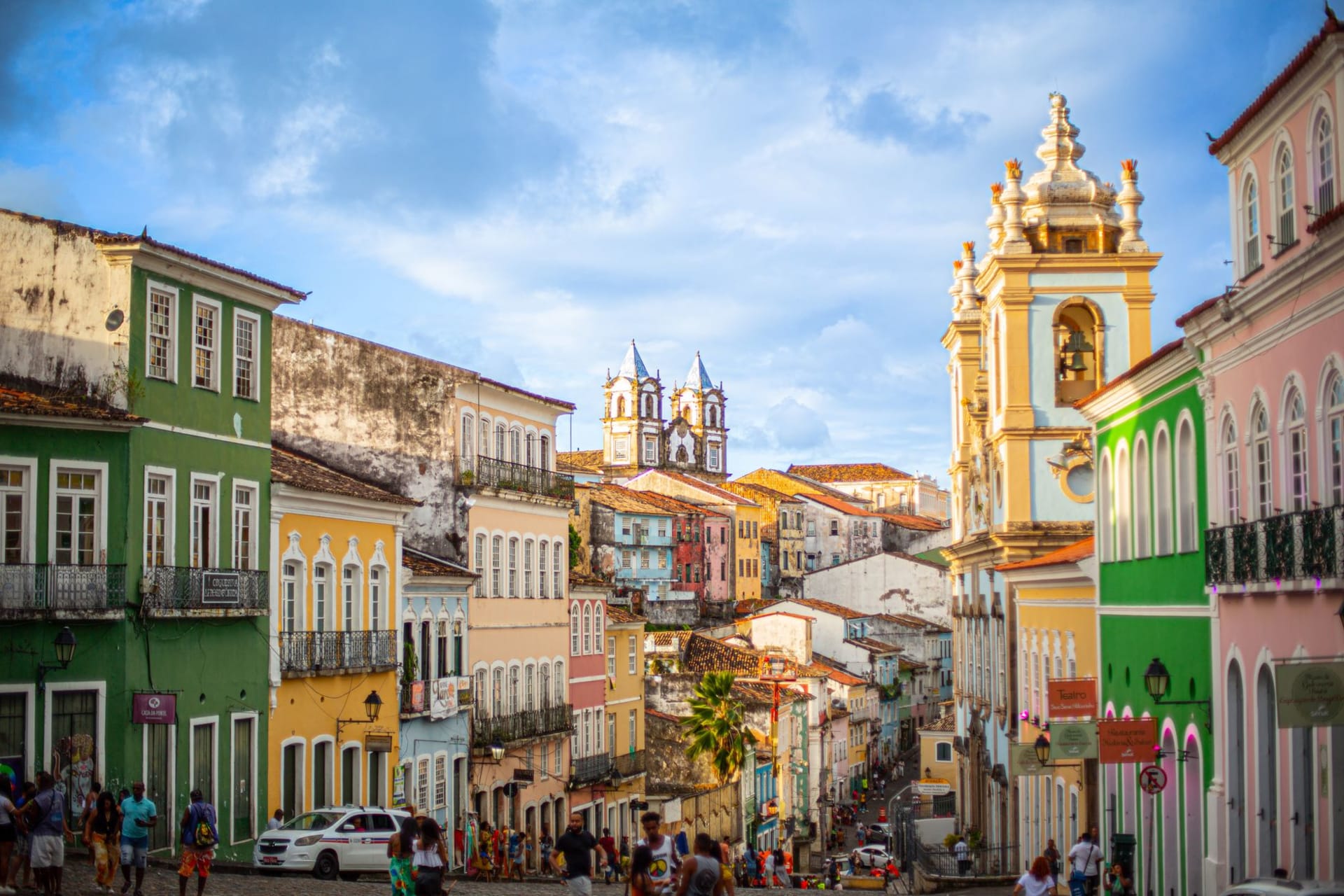
Pelourinho
"Standing in Largo do Pelourinho with drums coming up from below — history here doesn't echo, it breathes."
I arrived at the Pelourinho at seven in the morning, with the cobblestones still damp from a pre-dawn rain and a candomblé procession moving silently up the hill toward the Church of Nossa Senhora do Rosário dos Pretos. Women in white lace and blue beads, a drummer keeping a low, insistent rhythm, flower petals dropping from a basket onto the stones. No one was performing. They were going somewhere, and I was simply in the way — in the best possible sense.

The Pelourinho is the colonial upper city of Salvador, a UNESCO-listed cluster of seventeenth and eighteenth-century buildings stacked on a sandstone ridge above the Bay of All Saints. The Church of São Francisco is the obvious anchor — its interior a delirium of gilded baroque woodwork that covers every surface like a fever dream of Portuguese excess. But I kept coming back to the smaller churches, the ones half-hidden down alleyways: Nossa Senhora do Rosário dos Pretos, built by enslaved Africans who were forbidden from worshipping in the gold churches. Its façade is plainer. What is inside feels more honest.
The Largo do Pelourinho itself — the square that gives the neighborhood its name, the site of the colonial whipping post — is where the daily rhythm concentrates. By midday: street vendors grilling corn, kids doing capoeira in sandals, a woman selling acarajé from a clay pot balanced on a wooden tray, the oil so deep orange it looks almost red. The smell of dendê frying in open air is something I have found nowhere else on earth — rich, earthy, a little funky, unmistakably Bahian. By evening, when the drum circles start in the Terreiro de Jesus square, the neighborhood becomes something harder to describe. Not performative. Activated.
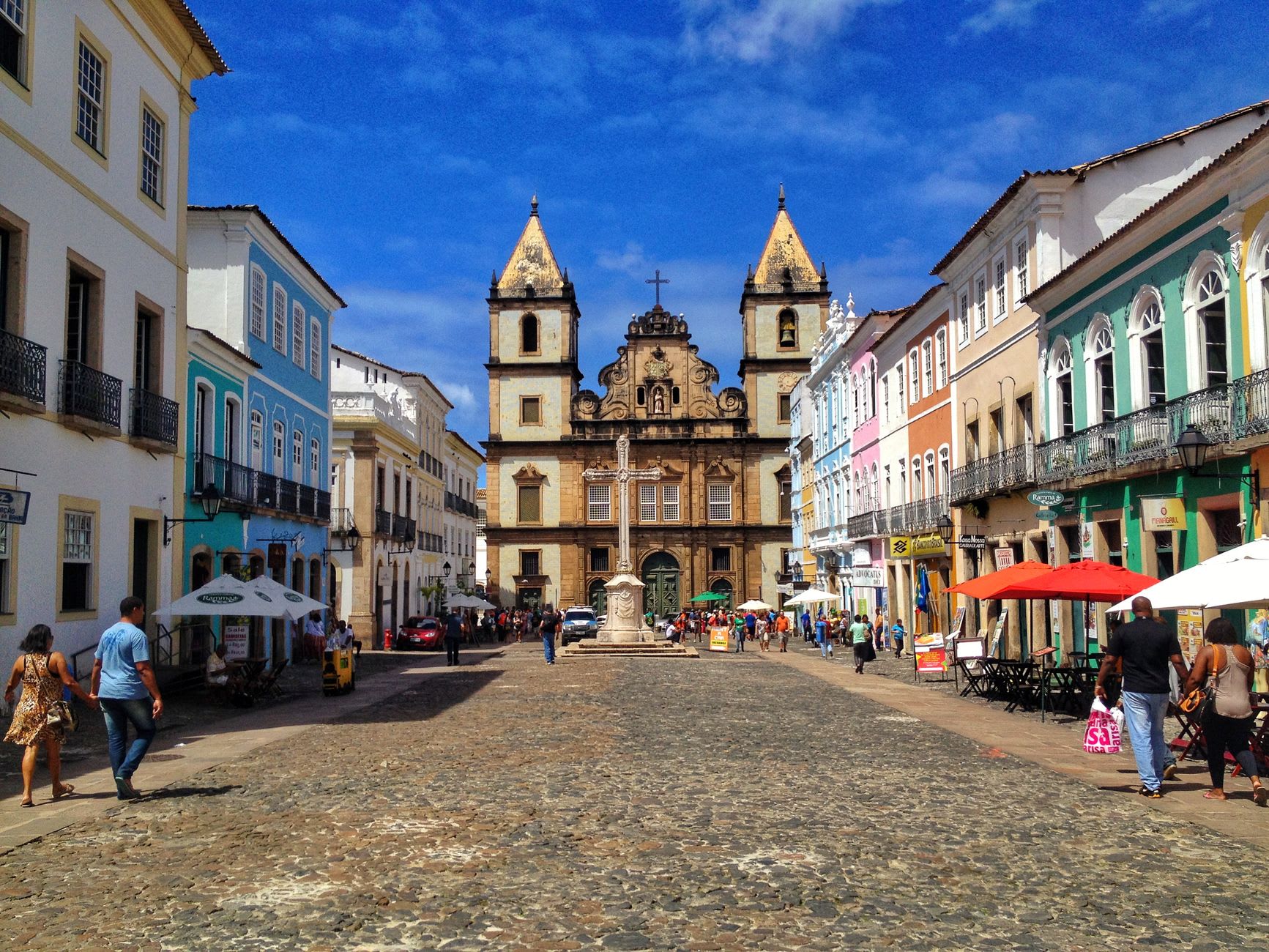
What the Pelourinho is not is the whole story of Salvador. The neighborhood has been heavily restored since the 1990s — some of the buildings are beautiful stage sets, their original populations priced out over the decades. But even a stage set can carry genuine spiritual weight when the candomblé terreiros are still active behind the painted doors, when the Olodum drummers run their Thursday night rehearsals in the street, when the women of the Sisterhood of Our Lady of the Good Death still process through squares that have known their footsteps for generations. The gentrification question is real. So is the pulse.
When to go: The neighborhood is most itself outside of peak tourist hours — before nine in the morning and after seven at night, when the cruise ship crowds have thinned. Carnival in Salvador, which spills across the Pelourinho in ways that defy description, falls in February or March. If you come for Carnival, book accommodation three months ahead and accept that you will sleep very little.