Itacaré
"The path to Engenhoca beach runs through actual jungle — you can hear the surf before you see any sky."
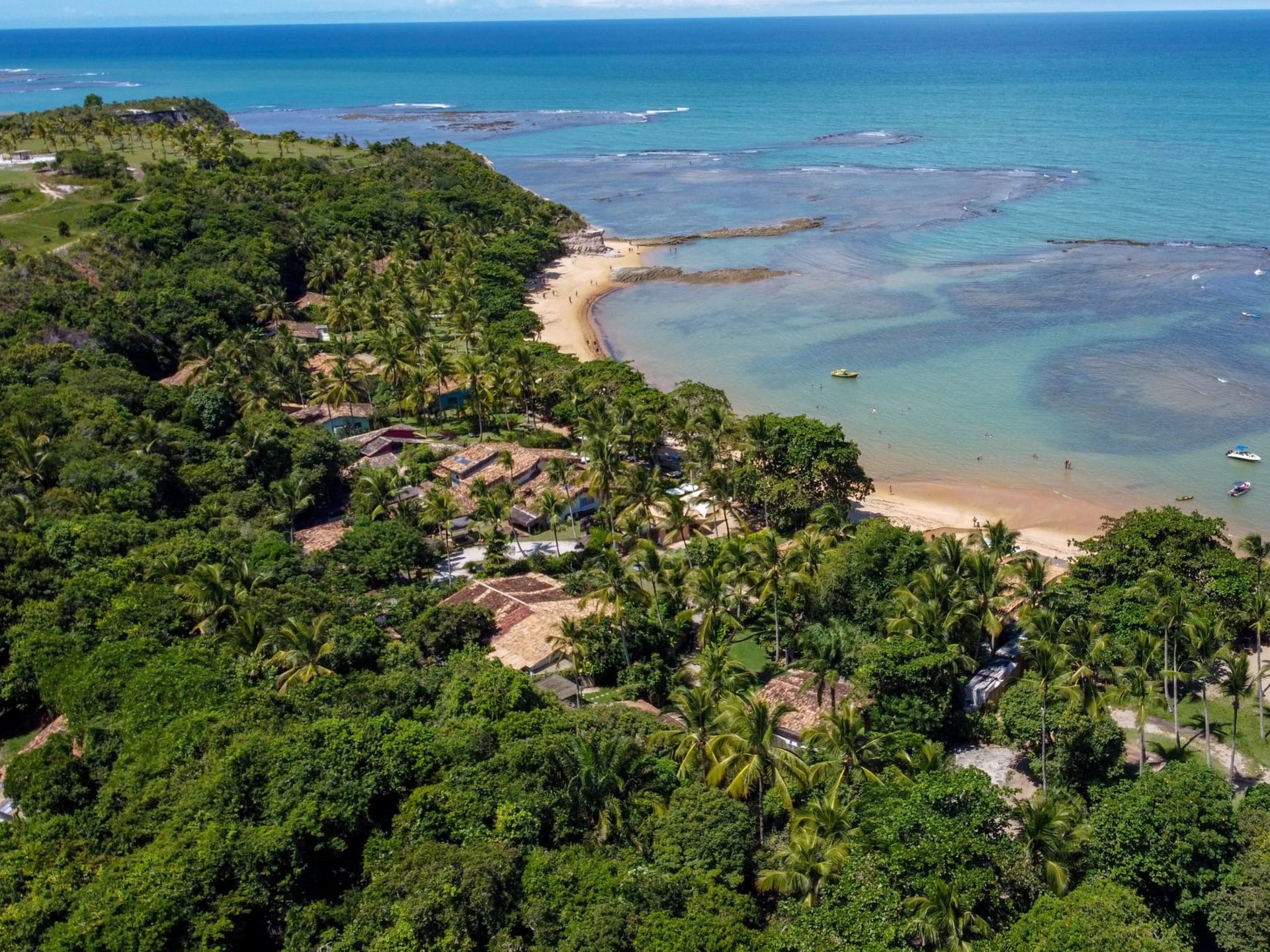
The BA-001 — the road that runs south from Ilhéus toward Itacaré — is one of those drives that produces a particular kind of silence in passengers: nobody talks because everyone is looking. The road cuts through the last significant stretch of Mata Atlântica at sea level, and this is the thing about this part of Bahia that photographs cannot convey — the density and greenness of the forest right next to the sea. It is not a forest with a beach at its edge. The two are simultaneous. The trees go to the cliff’s edge. Below is the ocean.

Itacaré itself is a small town at the mouth of the Rio de Contas, with a waterfront promenade, a main street of pousadas and surf shops, and a population that divides evenly between locals who have been here for generations and transplants who arrived for a surf trip in the 1990s and never left. The surfing is genuinely good — Ribeira, Tiririca, Resende are beach breaks of varying size and character, and the waves are consistent enough that there is almost always something to ride. But I do not surf, and Itacaré held me completely regardless.
What it held me for was the trails. The jungle paths that connect the beaches — Engenhoca, Jeribucaçu, Prainha — run through forest so thick that the light goes green, filtered through layers of palm and breadfruit and strangler fig. You hear the surf before you see the sky clear ahead. Then the path drops to a beach where the sand is dark tan and heavy and the waves come in hard from the Atlantic and there might be five other people. Walking from Itacaré to Engenhoca and back takes three hours through this forest. I did it twice.

The town at night has a low-key energy that I found immediately comfortable — bars on the waterfront, the sound of MPB from someone’s speakers, grilled octopus at a place I found by following a smell down an alleyway. The cachaça is local, the lime is abundant, the caipirinhas are cheap and strong in a way that makes sense at altitude but perhaps too much sense at sea level. I spent five days in Itacaré and found myself actively reluctant to continue south.
When to go: June through November is the best season — the heaviest rains fall March through May. The surf is most consistent between June and September. December and January see the Brazilian vacation crowds and accommodation prices double; the beaches fill but never become overcrowded in the way the Costa Verde beaches do.