
Terceira Island
"Angra is the kind of old city that doesn't need to tell you it's beautiful — it just waits."
I arrived in Angra do Heroísmo on a Sunday evening and the streets were full in a way that took me a moment to understand. It was a tourada à corda — Terceira’s famous bullfighting on a rope — and the town had arranged itself around the event with a practiced ease that suggested this had been happening for a long time, which it has, for roughly five centuries. Eight men in traditional costume hold ropes attached to a bull, and the animal moves through the street while young men called pastores run from it and with it, and the whole thing is simultaneously alarming and oddly festive. I watched from a first-floor balcony with a glass of local wine and felt I was observing something that had nothing to do with me in the best possible way.
Angra do Heroísmo is the most formally beautiful city in the Azores. It was the archipelago’s capital for centuries and a critical stopping point on the Atlantic trade routes, and the colonial wealth that flowed through here left behind a layered urban fabric: the Sé cathedral, baroque mansions with wrought-iron balconies, the grid of streets that was replanned after a 1980 earthquake that damaged much of the centre. The UNESCO designation is well-earned. What it can’t capture is the quality of the light in the streets between five and seven in the afternoon, when the low sun hits the painted facades — ochre, cream, terracotta — and everything glows with a particular warmth.
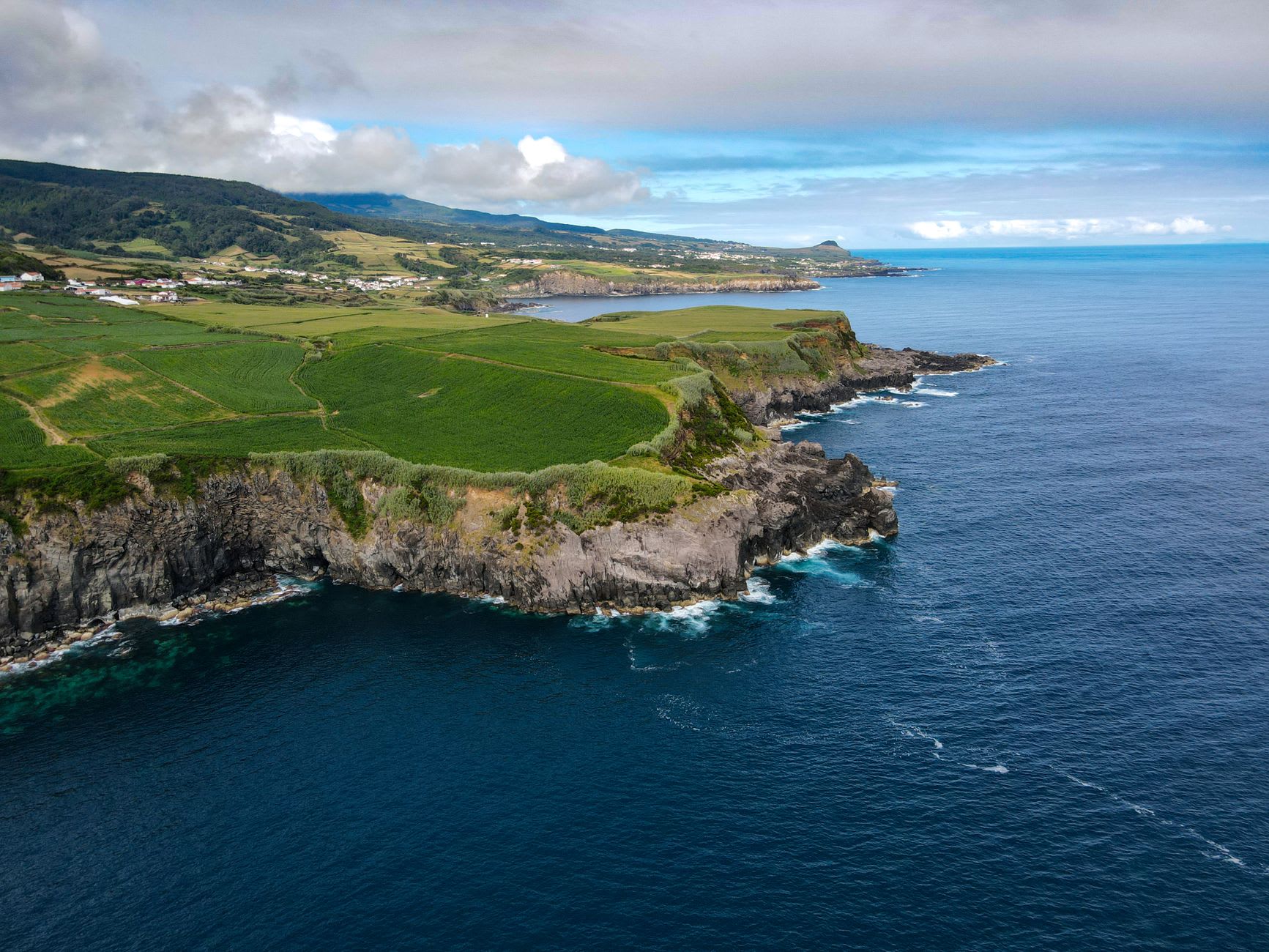
The Monte Brasil headland rises at the western end of town, a volcanic promontory encircled by the old fortress of São João Baptista. I walked up in the morning, through woods of cedar and pine, and emerged at the fortress walls — now military, but with public access to the outer ramparts — with views over Angra’s roofline, the bay, and on a clear day, Pico’s silhouette across the water. The fortress itself is enormous, a seventeenth-century defensive work that once controlled Atlantic traffic and is now so quiet that the only sounds are wind and a hawk hunting in the thermals over the bay.
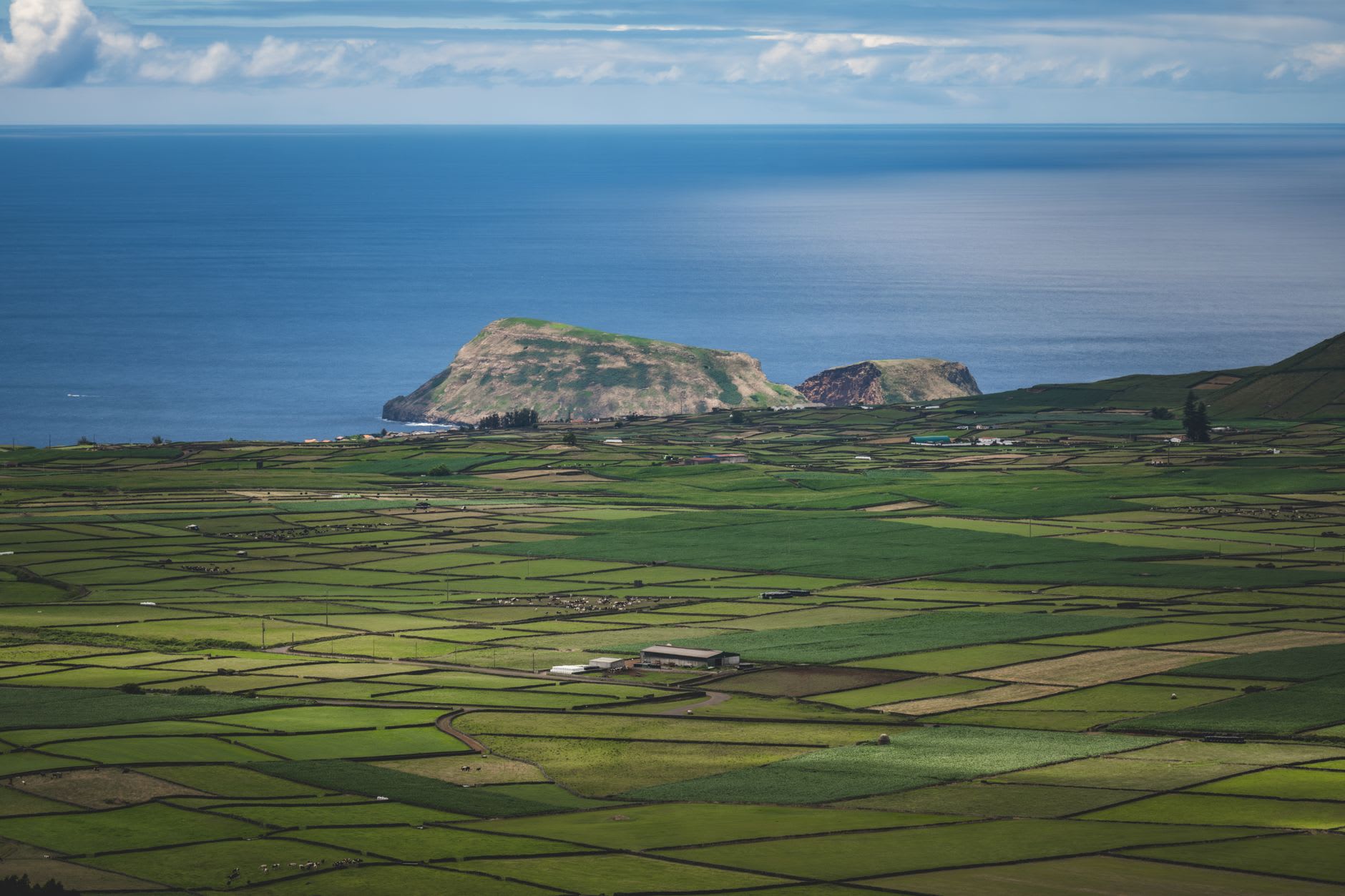
Terceira’s interior is different in character from São Miguel’s volcanic drama — gentler, pastoral, a rolling landscape of dairy farms and hedged lanes that reminded me more of Normandy than anywhere Azorean. Algar do Carvão is the exception: a volcanic chimney open to visitors, a cave that plunges straight down into a cavern filled with stalactites and a lagoon of absolute clarity at its base. The temperature drops sharply as you descend. The guide’s voice echoes against stone that hasn’t seen light in millennia. It’s the kind of place that makes geological time feel personal.
The food on Terceira runs to a particular island speciality: alcatra, a slow-braised beef stew cooked in a ceramic pot with white wine, garlic, and allspice, served with sweet bread called bolo lêvedo. I ate it at a restaurant on Rua de São João that seemed to have been in operation since around the time the fortress was built, the walls hung with old photographs of Angra and hand-painted ceramic plates. The alcatra came in the cooking pot. I finished it.
When to go: June through September for the tourada à corda season — the traditional bull events happen weekly on Sunday evenings in summer. The Sanjoaninas festival in late June is Terceira’s biggest celebration: ten days of events, music, and traditional culture that fills the city. Year-round for Angra itself; the city is beautiful in any weather.