
Ponta Delgada reveals itself slowly, and that’s the right pace for it. I arrived on a Tuesday morning by taxi from the airport and the driver took me along the seafront promenade — the Avenida Infante D. Henrique, though everyone just calls it the seafront — and I watched fishing boats and the marina and black basalt walls and a horizon that was just pure Atlantic, no land in any direction. The city is small enough that within an hour of arriving I felt oriented. Within a day I felt I understood its rhythm.
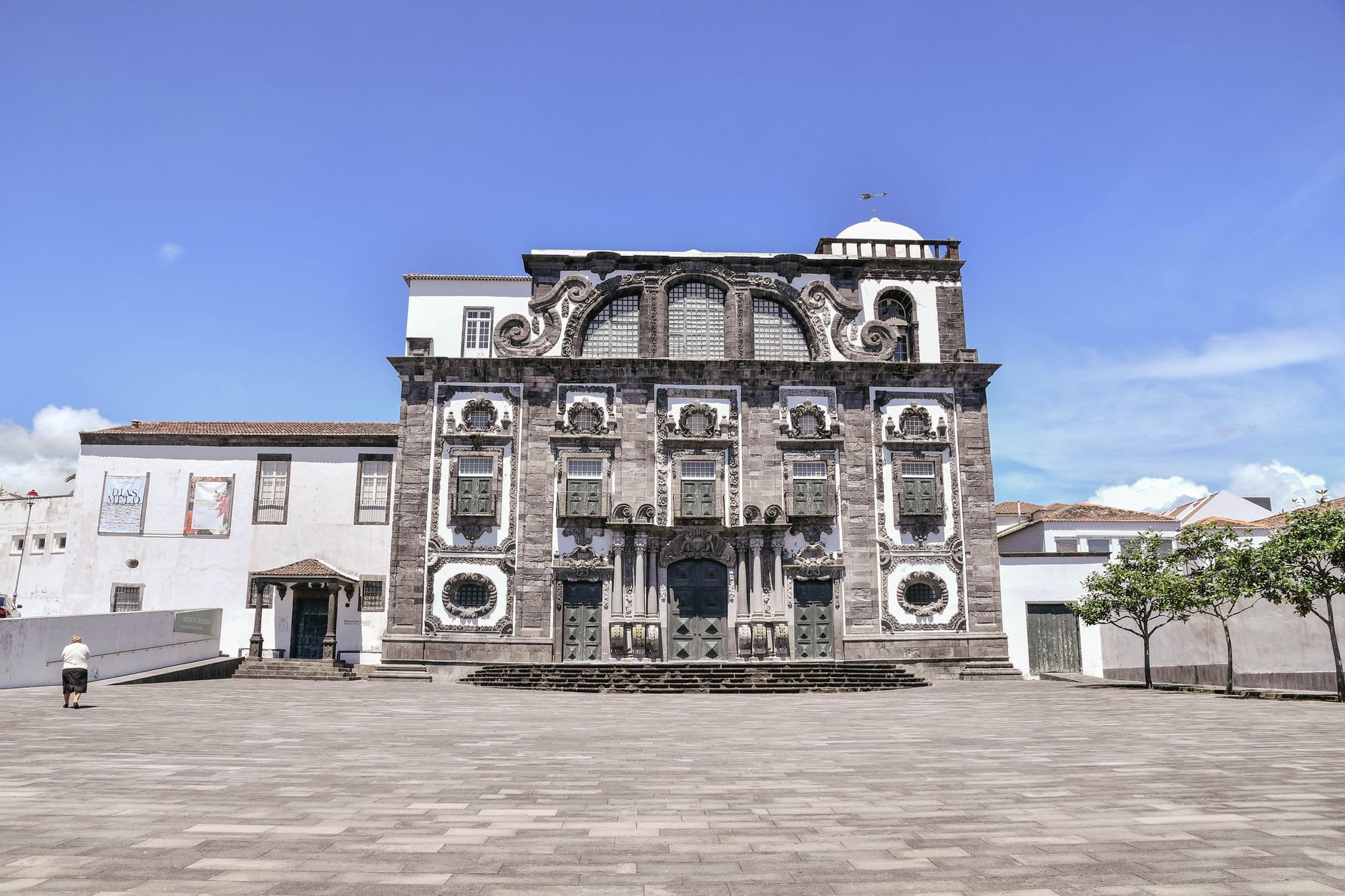
The Portas da Cidade — three arched black gates on the main square — are the image everyone takes home from Ponta Delgada, and they deserve the attention. Built in the eighteenth century, they open onto the Praça Gonçalo Velho Cabral, which is the kind of square that doesn’t try too hard: some cafés, pigeons, a couple of elderly men playing cards. The gates themselves are this remarkable combination of dark basalt and white plaster that runs through all the important architecture here, creating a graphic quality that photographs well but is better just to stand in front of and look at while your coffee cools.
The covered market — Mercado da Graça — is where I went every morning. It opens early and by eight o’clock has the best produce on the island: tea from Gorreana (the only tea plantation in Europe, grown inland on São Miguel), local cheeses, wedges of chouriço, boxes of the small fragrant pineapples grown in greenhouses on the island — nothing like the ones you find on the mainland. The pineapple vendor gave me a slice to try and I bought three immediately. They tasted like someone had taken a regular pineapple and turned up a dial labeled “what this should actually taste like.”
The city’s streets behind the waterfront are worth losing time in. The Rua do Aljube, the Rua da Graça — these narrow lanes hold eighteenth-century mansions that have become restaurants, ceramic workshops, wine shops. There’s a ceramics tradition here using local clay in blue tones that echoes azulejo without copying it. I spent an hour in one workshop watching a woman paint borders onto plates with a steadiness of hand I found almost hypnotic.
In the evenings the waterfront promenade fills with the whole population of the city — families, joggers, couples, groups of teenagers. There’s something genuinely unperformative about it. Nobody seems to be at a scene; they’re just there. I ate grilled limpets twice at a restaurant on the harbour with metal tables and no English menu, which I took as a good sign. The limpets came with garlic butter and bread and a sense that some things are exactly right and shouldn’t be changed.
When to go: May through October for reliable weather. June and July are peak but the city handles crowds better than the countryside. March and April are underrated — green, quiet, and the spring light on the basalt has a quality that makes even a morning coffee feel worth photographing.