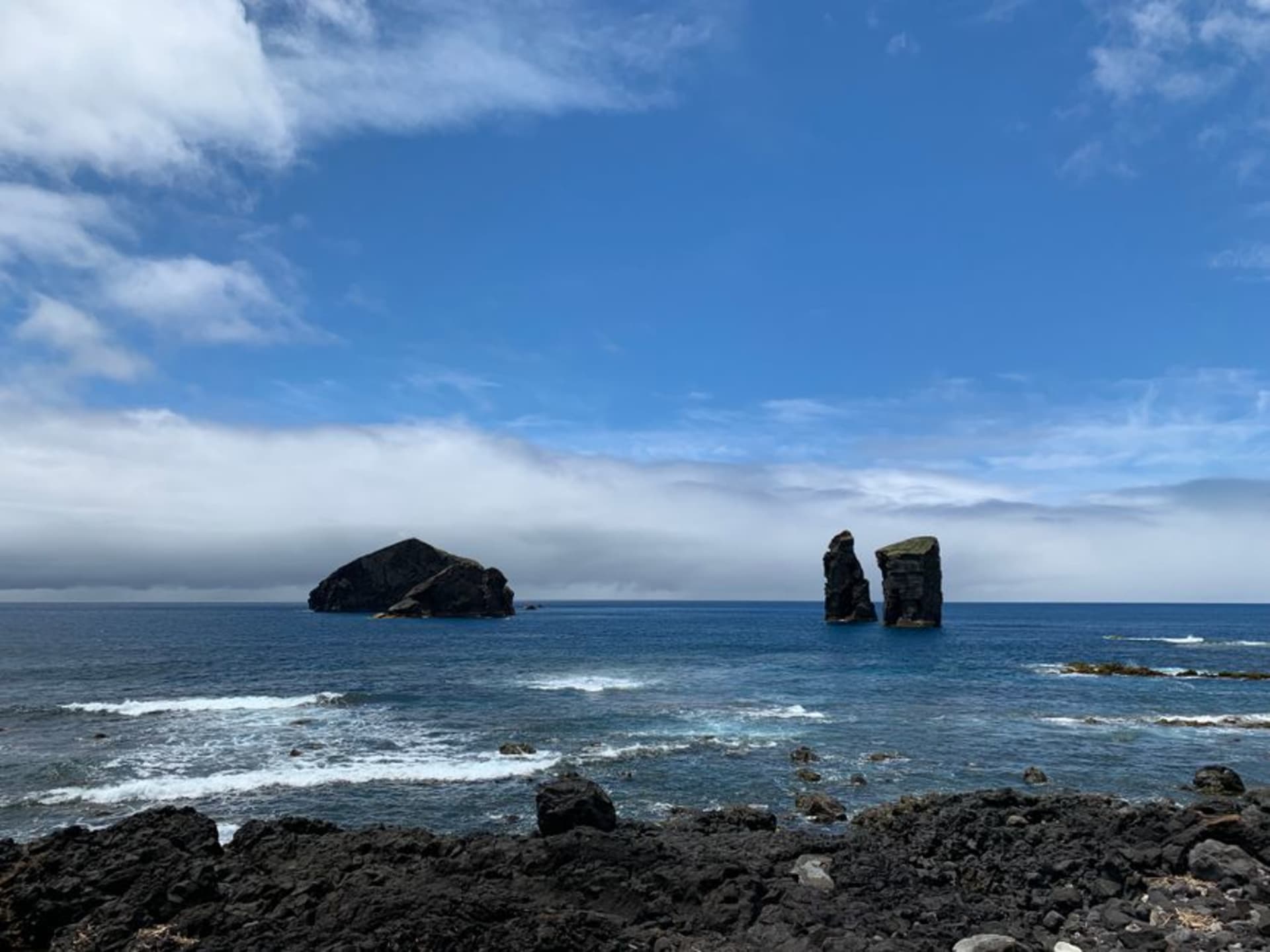
Mosteiros
"Lia floated on her back in a rock pool while Atlantic swells broke six feet away on the other side of the wall, and I just thought, this is the trick."
A black-sand village on Sao Miguel's west coast where volcanic rock pools trap the Atlantic into calm, swimmable seawater lagoons.

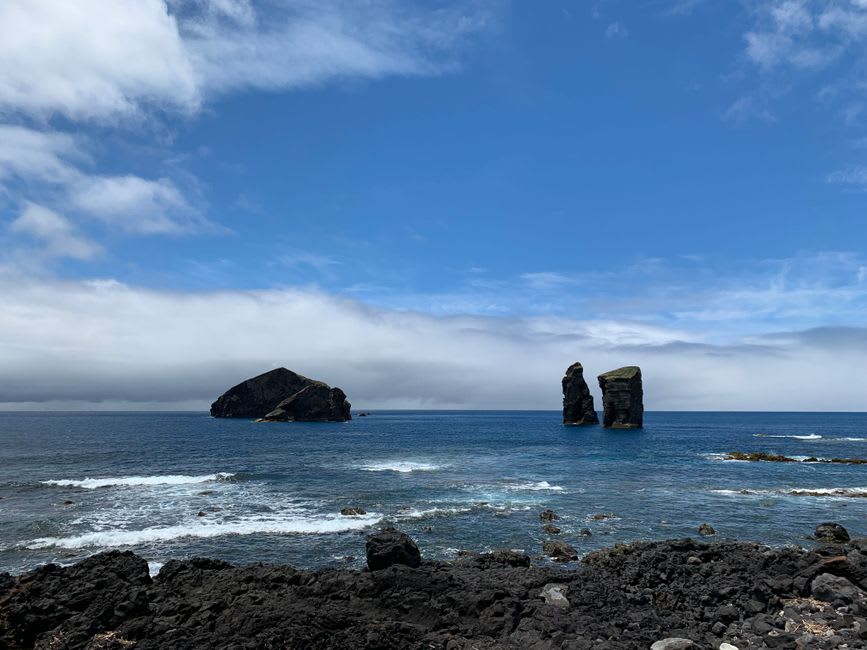
We drove to Mosteiros on a whim after a morning in Sete Cidades, following signs down toward the coast because the road looked like it dead-ended somewhere interesting, and it did. The village sits right where Sao Miguel’s green interior gives up and turns into black volcanic cliffs and sand, and offshore there are a handful of small islets — the “monastery” rocks the town is named for, supposedly resembling hooded monks from a certain angle, though Lia and I argued for ten minutes and never quite saw it.
What makes Mosteiros worth the detour, though, is the piscinas naturais — natural pools carved and partly walled by old lava flows right where they meet the ocean. The Atlantic here is rough and cold and not something you casually swim in, but these pools let the sea in through gaps in the rock while the walls break the worst of the swell, so you get genuinely swimmable seawater a few meters from waves that would otherwise knock you flat. There are ladders bolted into the rock, a couple of changing huts, nothing fancy, and on the weekday afternoon we went it was mostly local families and a few older men fishing off the black rocks with hand lines.

The black sand itself deserves a mention because it’s genuinely different underfoot than the pale stuff you get in the Caribbean or the Algarve — fine, almost sooty, and it holds heat in a way that made me hop across the last few meters to the water. We walked the length of the beach at low tide and found tide pools full of tiny crabs and one very confused-looking eel that Lia insisted on naming before we moved on.
We ended up eating grilled limpets at a plastic-table place two streets back from the water, the kind of spot with no sign and a menu that’s basically whatever the owner’s brother caught that morning, and it remains one of the best cheap meals I’ve had on the island. Mosteiros isn’t a headline Azores destination the way Sete Cidades or Furnas are, and that’s exactly its appeal.
When to go: Come between June and September for calmer seas and warm enough air to actually enjoy the pools; visit near low tide, when more of the rock walls are exposed and the pools are at their most sheltered.
Keep exploring
More from Azores
 azores
Pico Island
A volcano rising from the Atlantic, UNESCO wine country built in black lava walls, and the best place in the archipelago to watch whales.
Explore azores
Ponta Delgada
São Miguel's low-key capital where black basalt architecture meets Atlantic light and the waterfront cafés keep hours that make sense.
Explore azores
Santa Maria Island
The Azores' sunniest, southernmost island, where white-sand beaches and red-roofed villages feel more Mediterranean than mid-Atlantic.
Explore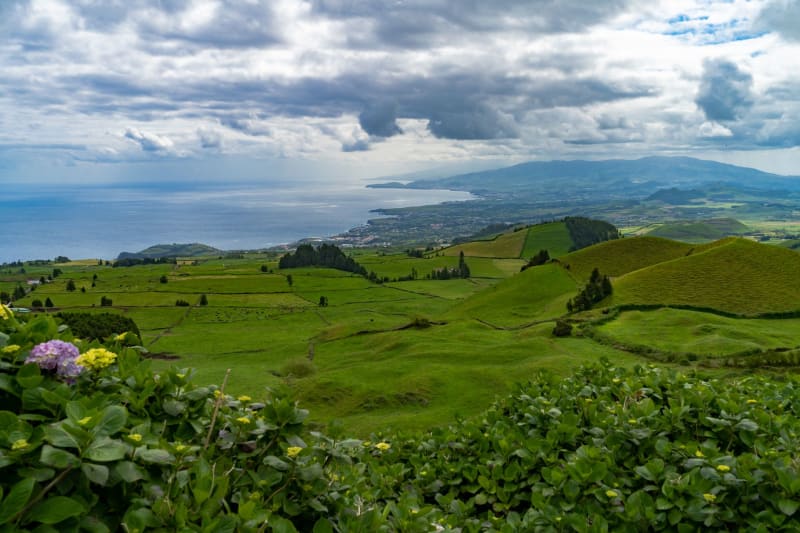 azores
São Jorge Island
A thin volcanic ridge above the Atlantic, where the fajãs — flat ledges at the cliff base — hold some of the most improbable farmland in the world.
Explore azores
Sete Cidades
Twin volcanic lakes — one blue, one green — sitting in a silence so complete you can hear the world thinking.
Explore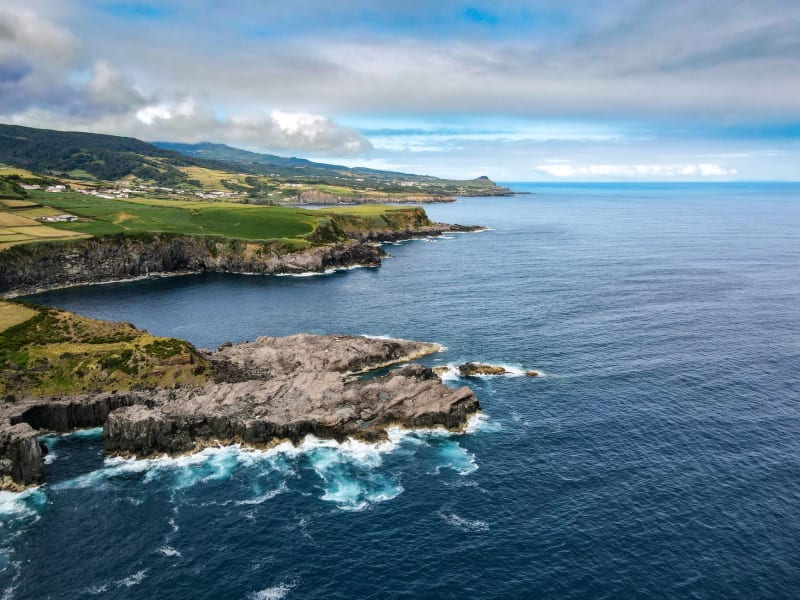 azores
Terceira Island
Home to Angra do Heroísmo, the Azores' only UNESCO-listed city, and a bull-running tradition that has been going since the sixteenth century.
Explore